
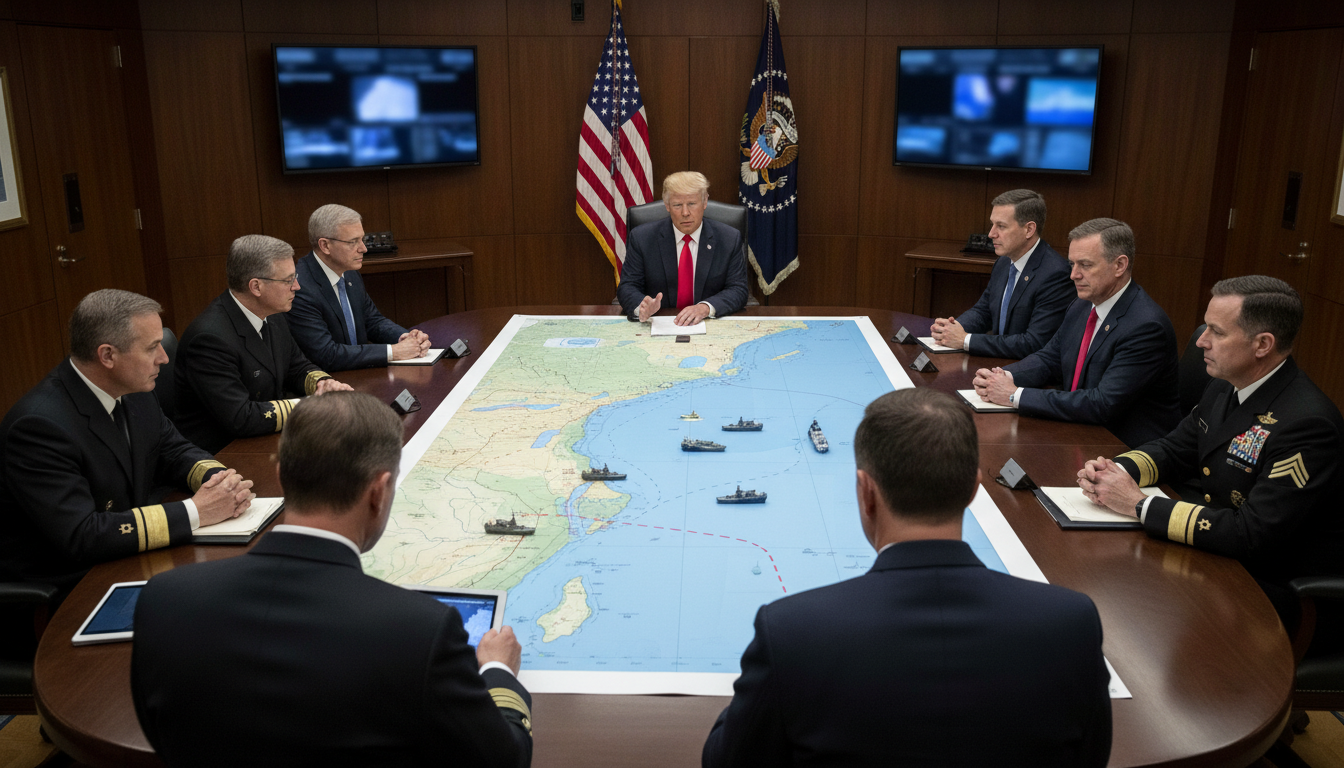
U.S. Administration Prepares for Potential Strait of Hormuz Blockade
U.S. aides have been ordered to prepare for an extended Strait of Hormuz blockade, a measure aimed at curbing Iranian oil exports as the conflict enters its third month and maritime traffic faces growing uncertainty.
White House Orders Preparations for Strait of Hormuz Blockade
Senior administration aides say the president directed staff to lay plans for a sustained naval posture that could stop vessels bound to or from Iranian ports. The directive reflects a decision to escalate economic pressure rather than immediately resume large-scale strikes or withdraw U.S. forces entirely.
Officials described the planning as preventive and precautionary, focused on constraining the flow of Iranian crude while limiting direct kinetic escalation. The administration framed the move as a calibrated effort to reduce Tehran’s export revenue without opening a new front of sustained aerial bombardment.
Scope of the Proposed Naval Restrictions
According to people familiar with the discussions, the preparations would involve intercepting and detaining ships transiting the Strait of Hormuz when intelligence indicates a direct link to Iranian ports. That could mean enhanced surface and air patrols, boarding operations, and longer-term naval deployments in the vicinity of the strait.
The measures are being portrayed internally as a hybrid of maritime interdiction and economic coercion, designed to deny Iran the benefits of oil sales while attempting to avoid a broader, high-intensity conflict. How rules of engagement would be applied to neutral or third-country vessels remains a central unresolved operational question.
Alternatives Rejected and Calculated Choices
Aides said the administration weighed several paths, including renewed air strikes and a full withdrawal of U.S. forces, before settling on blockade preparations as the least risky of the options under consideration. The decision reportedly reflects concern that kinetic strikes could rapidly expand the war, while withdrawal would cede greater influence to adversaries in the region.
Officials emphasized that the blockade option was chosen for its potential to produce strategic pressure without committing the United States to open-ended combat operations. Still, they acknowledged significant contingencies, including the risk of maritime confrontations with Iranian forces or proxies.
Potential Impact on Oil Exports and Global Shipping
Analysts warn that a prolonged Strait of Hormuz blockade would reverberate through global energy markets, given the strait’s role as a conduit for a substantial share of seaborne oil shipments. Constraining Iranian exports could tighten global supply and push prices higher, while increased naval activity could prompt insurers and shippers to reroute or suspend traffic.
Shipping companies may seek alternative passages or rely more heavily on pipelines and overland routes, but capacity and speed limits make wholesale replacement difficult. Markets will likely respond quickly to credible signals of a maritime choke point, raising costs for import-dependent economies and complicating energy security planning.
International and Legal Challenges
Maritime interdiction at or near the Strait of Hormuz raises complex questions under international law, including freedom of navigation and the rights of flag states. Allies and partner countries would face diplomatic pressure to align with or distance themselves from U.S. enforcement actions, potentially creating fractures within coalitions.
Legal advisers in several capitals may be asked to evaluate boarding, seizure, and detention authorities, especially where third-country commercial vessels are involved. Nations reliant on Middle Eastern petroleum are likely to demand clear legal justification and assurances that maritime commerce will be protected.
Operational Risks and Regional Responses
Military planners caution that extended operations in the narrow waters of the strait carry heightened risks of miscalculation and accidental engagements. Iranian naval forces and allied militias have demonstrated asymmetric tactics in recent months that could complicate interdiction efforts and increase danger to commercial crews.
Regional actors, including Gulf states and external powers with naval presences, will monitor any U.S. posture closely and may adjust their own force deployments. The potential for proxy escalation, shipping attacks, or mine-laying would force commanders to balance assertive interdiction with robust force protection measures.
The administration’s move to prepare for a Strait of Hormuz blockade marks a strategic pivot toward economic containment as a primary lever against Iran’s war effort. While planners argue the approach could avoid immediate large-scale combat, it introduces a protracted maritime dimension that risks disrupting global energy flows and provoking legal and diplomatic disputes. The ultimate trajectory will depend on how Tehran responds, how allies and neutral states react, and whether operational safeguards can prevent the tensions from spiraling into broader hostilities.

