
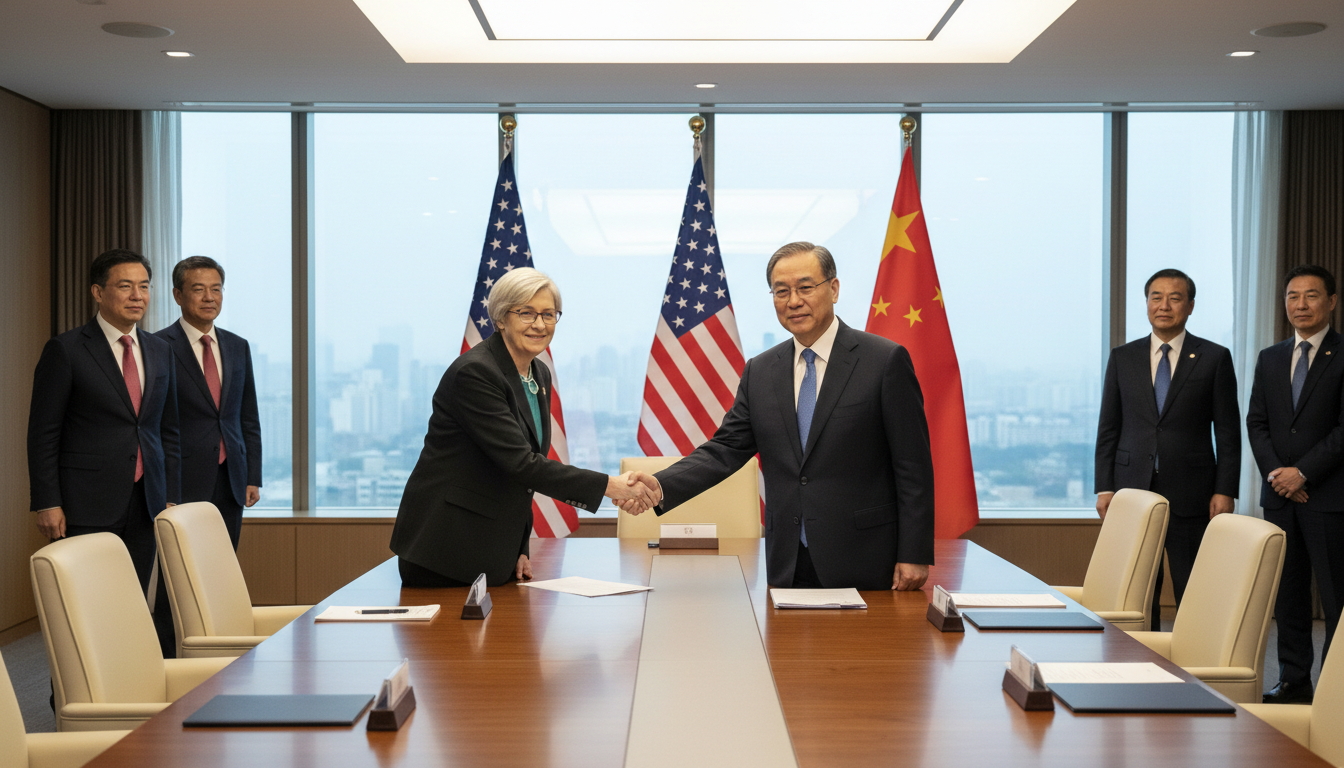
Bessent and He hold preparatory talks in Incheon ahead of U.S.-China summit in Beijing
U.S.-China summit talks in Incheon saw Treasury Secretary Scott Bessent meet Vice Premier He Lifeng to prepare trade, semiconductor and rare earth talks
U.S. Treasury Secretary Scott Bessent and Chinese Vice Premier He Lifeng held brief but consequential talks in Incheon on Wednesday as leaders of the two largest economies prepare for a U.S.-China summit in Beijing later this week.
The meeting followed separate calls with South Korean President Lee Jae Myung at the presidential Blue House and was staged to set agendas and reduce friction ahead of the summit.
Officials described the exchanges as preliminary consultations designed to align delegations and identify issues for leader level discussion.
Airport meeting follows Blue House visits
Bessent and He convened at Incheon International Airport after each met President Lee earlier in the day.
South Korean hosts arranged the encounters to provide a neutral venue and to allow U.S. and Chinese teams to trade views without scheduling delays.
The encounter was short and focused on preparing the formal sessions that will take place in Beijing from Thursday through Friday.
Officials accompanying He signal trade and finance focus
China sent senior trade and finance officials to the talks, reflecting the meeting agenda.
Vice Commerce Minister Li Chenggang and Vice Finance Minister Liao Min were among the delegation with He, underscoring trade and investment as priority items.
Their presence points to efforts to shape concrete measures and potential purchase announcements ahead of the leaders meeting.
Trade, purchases and investment forums on the table
Both sides are expected to discuss ways to ease bilateral trade and investment frictions and to establish forums to manage them.
United States officials have indicated that China may announce purchases in aerospace and agricultural goods to demonstrate progress on market opening.
Such purchases would form part of a broader package aimed at creating momentum for longer term cooperation.
Semiconductor controls remain a sticking point
Beijing is pressing Washington to relax export curbs on advanced semiconductors and critical production equipment, making technology controls a central issue.
U.S. negotiators have signaled limited appetite for early concessions on cutting edge chips, citing national security concerns and longstanding policy courses.
Analysts say this issue will be carefully calibrated at the summit because any shift carries broad implications for global supply chains.
Rare earth shipments and customs data complicate talks
China and the United States are considering whether to extend a truce on export curbs for rare earths, but trade data suggest Beijing has continued to limit shipments of key materials.
Those materials are essential for high tech manufacturing and defense industries, so any apparent throttling raises questions about the durability of a partial accommodation.
Diplomats and trade experts expect negotiators to press for clearer commitments and monitoring mechanisms if a temporary arrangement is to be extended.
Iran conflict and strategic issues may figure in leader talks
The summit agenda is likely to extend beyond trade to include regional security topics such as the Iran conflict and energy flows.
China remains a major buyer of Iranian oil and its diplomatic ties with Tehran give it leverage that other parties value or contest.
U.S. officials say Washington does not anticipate needing Chinese mediation to resolve the conflict but recognize Beijing will be part of broader discussions on stability and navigation of critical waterways.
Diplomats and observers portrayed the Incheon meeting as an exercise in mutual calibration rather than a venue for major breakthroughs.
A regional balance of economic resilience and political caution appears to have left both capitals with incentives to avoid sharp concessions before leader level talks.
As delegations move to Beijing the focus will be on translating preparatory understandings into concrete initiatives while managing the technical and strategic frictions that remain.

