
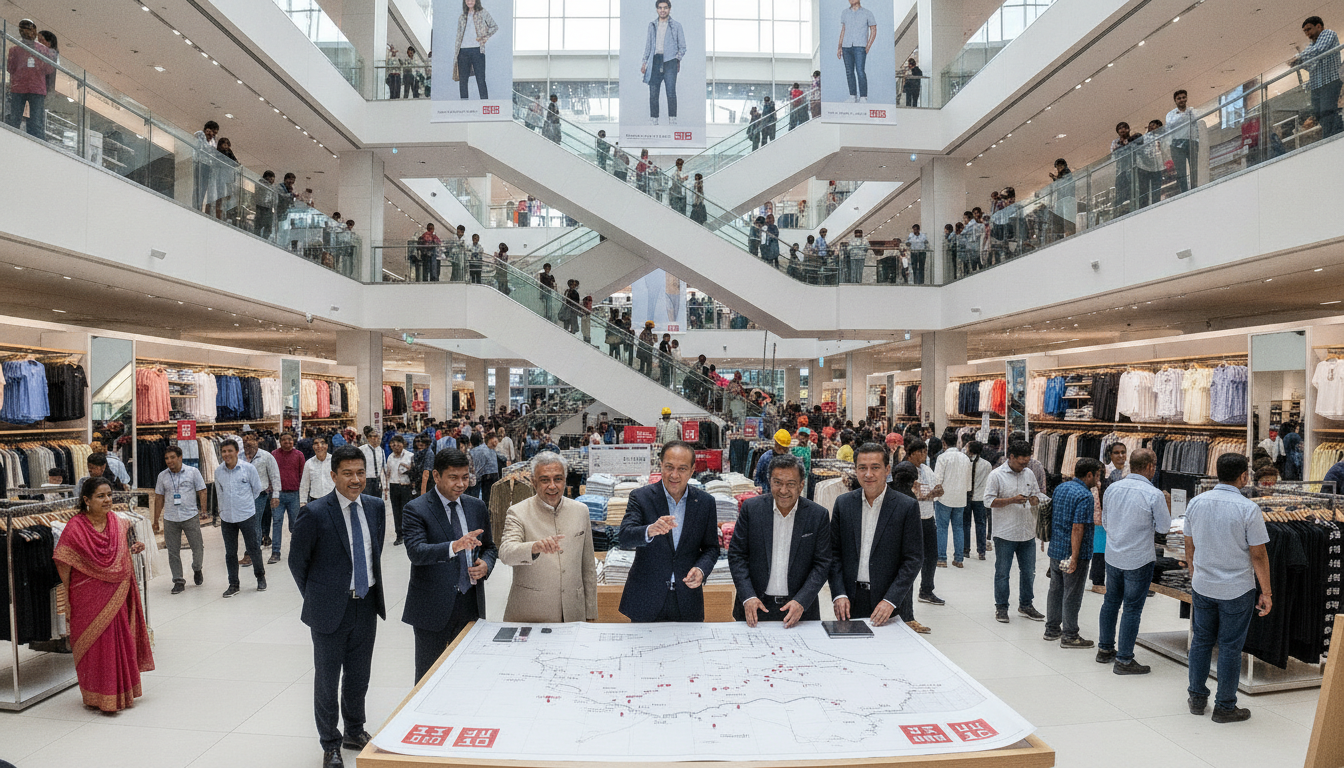
Uniqlo India expansion: retailer aims for over 100 stores within five years
Uniqlo India expansion: Uniqlo will grow from 20 to more than 100 stores within five years, targeting India’s expanding middle-class apparel market.
Japan’s casual-clothing chain Uniqlo is preparing a major retail push in India, announcing plans to increase its store network from roughly 20 locations to in excess of 100 over the next five years. The Uniqlo India expansion, disclosed by sources familiar with the strategy, signals a significant escalation of the brand’s footprint in one of Asia’s fastest-growing apparel markets. The move follows Uniqlo’s entry into India in 2019 and comes amid rising consumer spending and urbanisation across the country. Fast Retailing, Uniqlo’s parent, is positioning the brand to capture broader swathes of Indian shoppers as competition intensifies.
Plans to quintuple outlets
Sources told Nikkei that Uniqlo intends to roughly quintuple its Indian store count, aiming for more than 100 outlets within a five-year window. The company’s target reflects an accelerated rollout compared with its initial expansion tempo since entering India in 2019. Officials and executives have not publicly released a full timeline, but the reported ambition would require a sustained program of property deals, staffing and local operational build‑out. Retail experts say the planned scale-up would make Uniqlo one of the largest international apparel operators in India by physical presence.
Current footprint and market entry
Uniqlo first opened stores in India in 2019 and currently operates about 20 shops in major urban centres, according to industry reporting. The brand has focused on metropolitan areas where demand for casual, value-driven apparel is strongest, using flagship outlets to raise awareness and drive e-commerce traffic. Uniqlo’s initial strategy combined prominent mall locations with a curated product mix tailored to local climates and tastes. That groundwork is now being leveraged as the company prepares a faster roll-out into additional cities and regions.
Demand drivers in India
India’s large and youthful population, rising incomes, and growing middle class underpin the business case for the Uniqlo India expansion. Consumers in tier‑1 and expanding tier‑2 cities are increasingly buying branded apparel, shifting away from unbranded and traditional formats. Seasonal variability and regional preferences will require Uniqlo to balance international bestsellers with locally adapted lines, but analysts say the overall addressable market is substantial. Digital sales channels and mobile-first shoppers also offer a complementary route to reach consumers where physical stores are not yet present.
Competitive landscape and local rivals
Uniqlo will enter a competitive field that includes international fast-fashion chains, domestic brands and large retail conglomerates pursuing modern-format apparel. Competitors such as H&M, Zara and established Indian brands have already expanded into multiple cities, and local players often compete aggressively on price and promotions. Retail analysts warn that margins may be squeezed during the rapid expansion phase as Uniqlo establishes new stores and builds brand recognition beyond metropolitan hubs. Strategic site selection and differentiated product positioning will be central to maintaining profitability as the network grows.
Operational strategy and supply chain implications
Scaling to more than 100 stores will demand significant operational investments, including logistics, staffing, and local sourcing. Uniqlo and parent company Fast Retailing are likely to intensify partnerships with Indian suppliers and distributors to shorten lead times and control inventory costs. The retailer’s global experience with efficient supply chains and inventory management could help manage expansion risks, but adapting those systems to India’s diverse regional markets will be complex. Observers expect a mix of company-operated flagship stores and smaller-format outlets, supported by e-commerce fulfilment and regional distribution centres.
Regulatory, cost and consumer risks
Expanding rapidly in India exposes retailers to regulatory changes, import tariffs, rental volatility and currency fluctuations, all of which can affect rollout plans and returns. Local regulations governing foreign direct investment and retail operations can vary by state, creating additional complexity for nationwide expansion. Consumer tastes in India are heterogeneous, and success will depend on Uniqlo’s ability to match product ranges, pricing and seasonal offerings to local demand. Market entrants often face short-term promotional battles that can erode margins; careful financial planning will be critical as the company scales.
Uniqlo’s plan to multiply its Indian stores represents a substantial bet on the country’s longer-term apparel demand, building on a presence established since 2019. If implemented, the expansion could reshape competitive dynamics in India’s retail sector and become a central component of Fast Retailing’s Asia growth strategy. Observers will be watching the pace of openings, site choices and how Uniqlo balances global brand standards with the local adaptations needed to win over Indian consumers.

