
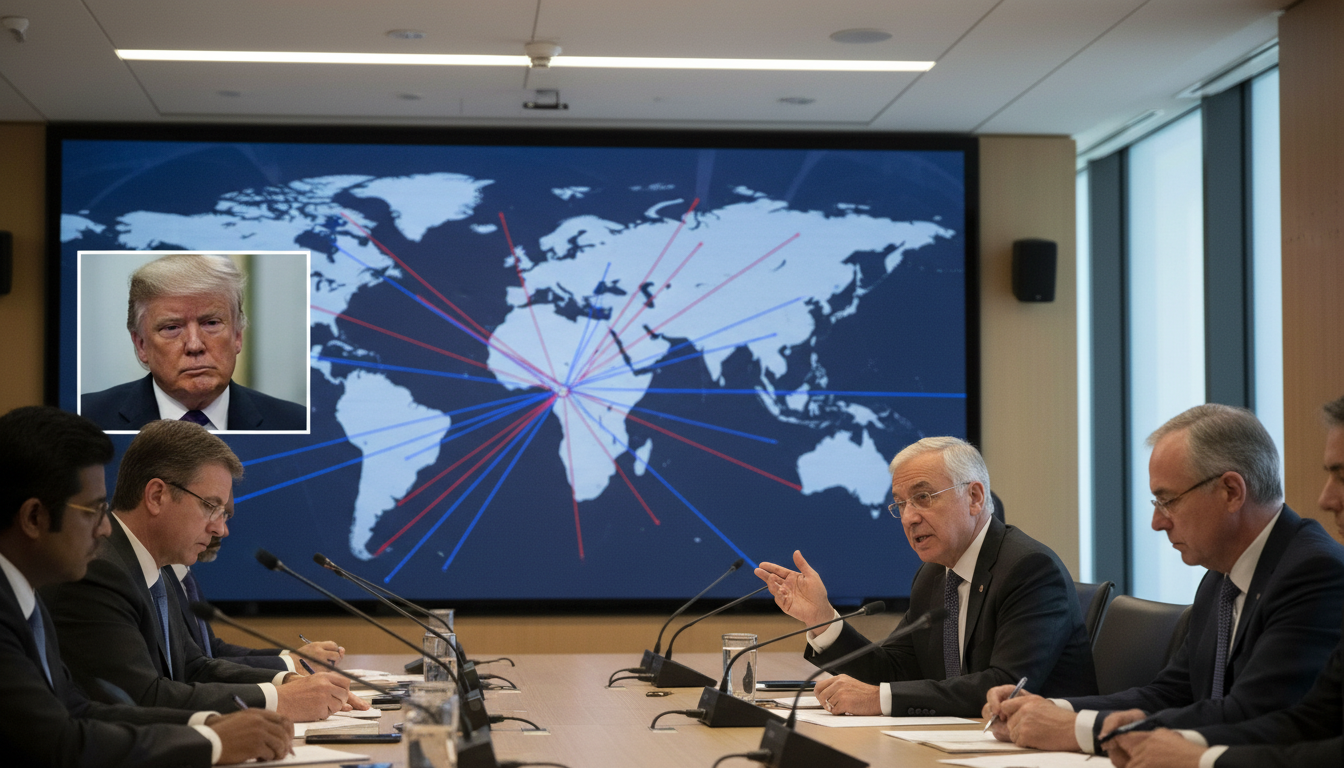
Vali Nasr Says Trump’s War with Iran Confirmed Tehran’s Fears and Reshaped Regional Politics
Vali Nasr of Johns Hopkins SAIS warns that Trump’s war with Iran reinforced Tehran’s view of perpetual U.S. hostility, altering regional security dynamics and international norms.
The U.S. strike ordered by former President Donald Trump has, according to Vali Nasr, a professor at Johns Hopkins School of Advanced International Studies (SAIS), served to confirm a longstanding Iranian conviction that Washington aims to dominate or subvert the Islamic Republic. Nasr says Trump’s war with Iran did not arrive in a political vacuum; instead, it tapped into a half-century of revolutionary memory and suspicion dating to 1979. The result, he argues, is a deeper entrenchment of adversarial perceptions on both sides that complicate diplomacy and raise the risk of prolonged confrontation.
Revolutionary Memory and Perceptions in Tehran
Vali Nasr points out that the 1979 revolution instantiated an emphasis on independence from foreign influence that remains central to Iran’s governing elite.
That historical experience, he explains, has fostered a mindset in which Iran’s leaders have long viewed relations with the United States through the prism of hostility and even permanent conflict.
For many in Tehran, Nasr says, the Trump-era military actions looked like validation of a narrative that Washington has never relinquished a desire to control or overthrow Iran’s political order.
How Tehran Interpreted the U.S. Strike
According to Nasr, the recent attack was interpreted in Iran as confirmation rather than anomaly, weakening hopes among reformists for normalization.
He argues that when a foreign power the leadership already distrusts takes military action, it reinforces hardline assumptions that the only viable response is resistance and strategic hedging.
That, in turn, strengthens factions within Iran that favor confrontation over engagement, narrowing options for diplomacy.
U.S. Missteps and the Strategic Trap
Nasr warns that U.S. policymakers misread the political logic of Iran’s leadership and fell into what he calls a strategic trap.
By taking kinetic action without a clear political outcome, Washington ended up playing into Tehran’s portrayal of itself as besieged and justified in retaliatory measures.
The result, Nasr says, is that tactical military steps produced strategic gains for Iran’s narrative, consolidating internal legitimacy for the regime and complicating U.S. aims.
Consequences for International Law and Norms
Vali Nasr contends that the episode has implications beyond immediate battlefield calculations, affecting global norms about the use of force.
He believes that the precedent set by unilateral military measures risks loosening established restraints that underpin collective security and diplomatic dispute resolution.
International legal frameworks, Nasr warns, may be weakened if powerful states repeatedly rely on force without broad multilateral justification.
Regional and Japanese Security Implications
Experts including Nasr say Japan must reckon with the broader fallout from Trump’s war with Iran, given Tokyo’s economic ties and energy dependence in the region.
Escalation between Washington and Tehran can drive up oil prices, disrupt shipping lanes, and force Tokyo to reassess contingency plans for energy security and citizen safety.
At the same time, Nasr suggests that Tokyo’s diplomatic posture—favoring de-escalation and rules-based order—positions it to play a stabilizing role if it chooses to engage more actively.
Policy Options and Paths Forward
Nasr urges a return to layered diplomacy that combines deterrence with clear political objectives and multilateral engagement.
He recommends that U.S. policy aim not merely at tactical military signaling but at durable political settlements that address underlying security dilemmas on both sides.
For regional actors and allies, Nasr emphasizes the importance of maintaining open channels, supporting intermediaries, and expanding nonmilitary cooperation to reduce incentives for future confrontation.
The interviews and analysis by Vali Nasr underscore a central lesson: military strikes that lack a coherent political strategy can validate the worst assumptions of adversaries and produce strategic outcomes contrary to their immediate tactical intent.

