
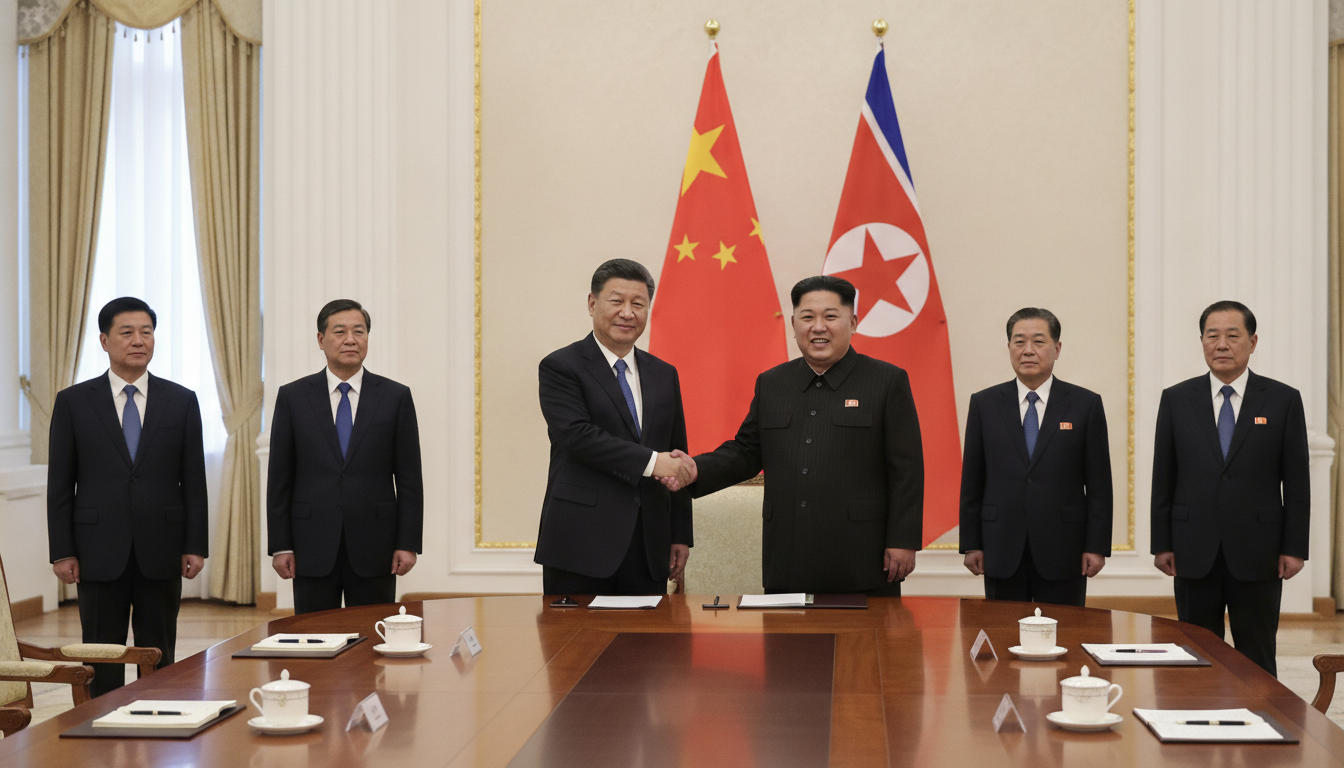
Xi Jinping meets Kim Jong Un in Pyongyang, signaling deeper China–North Korea ties
Xi Jinping met Kim Jong Un in Pyongyang on June 8, 2026, beginning a two-day state visit aimed at strengthening political, economic and security links between the neighbours. The rare summit, the Chinese leader’s first trip to North Korea in nearly seven years, included an official welcome and speeches emphasizing closer cooperation. (english.scio.gov.cn)
State visit reception and ceremony
Xi and his wife Peng Liyuan were met at Sunan International Airport by Kim Jong Un and his wife Ri Sol-ju in a publicly staged greeting that featured flags, a gun salute and floral presentations.
Televised footage released by state agencies showed Xi escorted through Pyongyang in a motorcade and welcomed with banners that framed the visit as a renewal of long-standing friendship. (scmp.com)
Leaders’ public statements and pledges
Ahead of the summit, Chinese state commentary described bilateral relations as entering a “new historical starting point,” language that Beijing and Pyongyang used to frame commitments on trade, cultural exchange and security cooperation.
Officials from both sides pledged to expand political exchanges and to deepen economic ties during talks intended to lay the groundwork for concrete follow-up measures. (marketscreener.com)
Security and geopolitical context
The visit comes as North Korea has strengthened ties with Russia and tested new weapons systems, developments that have complicated international efforts to address the peninsula’s nuclear programme.
Analysts say Beijing’s outreach is aimed at reasserting its influence over Pyongyang while managing the strategic challenge posed by Moscow’s closer relationship with the North. (apnews.com)
Economic cooperation and practical measures
Both governments signalled an appetite for reviving commerce and infrastructure links that were reduced during pandemic years and heightened diplomatic friction.
Discussion items reported by state outlets and regional media included reopening transport corridors, stepping up cross-border trade, and exploring joint projects intended to stabilise bilateral commerce and benefit border communities. (thediplomat.com)
Signals to Washington, Seoul and Tokyo
The summit is likely to be read across the region as a demonstration of Beijing’s intent to anchor Pyongyang within its strategic orbit even as the North pursues diversified partnerships.
Washington and allies in Seoul and Tokyo will be watching for any formal agreements that could alter the balance of economic leverage or that signal military cooperation beyond past understandings.
Regional and diplomatic implications
Observers say a closer China–North Korea alignment could complicate efforts to pursue denuclearisation negotiations, while simultaneously creating incentives for Beijing to manage escalation on the peninsula.
The visit is also expected to shape trilateral dynamics involving China, Russia and North Korea, with potential effects on sanctions enforcement, humanitarian access and regional security dialogues.
Xi’s short trip — publicly framed by both capitals as a renewal of historic ties — will be followed by scrutiny over whether pledges translate into measurable policy changes.
Signalling unity and mutual support, the leaders used the summit to reset a bilateral agenda that Beijing portrays as stabilising for northeast Asia even as external governments express concern about its security implications.
The talks in Pyongyang mark a high-profile moment in East Asian diplomacy as the two states move to expand cooperation amid shifting geopolitical alignments and persistent tensions over the North’s weapons programmes.

