
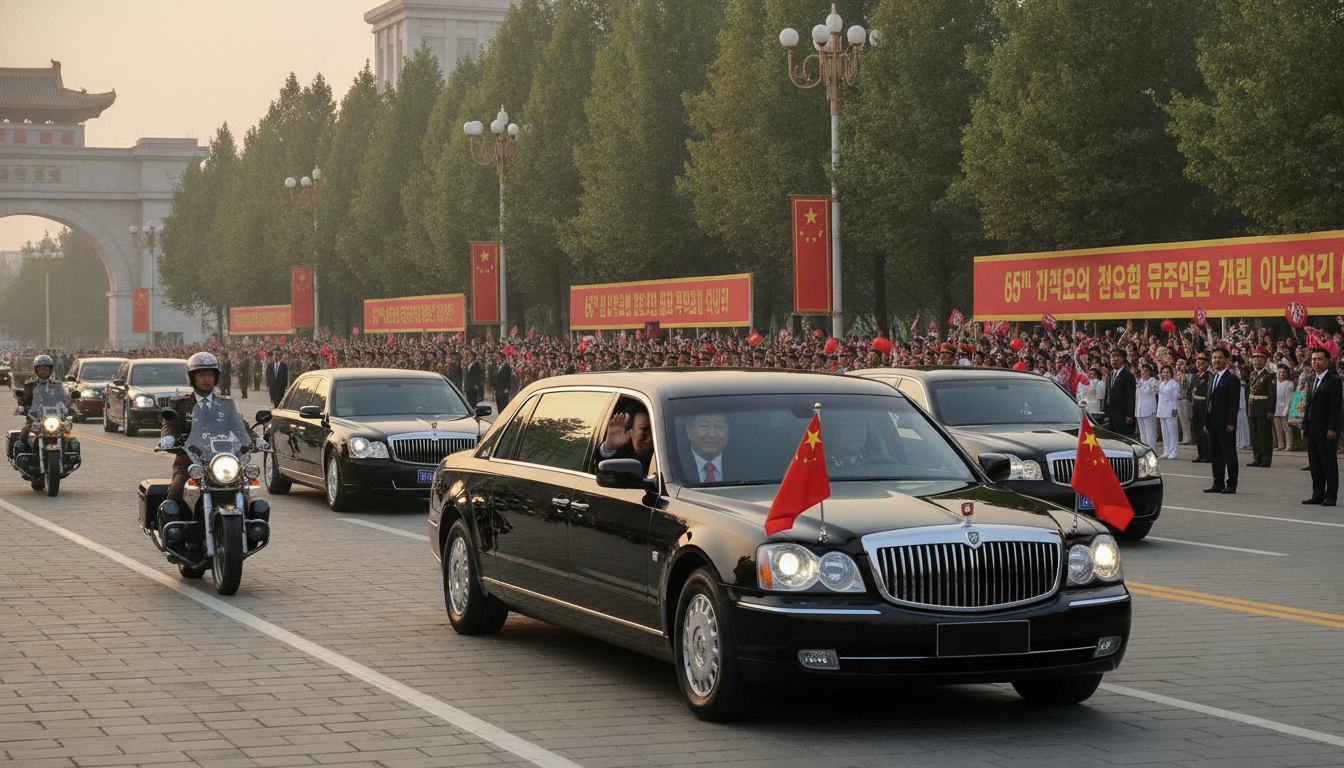
Xi Jinping visit to Pyongyang set for June 8–9, 2026, CCTV says
China’s Xi Jinping will visit Pyongyang on June 8–9, 2026, to mark the 65th anniversary of a bilateral treaty, CCTV announced with talks on ties and security.
Xi Jinping visit to Pyongyang was confirmed by Chinese state broadcaster CCTV on June 5, 2026, which said the trip will begin on June 8 and last for two days.
The announcement said President Xi accepted an invitation from North Korean leader Kim Jong Un and that the visit will mark the 65th anniversary of a bilateral treaty between the two countries.
The timing and format of the trip underscore Beijing and Pyongyang’s intent to present a steady relationship amid heightened regional tensions.
Xi Jinping to Visit Pyongyang on June 8–9, 2026
CCTV’s statement gave concrete dates for the visit, specifying a two-day programme beginning June 8, 2026.
Officials in Beijing have not released a detailed itinerary, but state media framed the trip as a diplomatic visit at the invitation of Kim Jong Un.
The announcement follows a pattern of high-level exchanges that China says are aimed at sustaining diplomatic and security dialogue with its neighbour.
Anniversary of the Bilateral Treaty Between Beijing and Pyongyang
Chinese and North Korean leaders will mark the 65th anniversary of their post-war bilateral treaty during the visit, according to the announcement.
That treaty has long been a symbolic foundation of the two countries’ official relationship, and the anniversary provides a public rationale for high-level meetings.
Observers say the anniversary framing allows both capitals to emphasize continuity while managing the optics of closer engagement.
Planned Bilateral Meetings and Agenda
Chinese state media said Xi will meet Kim Jong Un during the visit, but did not specify locations or additional participants.
Sources familiar with diplomatic practice say meetings are likely to include discussions on bilateral trade, border cooperation and mechanisms for high-level political consultation.
Both sides may also use the visit to coordinate messaging ahead of regional diplomatic calendars and international fora.
CCTV’s announcement indicated that officials expect to discuss “ties and security,” language that suggests a mix of political, economic and strategic topics.
Analysts caution that while ceremonial and symbolic elements will be prominent, Beijing and Pyongyang could aim for tangible agreements on economic assistance or cooperation in key sectors.
Any operational arrangements would have to navigate existing UN sanctions and international scrutiny.
Implications for Regional Security and Nuclear Talks
A visit by Xi to Pyongyang is likely to attract attention because of North Korea’s nuclear and missile programmes and their impact on East Asian security.
Beijing has repeatedly called for negotiations and restraint while opposing further escalation, and the visit gives China an opportunity to press for de‑escalatory language.
Diplomatic engagement between the two capitals may also be intended to shape Pyongyang’s posture toward potential resumption of multilateral or bilateral talks.
Reactions From Seoul, Tokyo and Washington
Regional capitals monitor any high-level China–North Korea engagement closely, and officials in Seoul and Tokyo are expected to issue assessments once details emerge.
Allies in Washington have previously urged close consultation over interactions that might affect deterrence or sanctions policy, and the U.S. State Department typically calls for transparency on substantive outcomes.
Diplomatic notes and public statements from these governments will be watched for indications of whether the visit alters coordination among Seoul, Tokyo and Washington.
Economic and Humanitarian Dimensions of the Trip
China remains North Korea’s largest trading partner and a key provider of energy and humanitarian assistance, and economic cooperation is likely to feature in talks.
Beijing has in the past balanced support for Pyongyang with adherence to UN sanctions, and negotiators must reconcile commercial interests with international obligations.
Any commitments on infrastructure, food or fuel would be closely scrutinized by both neighbouring governments and monitoring bodies.
The Xi visit to Pyongyang comes at a moment of sustained diplomatic activity across East Asia and is likely to be framed by both governments as reinforcing a long-standing bilateral relationship.
Observers will watch for concrete agreements or shifts in rhetoric that could influence regional diplomacy and the prospects for renewed dialogue on security issues.
As details of the itinerary and outcomes are released, capitals in Seoul, Tokyo and Washington are expected to respond with statements that reflect both concern and a call for clarity on next steps.

