
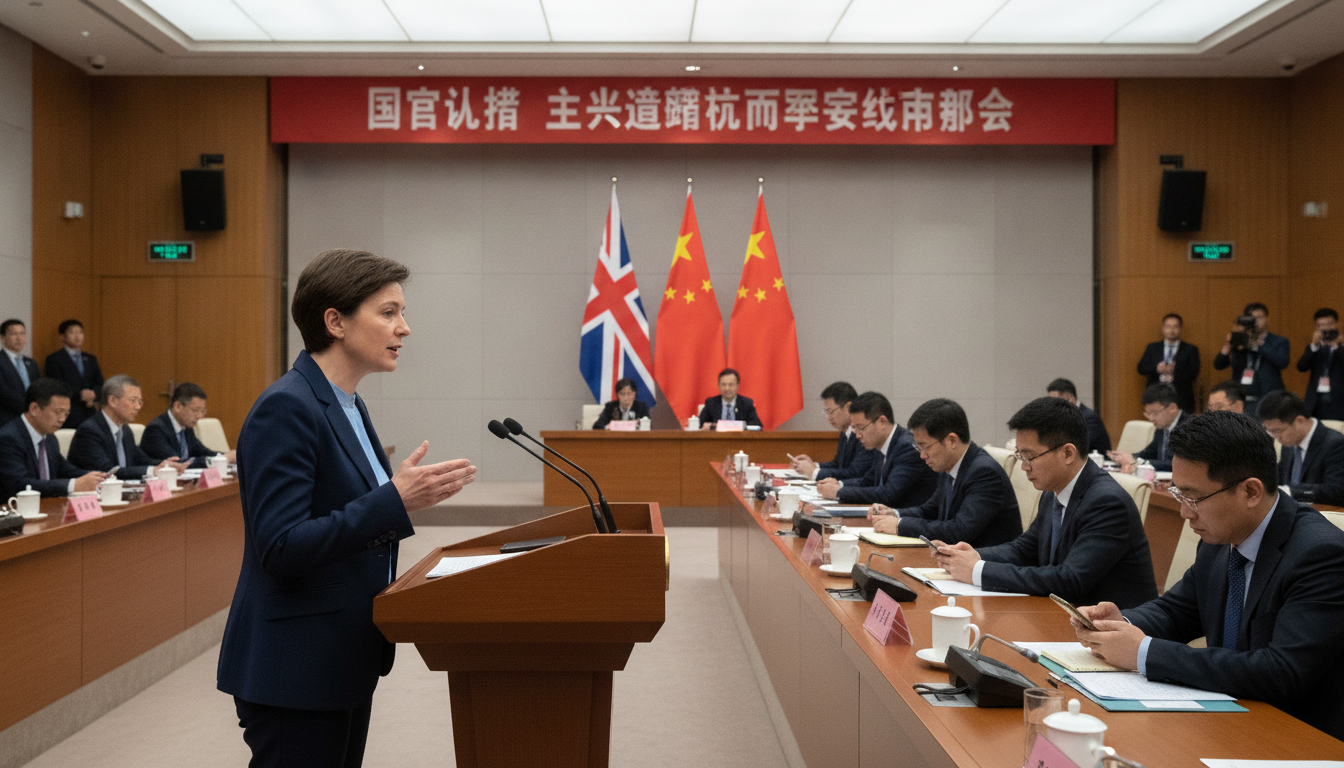
Yvette Cooper Urges Engagement with China While Pushing UK-India Trade Deal on Asia Visit
UK Foreign Secretary Yvette Cooper defended engagement with China during a three-day Asia trip and underscored the need to balance security and prosperity as she sought to keep the UK-India trade deal on track.
Yvette Cooper opened her visit by setting out a pragmatic stance toward Beijing, saying engagement was necessary for the United Kingdom’s security and economic interests. Her three-day trip included a stop in New Delhi where she held talks aimed at ensuring momentum on a landmark trade agreement with India. Cooper framed the approach as one that must align strategic caution with continued commercial ties.
Cooper’s statement on China
Yvette Cooper wrote on X that the UK must engage with China “for the U.K.’s security and prosperity in line with British values,” a line she repeated in meetings and public remarks. Her words signal a determination in London to avoid a simple binary of confrontation or appeasement, instead seeking engagement that preserves national interests.
The message seeks to reconcile competing pressures within British politics, where concerns over human rights and security sit alongside interest in trade and investment. Cooper’s formulation pushes a middle path: retain leverage and principles while keeping channels open for diplomacy and commercial interaction.
New Delhi stop focused on the trade agreement
While in New Delhi, Cooper concentrated on sustaining progress toward a comprehensive UK-India trade deal that British ministers have described as a priority for post-Brexit economic strategy. Officials said the talks were intended to iron out technical points and reassure Indian counterparts about timetable and outcomes.
The trade agenda underpins wider ambitions to deepen economic ties across Asia, attract investment, and diversify supply chains. For the UK government, advancing the India deal is both an economic imperative and a way to demonstrate an independent global trading posture.
Security implications and strategic balance
Cooper repeatedly linked engagement with China to broader security calculations, arguing that managing relations with Beijing is part of safeguarding the UK’s strategic interests. That balancing act reflects an assessment that economic interdependence and geopolitical rivalry must be handled in parallel.
Analysts note the challenge: sustaining trade and cooperation in areas such as climate and public health, while protecting critical infrastructure and upholding defence commitments with allies. Cooper’s language sought to signal to partners that the UK intends to combine firm security measures with pragmatic diplomacy.
Diplomatic outreach during a short Asia tour
The three-day itinerary was compact but aimed to cover multiple priorities, from commercial negotiations to security consultations and regional diplomacy. Cooper’s meetings in New Delhi were presented as part of a broader effort to engage Asian partners on issues ranging from trade to crisis management.
Officials framed the visit as both symbolic and practical: a signal that the UK remains active in Asia, and a chance to progress detailed negotiations. Cooper’s travel schedule was designed to show continuity in the government’s foreign policy while testing the diplomatic ground for future talks.
Responses from London and international partners
Reactions in Westminster were mixed but cautious, with supporters welcoming a clear policy line and critics urging vigilance on human rights and defence matters. British ministers and diplomats publicly emphasized coherence between values and interests, while privately acknowledging the complexity of China policy.
International partners in Asia have followed the UK’s signals closely, saying they value clarity about Britain’s intentions. For New Delhi, progress on the trade deal matters for market access and political ties; for other regional capitals, Cooper’s approach provides an indication of London’s longer-term engagement strategy.
Economic stakes for UK businesses and investors
For UK exporters and investors, the outcome of both engagement with China and a trade deal with India has practical consequences for market access and supply chain decisions. Businesses have lobbied for predictable rules and reduced barriers, arguing that clear bilateral agreements and stable relations support growth and jobs.
Cooper’s sequencing — managing relations with China while advancing a pact with India — is meant to reassure commercial stakeholders that the government seeks to protect economic interests without compromising national security. The final terms of any agreement and the manner of engagement with Beijing will be watched closely by corporate and financial communities.
Cooper’s Asia trip crystallized a central dilemma of contemporary British foreign policy: how to safeguard security and uphold values while remaining an active trading nation in a region that includes both partners and competitors. The Foreign Secretary’s statements and negotiations leave London with a strategy that emphasizes calibrated engagement, and the next round of diplomatic and technical talks will determine how effectively that approach translates into policy and deals.

