
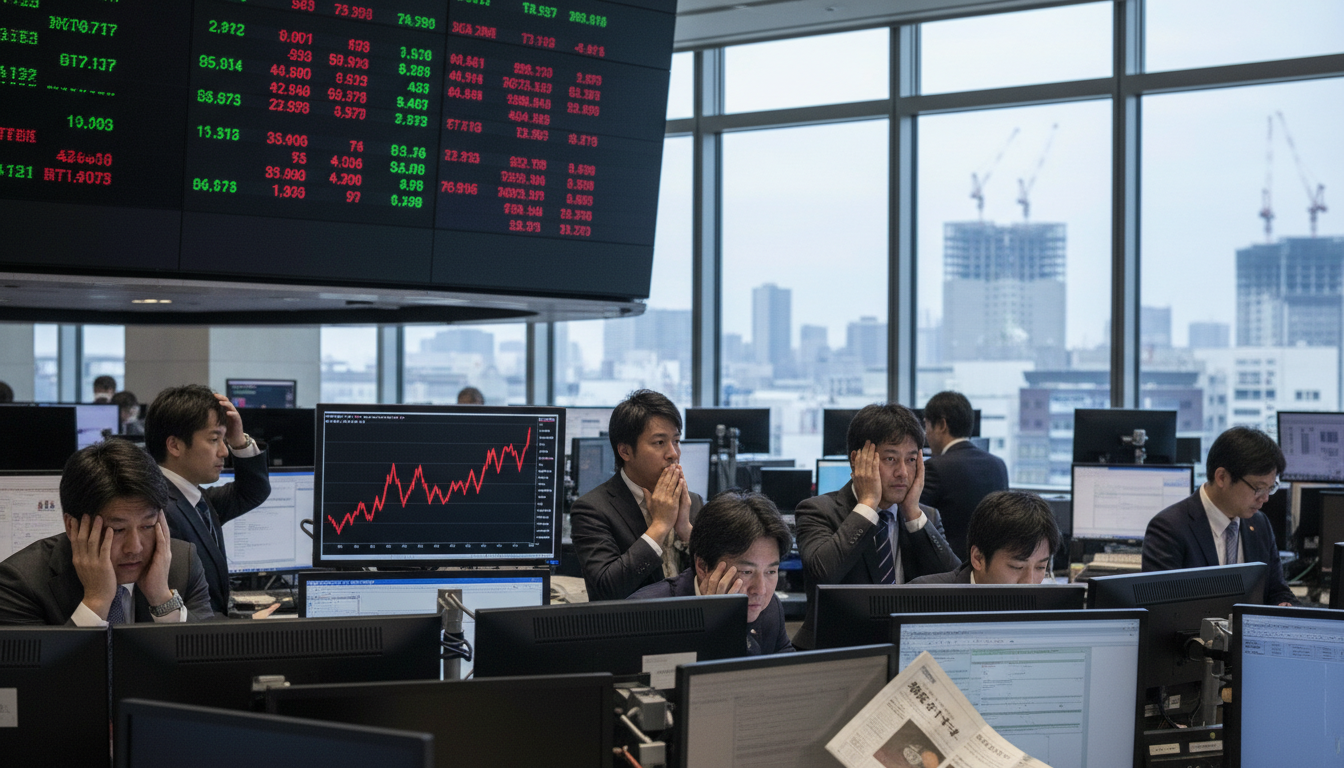
Japan 10-year JGB yield jumps to 2.8%, highest since 1996
10-year JGB yield rises to 2.8% on May 18, highest since 1996, as inflation and fiscal financing concerns push Japanese sovereign yields notably higher.
TOKYO — The 10-year JGB yield rose sharply to 2.8% on May 18, marking the highest level for that benchmark since October 1996 as investors sold Japanese sovereign debt. The jump reflected mounting concerns about persistent inflation and the impact of extensive government borrowing on financing costs. Market participants said the move accelerated selling across the curve and pushed longer-dated maturities higher.
Yields Surge to 2.8% on May 18
The 10-year JGB yield climbed roughly 10 basis points on the day to reach 2.8%, according to trading desks and market data. That level is the strongest in 29 years and underscores the speed of repricing as global and domestic forces push rates up.
Traders attributed the move to a combination of stronger-than-expected price pressures and heightened anxiety over Japan’s near-term fiscal trajectory. The scale of selling in government bonds was notable given the long period of subdued yields that followed decades of low-rate policy.
Investor Selling and Market Flows
Domestic and overseas investors accelerated sales of government securities, dealers said, seeking to reduce duration risk as yields moved higher. Pension funds and insurers, which hold large JGB positions, were reported to be rebalancing portfolios, adding supply to an already pressured market.
Cash and derivative markets both registered elevated volumes, with futures and swaps reflecting increased hedging activity. Market participants said the rapid rise in the 10-year yield prompted stop-loss and algorithmic selling that amplified intraday moves.
Upward Pressure Extends to 30- and 40-Year Debt
The upward pressure was not confined to the 10-year sector; yields on 30- and 40-year maturities also rose, steepening yields at the long end of the curve. Market sources noted that long-term benchmarks moved in sympathy as investors reassessed the trajectory of long-run financing costs.
Higher long-end yields raise questions about future issuance costs for long-dated government borrowing and the valuation of long-duration liabilities held by life insurers and pension schemes. Officials monitoring market functioning signaled they were watching the situation closely, though no immediate policy action was announced.
Policy Implications for the Bank of Japan
The sharp move in JGB yields has intensified scrutiny of the Bank of Japan’s existing policy framework, including yield curve control. Analysts said the BOJ will face pressure to clarify its reaction function as market prices shift, even as it maintains that policy settings remain accommodative to support the recovery.
Officials are likely to weigh a mix of verbal reassurance and targeted market operations to address disorderly moves, according to central bank watchers. Any sustained upward trend in yields could complicate the BOJ’s balance between supporting growth and responding to inflationary signals.
Government Financing and Fiscal Concerns
Rising yields increase borrowing costs for the government at a time of large planned issuance to finance stimulus and social spending. Finance ministry advisers have warned that a sustained increase in yields would add to debt-servicing burdens over time, potentially narrowing fiscal policy options.
For households and businesses, the pass-through from higher JGB yields to corporate borrowing rates and mortgage pricing could be gradual but meaningful. Market participants said lenders would watch longer-term wholesale rates closely when setting new loan conditions.
Markets will now look to upcoming inflation data, policy minutes and any statements from the BOJ and the finance ministry for cues on whether yields will settle or continue to climb. Investors said trading is likely to remain volatile as participants adjust to a new pricing regime for Japanese sovereign debt.

