
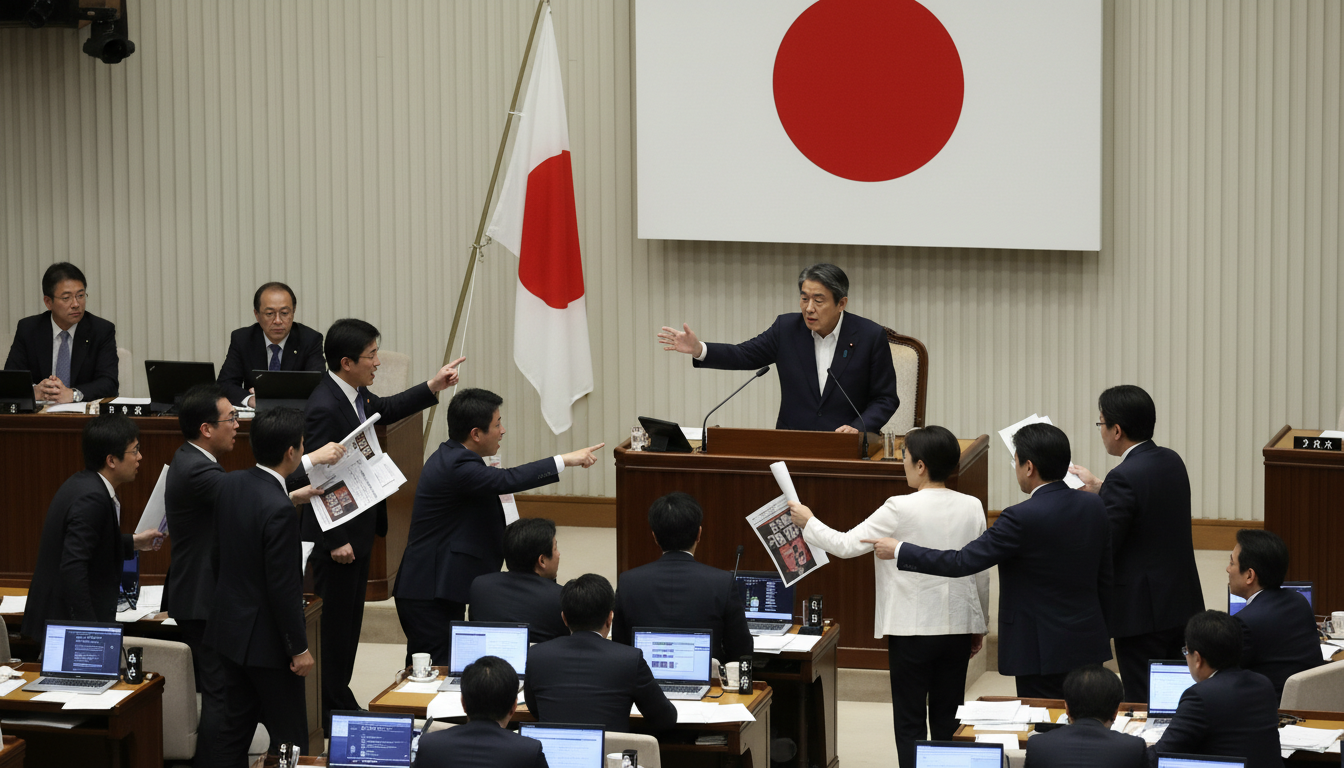
Ruling coalition advances national flag desecration law as Diet debate opens
Ruling coalition seeks a national flag desecration law in Japan, sparking debate over punishable acts, penalties, scope and protection of free expression.
The ruling Liberal Democratic Party and the Japan Innovation Party have begun internal deliberations to introduce a national flag desecration law in the current Diet session, a move described by supporters as necessary to protect national dignity. The proposed national flag desecration law is framed by proponents as correcting an inconsistency in the criminal code and reinforcing social norms established under the Flag and Anthem Law. Legal scholars and civil liberties advocates warn the initiative raises difficult questions about the boundary between criminal sanctions and constitutionally protected expression.
Political drivers and statements from government leaders
Prime Minister Sanae Takaichi and other conservative LDP figures have made the issue a priority, arguing a specific criminal provision would affirm the public’s respect for the national flag. At public appearances and media statements, LDP leadership framed the measure as responding to citizens’ feelings and bolstering national honor. The ruling coalition says it aims to submit legislation in the current Diet session, although details of the bill remain under negotiation within party project teams.
LDP policy chief Takayuki Kobayashi has urged lawmakers to consider how to protect public sentiment toward the flag, while party project briefings have sought input from the Ministry of Justice on possible formulations. Supporters emphasize symbolic and diplomatic considerations, but they have not yet settled on precise language to define prohibited conduct or intent requirements.
Historical precedent: why foreign-flag desecration is already penalized
Japan’s criminal code already contains an offence for damaging foreign national emblems, a provision that dates back to 1907 and was introduced in a historical context of safeguarding diplomatic relations. According to government briefings cited in party discussions, the foreign-flag provision was designed to prevent acts that could jeopardize Japan’s standing or provoke international incidents. Records show prosecutions under that statute have been rare.
Criminal law scholar Takahiro Eto of Momoyama Gakuin University points out the foreign-flag offence serves to protect Japan’s diplomatic position rather than act as a favour to another state. That distinction complicates simple comparisons with any proposed domestic flag offence, he says, and helps explain why the legal tradition has treated the two cases differently.
Legal design choices under debate inside the ruling bloc
A central legislative challenge is whether to require specific intent, such as an intent to insult, or to adopt a broader prohibition on acts like burning, tearing, removing or defiling the flag. Policymakers are also weighing whether any new offence should be a complaint-based offence, as is the case for foreign-flag damage, or prosecutable at the initiative of public prosecutors. Each option carries different implications for enforcement and for civil liberties.
Drafting questions include the definition of the protected object (flags only or also other national emblems), the range of prohibited acts, and whether exemptions should apply for artistic, academic or political expression. Lawmakers are discussing whether criminal sanctions are the appropriate instrument or whether administrative penalties and public education might better address societal concerns.
Constitutional freedom of expression and judicial scrutiny
Civil liberties groups and some legal scholars caution that criminalizing flag desecration risks colliding with the constitutionally guaranteed freedom of expression, particularly in the context of political protest. Japanese constitutional law has long recognized broad protections for expressive acts, and courts typically apply careful scrutiny when restrictions affect political speech. Any statute will therefore need precise limits to withstand judicial review.
Eto warns that vague or overly broad wording could chill legitimate dissent and artistic expression, leading to uncertain enforcement and possible constitutional challenges. Debate within the Diet is expected to focus on balancing respect for national symbols with robust protection of free expression under the Constitution.
Penalties, enforcement and international implications
Another unresolved issue is the appropriate penalty level and whether criminal sanctions would be effective or proportional. Proponents argue a penal provision would signal social disapproval and deter deliberate acts meant to humiliate national symbols. Opponents and some legal commentators question whether imprisonment or fines are necessary, or whether criminal penalties would be disproportionate to the social harm.
There are also diplomatic considerations: a domestic law that mirrors the foreign-flag offence could be seen as aligning domestic and international norms, but differences in enforcement approaches may carry reputational consequences. The ruling coalition’s project team has sought technical input from the Justice Ministry to assess these cross-border and prosecutorial implications.
Legislative timetable and likely hurdles ahead
The ruling parties have signalled an intention to move swiftly, aiming for action in the current Diet session, but internal disagreements and public consultation may delay any final bill. Opposition parties, constitutional lawyers and civil society organizations are likely to press for clarifications and safeguards during committee deliberations. Lawmakers must also decide whether to pursue a narrowly tailored statute or a broader criminal provision with built‑in exceptions.
As the debate proceeds, committee hearings and expert testimony are expected to shape the contours of any draft law. Observers say the key determinants will be the statute’s specificity on prohibited conduct, inclusion of intent elements, and explicit protections for legitimate expression.
The ruling coalition’s push for a national flag desecration law has opened a complex debate that reaches into constitutional protections, criminal law design and national identity. How lawmakers reconcile the aim of protecting the flag with the need to preserve free expression will determine whether any new statute survives political scrutiny and judicial review.

