
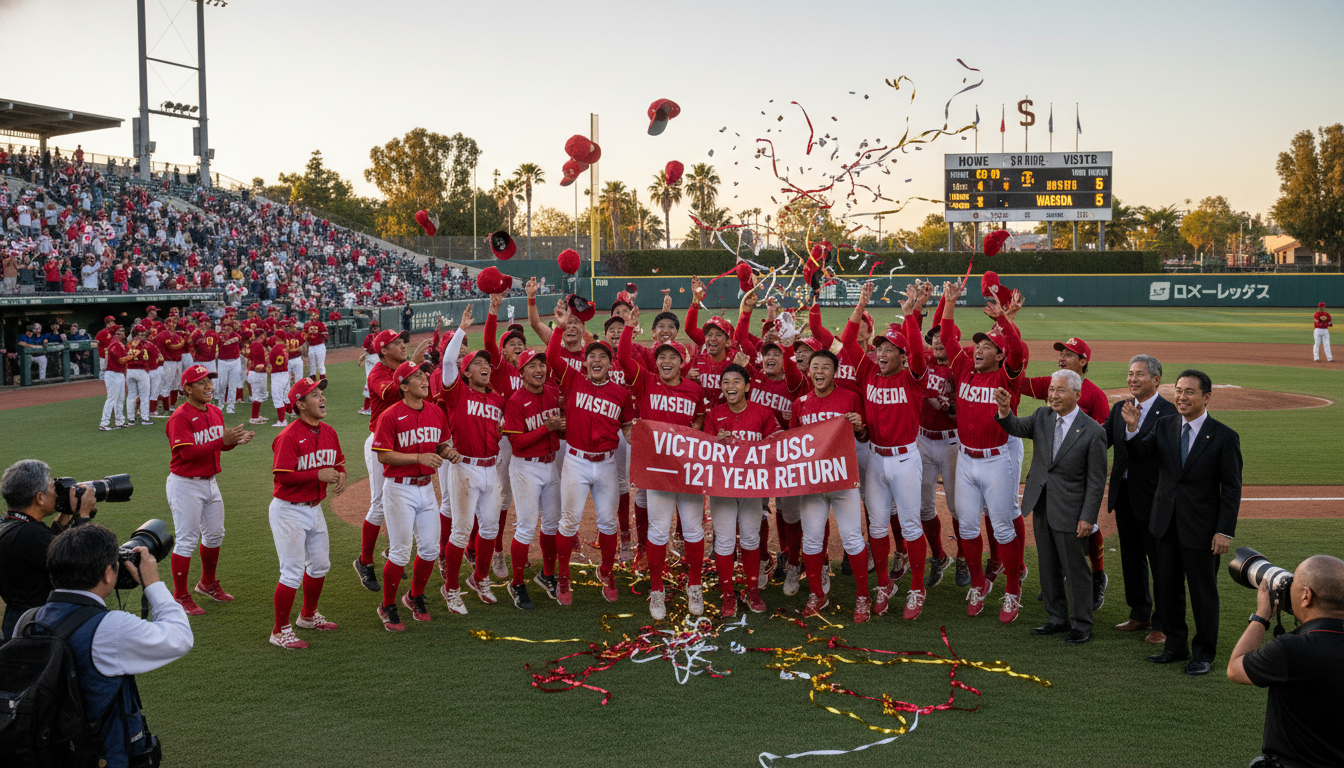
Waseda University baseball marks 121-year transpacific legacy in narrow exhibition win at USC
Waseda University baseball returned to California for a 14th U.S. goodwill tour, rekindling a 121-year cultural exchange that began with the team’s 1905 visit to Stanford and culminating in a 5-4 exhibition victory at USC’s Dedeaux Field.
Historic 1905 Visit to Stanford
On April 16, 1905, Waseda University became the first Japanese baseball team to play in the United States when it faced Stanford, an event that established the earliest formal sporting contact between Japanese universities and American collegiate athletics. The trip was intended primarily as a study tour to absorb American baseball technique, but it yielded unexpected cultural lessons for the visitors. Manager Isoo Abe returned home with vivid impressions of American student traditions, particularly the prominent use of flags and organized chants at football games. Those visual and vocal elements would later be adapted and woven into Japanese university sports culture, influencing how fans support teams across the country.
Exhibition at USC Rekindles Transpacific Links
On a warm evening at USC’s Dedeaux Field, the visiting Waseda University baseball team edged the USC Trojans 5-4 in an exhibition that mixed competitive play with ceremonial significance. The matchup served as the latest stop on Waseda’s 14th U.S. Goodwill Tour, a program that combines athletic competition, cultural outreach, and alumni engagement. While the scoreboard settled the contest, many in the stands were watching a broader narrative unfold — a living thread between the two nations that spans more than a century. The event drew students, alumni and local baseball fans who came to witness both sport and shared history.
From Sideline Chants to Stadium Culture
Those sideline traditions observed by Isoo Abe in 1905 would not remain a curiosity for long; they were absorbed and reinterpreted by Japanese university communities in subsequent decades. The large, coordinated flags and rhythmic chants became staples of university support groups and were adapted to fit the aesthetics and social structures of Japanese campuses. This exchange helped shape a distinctly Japanese form of spectator culture that blends disciplined choreography with passionate vocal support. Over time, such practices have become closely associated with college baseball and other university sports across Japan.
14th U.S. Goodwill Tour Returns to California
The tour’s return to California underscores Waseda’s long-term commitment to international engagement through sport, with the current itinerary emphasizing both competition and cultural exchange. The Goodwill Tour, now in its 14th iteration, brings student-athletes to American campuses to compete, study, and build ties with alumni living abroad. Organizers frame the tours as opportunities for on-field development and off-field diplomacy, allowing players to experience different styles of play while reinforcing institutional bonds. The California stops, in particular, carry symbolic weight given the state’s historical role in the early 20th-century exchanges that seeded Japan’s university sports traditions.
Impact on Players and Fans
For players, the tour offers exposure to varied coaching philosophies and game tempos that can inform seasonal preparation back home. Visiting student-athletes gain not only technical experience but also the chance to observe fan organization and stadium atmosphere in person. Fans attending the Dedeaux Field exhibition found themselves part of a narrative that extends beyond a single game; many spectators were unaware they were witnessing a ritual that traces back to 1905. The continuity between past and present resonated with older alumni and younger supporters alike, illustrating how sport can serve as a repository of institutional memory.
Institutional and Cultural Significance
Waseda’s sustained participation in U.S. tours reflects broader trends in university-level internationalization, where athletics function as a platform for cultural diplomacy. The transplantation of specific fan customs from American football into Japanese baseball culture highlights the two-way nature of these exchanges: technical practices travel alongside social and ceremonial behaviors. Such adaptations have contributed to the unique character of Japanese university sports, where collective identity and fan ritual often take center stage. Institutional leaders on both sides have used these tours to strengthen alumni networks and promote educational ties.
Waseda’s evening victory at USC thus reads as more than a single result; it is a contemporary chapter in a long-running story of sporting connection between Japan and the United States. The game reaffirmed historical links first formed in 1905 while signaling that university sport remains an active arena for cultural exchange and institutional outreach.

