
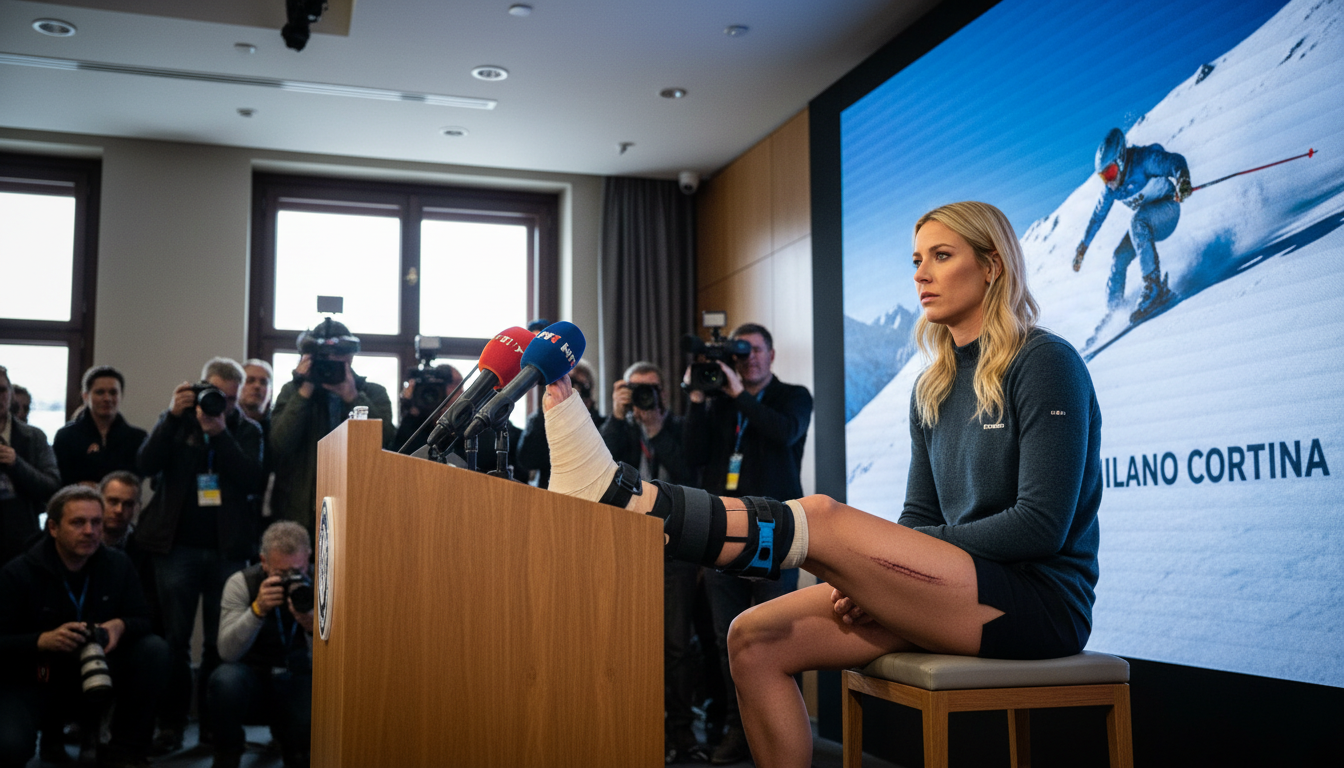
Lindsey Vonn unsure about return to racing after Milano Cortina crash
Lindsey Vonn unsure about return to racing after severe leg injuries at the Milano Cortina Olympics, including a complex tibia fracture and a prior ACL tear.
Three-time Olympic medalist Lindsey Vonn said on Wednesday she is uncertain whether she will make a Lindsey Vonn return to competitive ski racing after suffering serious injuries at the Milano Cortina Olympics. The 41-year-old is still processing the fallout from a frightening downhill crash on Feb. 8, 2026, that left her with a complex tibia fracture and required an airlift from the slope. Vonn’s statement underscored the gravity of back-to-back injuries that have left her future in the sport undecided.
Vonn Leaves Future Open After Olympic Crash
Vonn told reporters she has not ruled anything in or out, describing the decision as one she is still working through personally and medically. The uncertainty follows a dramatic incident on the Olympic downhill course that ended with emergency evacuation and intensive early treatment. Her comments mark a pause in a decorated career as she and her medical team evaluate long-term options.
Crash Details and Emergency Response
The crash occurred during the downhill event at the Milano Cortina Winter Olympics on Feb. 8, 2026, when Vonn lost control at high speed and tumbled before coming to rest on the course. Medical personnel assessed a complex fracture of the tibia and moved quickly to stabilize her on-site before she was airlifted to a nearby hospital. Early reports after the accident indicated the injury was severe enough that surgical intervention was required and that there were moments when amputation was discussed as a possibility.
Sequence of Injuries in Short Span
The downhill injury came just nine days after Vonn sustained a torn anterior cruciate ligament in a World Cup crash, compounding the physical toll in a matter of days. That earlier ACL tear had already placed her in a vulnerable medical state and intensified concerns when the subsequent fracture occurred. The rapid succession of serious injuries has complicated rehabilitation planning and raised difficult questions about recovery timelines and future competition.
Medical Treatment and Rehabilitation Outlook
Doctors treating complex tibia fractures typically consider multiple surgeries, lengthy immobilization, and extensive physical therapy before returning to high-impact sports, and Vonn’s case appears to follow that pattern. The fact that amputation was contemplated underscores both the severity of the fracture and the risk of complications such as infection or compromised blood flow. Medical teams will likely monitor healing with repeated imaging and adjust surgical and rehabilitation plans as Vonn progresses.
Potential Impact on Career and Legacy
Vonn’s hesitation about a Lindsey Vonn return reverberates beyond her own career, given her status as one of the most successful U.S. alpine skiers and a three-time Olympic medalist. Her achievements have made her a high-profile figure in skiing and a prominent voice on athlete safety and recovery, so her decisions will be closely watched by peers and the broader skiing community. A return to competition would require not only full physical recovery but also confidence in performance and long-term health, factors that elite athletes weigh carefully.
Reactions Within the Skiing Community
Fellow athletes, coaches and national federations have expressed concern and support since the crash, noting the inherent dangers of downhill racing and the resilience required after major injury. The incident has reignited conversations about course safety, protective equipment and medical readiness at major events. While many colleagues have offered messages of encouragement, the community recognizes that each athlete’s path back to competition — if any — is highly individual.
Vonn’s statement that she is “still processing” the crash and its aftermath reflects the personal and professional crossroads she faces. As she and her medical team continue evaluations and rehabilitation, the possibility of a return to racing remains open but uncertain, with patient recovery and long-term health as the guiding priorities.

