
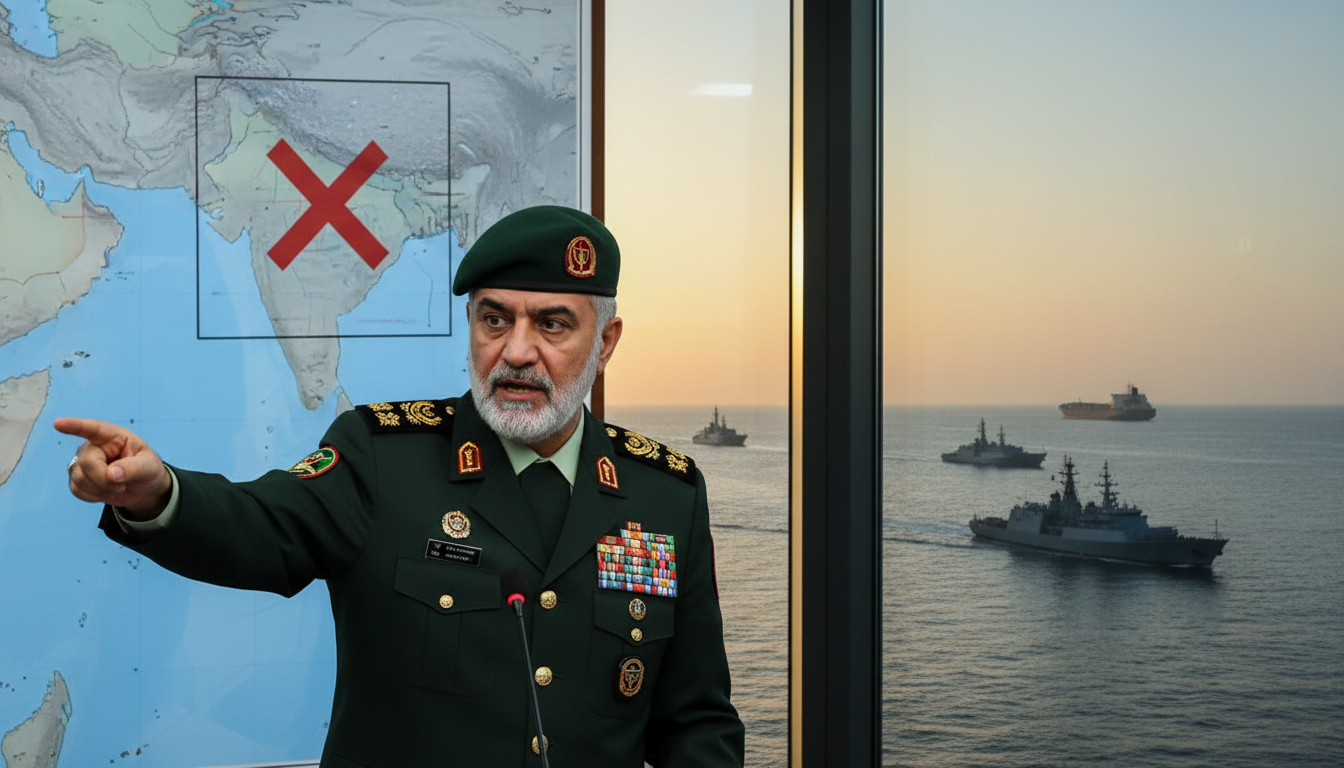
IRGC Declares Strait of Hormuz Closed Until U.S. Ends Blockade of Iranian Ports
IRGC says the Strait of Hormuz will remain closed until the US ends its blockade of Iranian ports, raising immediate concerns for global shipping and energy markets.
The Islamic Revolutionary Guard Corps (IRGC) announced on 19 April 2026 that the Strait of Hormuz will remain closed to navigation until the United States lifts what the Iranian force called a blockade of Iranian ports. The declaration, released in a statement attributed to IRGC commanders, came amid heightened tensions between Tehran and Washington and was described as an open-ended measure.
The announcement directly names the Strait of Hormuz as the focal point of the action, a development that could disrupt seaborne trade and oil shipments that routinely transit the waterway. Authorities did not provide a timetable for reopening or operational details for how the closure would be enforced.
IRGC Announcement and Immediate Operational Impact
The IRGC stated that the closure is conditional on the United States ending operations it described as a blockade of Iranian ports. The statement framed the move as a response to what the IRGC characterized as economic coercion and a threat to Iran’s sovereign rights.
Ports and shipping companies operating in the Persian Gulf were said to be on alert after the announcement, with commercial operators reportedly reviewing routing and insurance arrangements. Shell companies, insurers and charterers typically respond quickly to such statements; the practical effect could be immediate increases in freight rates and insurance premiums for Gulf transits.
U.S. Blockade Accusation and Tehran’s Position
The IRGC’s statement accused the United States of an effective blockade designed to restrict Iran’s maritime commerce, but offered few operational specifics beyond the closure ultimatum. The force linked any reopening of the strait directly to an end to those U.S. actions.
Tehran’s central government and civilian ministries did not issue a separate, detailed policy statement at the time of the IRGC release, leaving uncertainty over whether the closure represents a coordinated national policy or a measure asserted by Iran’s parallel security apparatus. External diplomats and shipping operators remain attentive to any clarifying remarks from Iran’s foreign ministry or government offices.
Implications for Oil Flows and Global Trade
The Strait of Hormuz is a critical maritime chokepoint for global energy supplies, and any extended interruption of traffic would carry immediate economic consequences. Even the threat of closure tends to push commodity traders and shipping firms to reassess risk, potentially amplifying oil price volatility and disrupting refined product supplies.
Longer detours around the Arabian Peninsula or shipments re-routed over land would add transit time and cost to cargoes that normally pass through the strait. Market observers have historically treated the security of the Hormuz corridor as a bellwether for energy market sentiment, and announcements of this nature often trigger rapid adjustments in futures and freight markets.
Regional Security Responses and Naval Postures
Regional navies and international naval task forces that operate in the Gulf face complex choices when a major maritime artery is declared closed by a non-state or state-aligned military body. Naval deployments, freedom-of-navigation operations and convoy arrangements are among the measures that states may consider to safeguard commercial passage.
Commercial operators typically seek guidance from classification societies and P&I (protection and indemnity) clubs when security conditions change, and shipowners may opt to postpone calls, alter cargo plans or suspend transits until risk assessments are updated. The logistics of crew changes, bunkering and port calls in the region could become more complicated if the situation remains unresolved.
Diplomatic Stakes and International Monitoring
At the time of the IRGC announcement, international capitals and multilateral organizations were reported to be monitoring developments closely and calling for de-escalation. Diplomatic channels often become the principal forum for resolving such standoffs, though progress depends on whether the parties are willing to negotiate on the specific conditions cited by Tehran’s security forces.
Any sustained blockage of the Strait of Hormuz would likely prompt emergency consultations among oil-consuming nations, shipping industry stakeholders and insurers. The broader diplomatic question centers on whether the IRGC’s demand—termination of the U.S. actions described as a blockade—can be credibly addressed through negotiation or verification mechanisms.
The near-term trajectory will depend on further public statements and actions by Tehran and Washington, as well as responses from regional governments and commercial maritime actors. Observers will watch for clarifications from Iranian civilian authorities and for any operational steps taken by navies or shipping firms that would indicate whether the declaration is being enforced in practice.

