
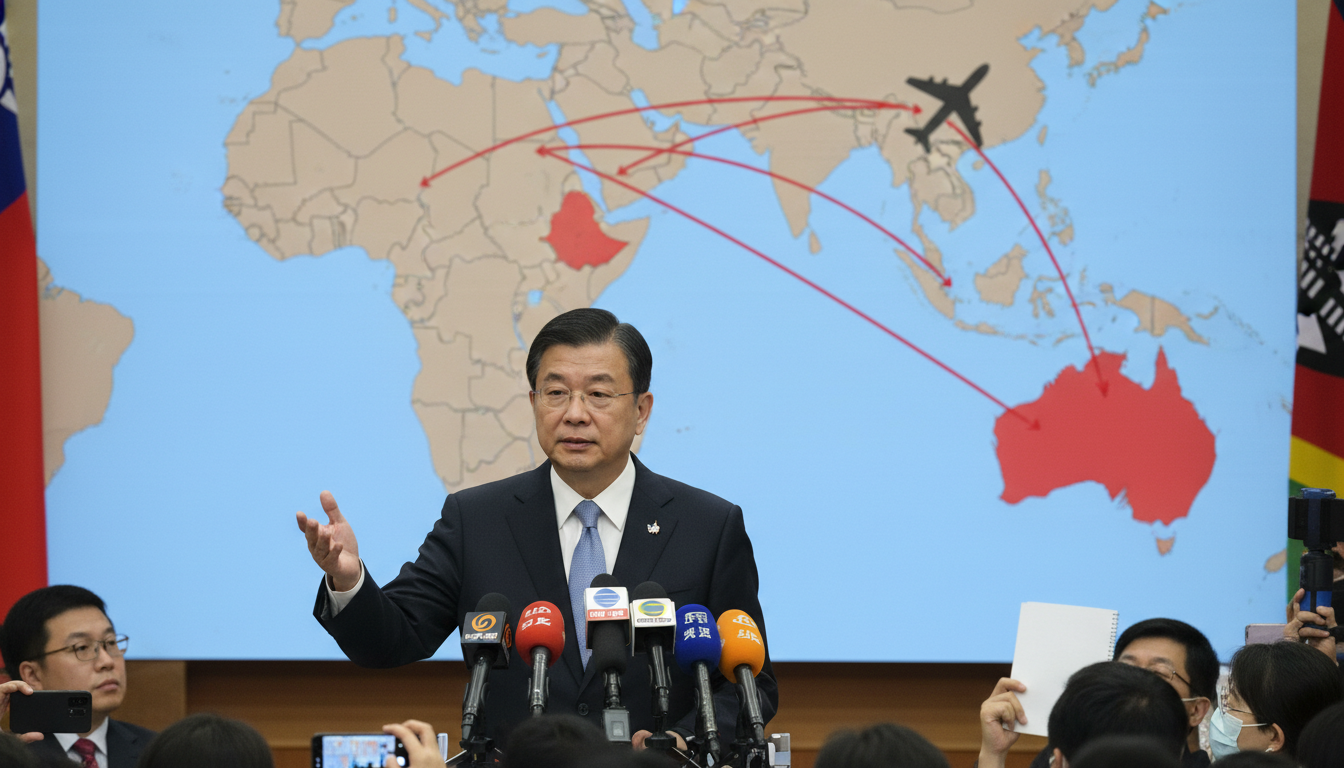
Taiwan tensions deepen as President Lai cancels Eswatini trip, blames third-party blocking of flight plan
Taiwan tensions: President Lai Ching-te canceled a planned visit to Eswatini after Taipei accused three countries of blocking the presidential flight plan, citing Chinese pressure.
Lai calls off Eswatini trip amid alleged flight obstruction
Taiwan President Lai Ching-te abruptly canceled a scheduled visit to Eswatini, his office announced on Tuesday, attributing the decision to interference that disrupted the planned flight route. The presidential office said Taipei had identified three countries that it accused of blocking the flight plan, making the journey untenable. The cancelled trip was to Eswatini, one of Taipei’s few remaining official diplomatic partners in Africa. The move marks a sharp escalation in Taiwan tensions over Beijing’s international influence and the vulnerability of air corridors to diplomatic pressure.
Presidential office outlines operational breakdown
Taipei’s statement described logistical and regulatory barriers that undermined the safety and coordination of the presidential flight, though it did not provide a full technical breakdown. Officials said attempts to secure clearances and alternative routings encountered refusals that could not be resolved within the time available for the trip. The administration emphasized that the decision to cancel prioritized the president’s safety and the integrity of Taiwan’s diplomatic missions. Government spokespeople framed the incident as part of a broader pattern of pressure exerted against Taipei.
Taipei accuses three countries without naming them
The government has publicly accused three unnamed countries of obstructing the flight plan but stopped short of releasing detailed evidence or naming the states involved. Analysts note that naming third parties can carry significant diplomatic consequences, and the administration may be weighing operational security against political transparency. International aviation experts say flight-plan denials, airspace rerouting and overflight refusals are rare for heads of state but can be used as instruments of statecraft. Taipei’s reluctance to disclose the identities of the accused countries ensures ambiguity while signaling a serious complaint to global audiences.
Eswatini’s diplomatic significance to Taipei
Eswatini is one of a small number of countries that maintain formal diplomatic relations with Taiwan, giving the planned visit symbolic and practical value. For Taipei, state-level engagements reinforce bilateral development cooperation, aid programs and political recognition on the international stage. For Eswatini, hosting Taiwan’s president would have reinforced its own diplomatic profile and cooperation projects. The cancellation therefore carries political weight for both capitals and raises questions about the stability of such ties under external pressure.
Beijing’s posture and the broader diplomatic contest
China routinely opposes official exchanges between Taiwan and countries that maintain formal ties with Beijing, viewing such interactions as challenges to its “one-China” policy. Taipei’s allegation that third parties disrupted a presidential flight feeds into long-running diplomatic contention over recognition and influence. Beijing has in recent years intensified economic and diplomatic measures to limit formal interactions between Taiwan and other states. Observers say the episode underscores how geopolitical rivalry can extend into operational domains like airspace management and travel logistics.
Regional and international implications
The cancellation may prompt reactions from allied and partner capitals, which often monitor moves that affect cross-strait stability and regional security. Countries that facilitate diplomatic travel or aviation clearances could face scrutiny over neutrality and compliance with international norms. The incident could also prompt Taiwan to reassess contingency planning for high-level travel, including alternative routing, coordination with friendly air traffic authorities, and public diplomacy strategies. International aviation bodies typically urge transparency and coordination for state flights, but enforcement mechanisms are limited when political considerations intervene.
Domestic political response in Taiwan
Within Taiwan, opposition parties and civic groups may press the government for more detailed explanations and evidence of the alleged interference. Some lawmakers are likely to call for stronger safeguards for presidential travel and clearer protocols to prevent similar disruptions. The administration will face pressure to demonstrate that it can both protect national dignity and maintain the practical benefits of diplomatic ties. How Taipei balances disclosure with operational discretion could shape public sentiment and political debates ahead.
The cancellation of President Lai’s Eswatini visit highlights how Taiwan tensions now extend beyond diplomatic statements and economic measures into the practicalities of international travel and aviation management, raising fresh questions about the reach of geopolitical pressure and the resilience of Taiwan’s external relationships.

