
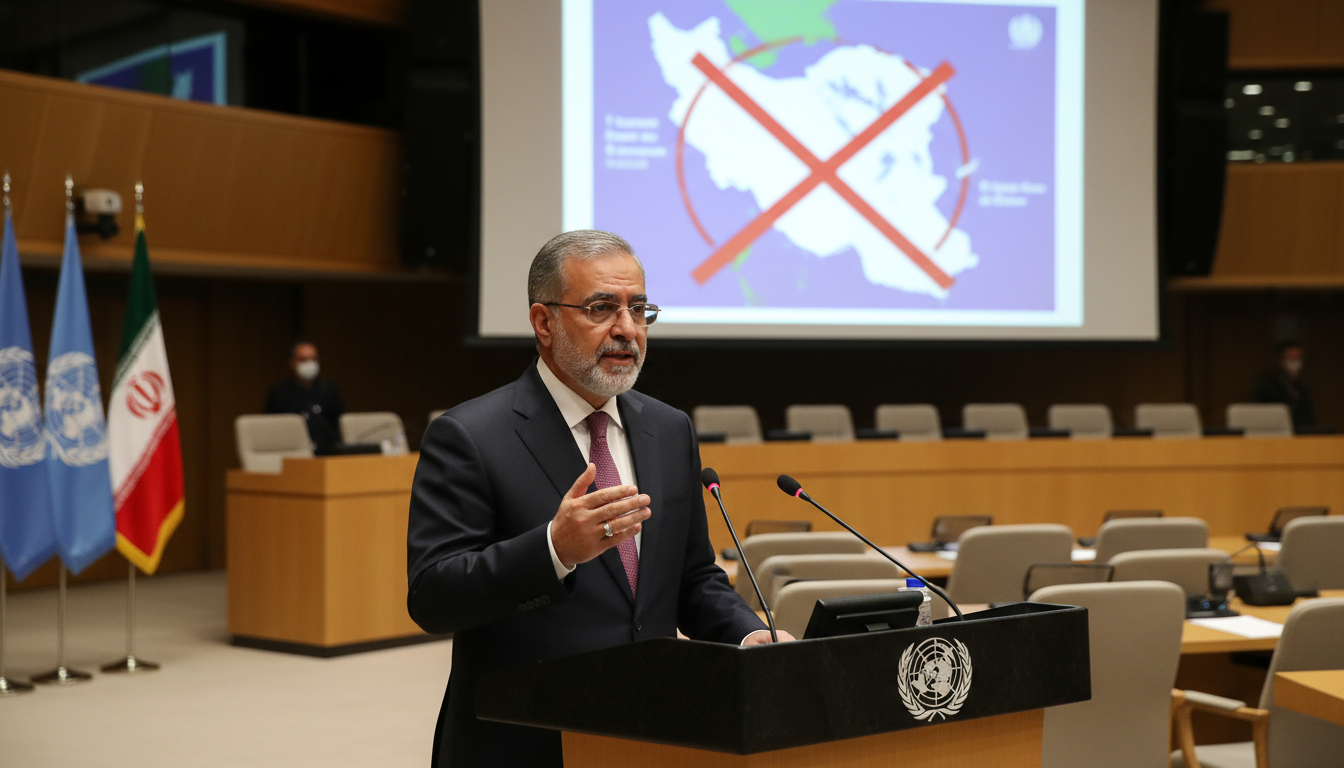
Iran Refuses Negotiations with US Unless Naval Blockade Is Lifted, UN Ambassador Says
Iran’s UN ambassador says Tehran will not resume talks while the US maintains a naval blockade, rejecting President Trump’s ceasefire extension and keeping diplomatic prospects uncertain.
President Donald Trump announced an indefinite extension of the ceasefire with Iran on April 21–22 but said US forces would continue a naval blockade on Iranian ports as part of a broader pressure campaign. Iran’s permanent representative to the United Nations, Amir‑Saeid Iravani, responded that Tehran will not enter negotiations unless the blockade is lifted, calling the maritime measures a violation of the truce and a precondition for any talks. (apnews.com)
Trump extends ceasefire while military keeps pressure
President Trump framed the decision to prolong the pause in fighting as a chance for diplomacy, saying he acted at the request of Pakistani mediators and would “hold” planned strikes pending a unified Iranian proposal.
Despite the extension, White House statements and Trump’s own messages stressed that US forces would remain poised and that a naval blockade of Iranian ports would continue, signaling a mix of restraint and sustained coercion. (axios.com)
Iran’s UN envoy demands blockade lifted before talks
Amir‑Saeid Iravani told reporters that Tehran would only return to a negotiating table after Washington ended the naval blockade, reiterating that the seizure of ships and port restrictions amounted to a breach of the ceasefire.
He said that if the United States removed the blockade, Iran was prepared to hold the next round of talks in Islamabad, a venue that has been floated by mediators as neutral ground. (apnews.com)
Naval incidents amplify distrust and raise stakes
The diplomatic impasse follows high‑profile maritime incidents, including the US Navy’s recent seizure of an Iranian‑flagged vessel near the Strait of Hormuz, which Washington said was attempting to evade the blockade.
Tehran condemned the action as an act of aggression and warned of potential responses, deepening mutual mistrust at a moment when negotiators had hoped a pause could create space for a political solution. (apnews.com)
Pakistan’s mediators and the stalled Islamabad plan
Pakistani intermediaries — including military chief Field Marshal Asim Munir and Prime Minister Shehbaz Sharif — were cited by Washington as having urged the US to hold off on further strikes and allow more time for talks to form.
But with Iran insisting on the lifting of the blockade as a non‑negotiable condition, plans for a Pakistan‑hosted round of negotiations remain on hold and the proposed trip by US officials to Islamabad was paused. (axios.com)
Regional economic and security ripple effects
Market indicators reacted to the uncertainty: precious metals and oil benchmarks showed volatility as traders weighed the risk of further disruptions to shipping in the Gulf and potential retaliatory measures.
Regional actors have warned that continued maritime pressure could prompt countermeasures that would threaten commercial traffic through the Strait of Hormuz, a critical chokepoint for global energy supplies. (aa.com.tr)
Diplomatic pathways and the mechanics of a return to talks
Diplomats say resolving the impasse will require a clear sequence of concessions and confidence‑building measures, with the blockade’s status central to Iran’s willingness to engage.
Analysts note that even with a ceasefire extension, durable progress will depend on verifiable steps addressing security, maritime freedom of navigation and guarantees that any agreement will be enforceable. (washingtonpost.com)
For now, the standoff centers on a single, tangible demand: Tehran has made ending the US naval blockade a prerequisite for rejoining formal negotiations, and Washington has tied the blockade to its broader leverage strategy, leaving the fragile pause in hostilities vulnerable to further erosion if either side moves unilaterally.

