
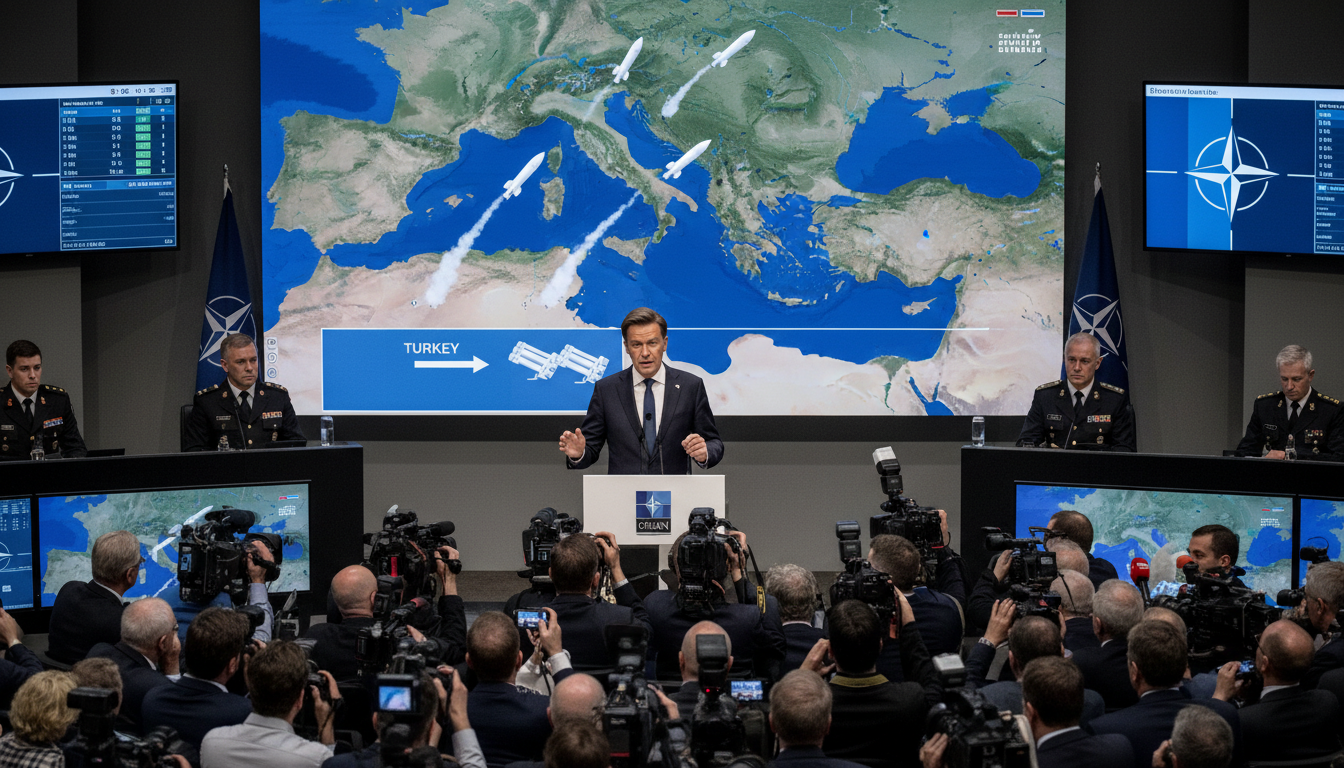
NATO intercepts Iranian missiles over Turkey as alliance strengthens air defences
NATO intercepts Iranian missiles over Turkey; alliance shoots down four ballistic missiles, deploys Patriot battery at Incirlik and pledges collective defence ahead of July summit.
Turkey has seen NATO intercept ballistic missiles fired from Iran on multiple occasions in recent weeks, NATO chief Mark Rutte said, as the alliance moves to reinforce air defences and reassure a frontline member. NATO intercepts Iranian missiles over Turkey has become the central security concern cited by Rutte during a visit to the Turkish defence electronics firm Aselsan, where he reiterated that the alliance will “do what is necessary to defend” its members. The incidents prompted the deployment of a new Patriot missile battery to Incirlik air base in southern Turkey, underscoring an urgent shift in NATO’s posture on its southeastern flank.
Four ballistic missiles intercepted heading toward Turkish airspace
NATO officials confirmed that forces shot down ballistic missiles fired from Iran on four separate occasions in recent weeks, preventing incursions into Turkish airspace. The interceptions were described by Rutte as successful defensive actions carried out by coalition assets to protect Turkish territory and civilians. Turkish officials have not reported large-scale damage from these strikes, and authorities emphasize that rapid detection and engagement were critical to averting escalation.
Patriot battery positioned at Incirlik to bolster defences
In response to the missile threats, NATO deployed a Patriot air defence battery to Incirlik air base in southern Turkey, a strategic site that hosts both Turkish and allied assets. The Patriot system is intended to enhance missile detection and interception capabilities in the region and to provide a visible deterrent against further launches. Military planners say the deployment aims to reassure Turkey and complement existing NATO air and missile defence layers across southeastern Europe.
Rutte visits Aselsan and praises Turkish defence industry
During his visit to Aselsan, Turkey’s largest defence electronics company, Rutte commended recent advances in Turkish defence production and described the sector’s growth as a “defence industrial revolution.” He suggested that NATO can learn from Turkey’s investments in defence technology while stressing that collective capability remains essential. The remarks came as Rutte prepared for scheduled meetings with Turkish leaders, including President Recep Tayyip Erdogan, to discuss both industrial cooperation and shared security challenges.
NATO stresses collective defence and readiness
Rutte emphasized that NATO is prepared to meet threats and will act to defend all members, stressing the importance of collective readiness and burden-sharing. He acknowledged that the alliance “cannot do it alone” and called for continued cooperation among member states to sustain deterrence and defence operations. NATO officials say the intercepts and subsequent deployments are intended to demonstrate resolve and to prevent destabilizing actions from spreading to neighbouring states.
Diplomatic timing ahead of July NATO leaders’ summit in Ankara
Rutte’s visit to Turkey comes ahead of a NATO summit scheduled for July in Ankara, where leaders are expected to address alliance security, regional tensions and defence industrial collaboration. The recent missile incidents are likely to feature prominently on the summit agenda, shaping discussions about deterrence, missile defence architecture and burden-sharing. Turkish officials have framed the summit as an opportunity to highlight Turkey’s role on the alliance’s southeastern frontier and to seek further allied support.
Regional analysts caution that the interceptions and deployments reflect a wider deterioration of security dynamics in the area, with implications for neighbouring countries and maritime routes. While Turkey has avoided the direct aftermath of some retaliatory strikes that affected Gulf states earlier, the proximity of launches and the potential for miscalculation have raised concerns among NATO capitals. Military and diplomatic channels remain active as alliance members coordinate intelligence, air-defence assets and contingency plans.
The recent developments have underscored the dual nature of the response: kinetic defensive measures to protect airspace, and diplomatic engagement to manage escalation risks. NATO officials argue that visible defence measures like the Patriot deployment serve both to defend territory and to buy time for political solutions. Turkish officials continue to balance domestic security imperatives with broader regional diplomacy as the July summit approaches.
Longer-term questions include how NATO will adapt its missile-defence posture on the alliance’s southeastern flank and how member states will share costs for sustained deployments. Military planners are reviewing sensor coverage, interceptor allocations and command arrangements to ensure continuous protection without creating gaps elsewhere in NATO’s integrated air-defence network. Defence industry ties between Turkey and other allies, spotlighted during Rutte’s visit to Aselsan, may factor into capability planning and sustainment.
As leaders prepare for high-level talks in Ankara, NATO’s message is clear: safeguarding member states from missile threats remains a priority, and the alliance is taking tangible steps to reinforce Turkey’s defences. The intercepts of missiles fired from Iran and the subsequent reinforcement measures reflect an alliance recalibrating to immediate threats while preparing for broader diplomatic and operational challenges in the months ahead.

