
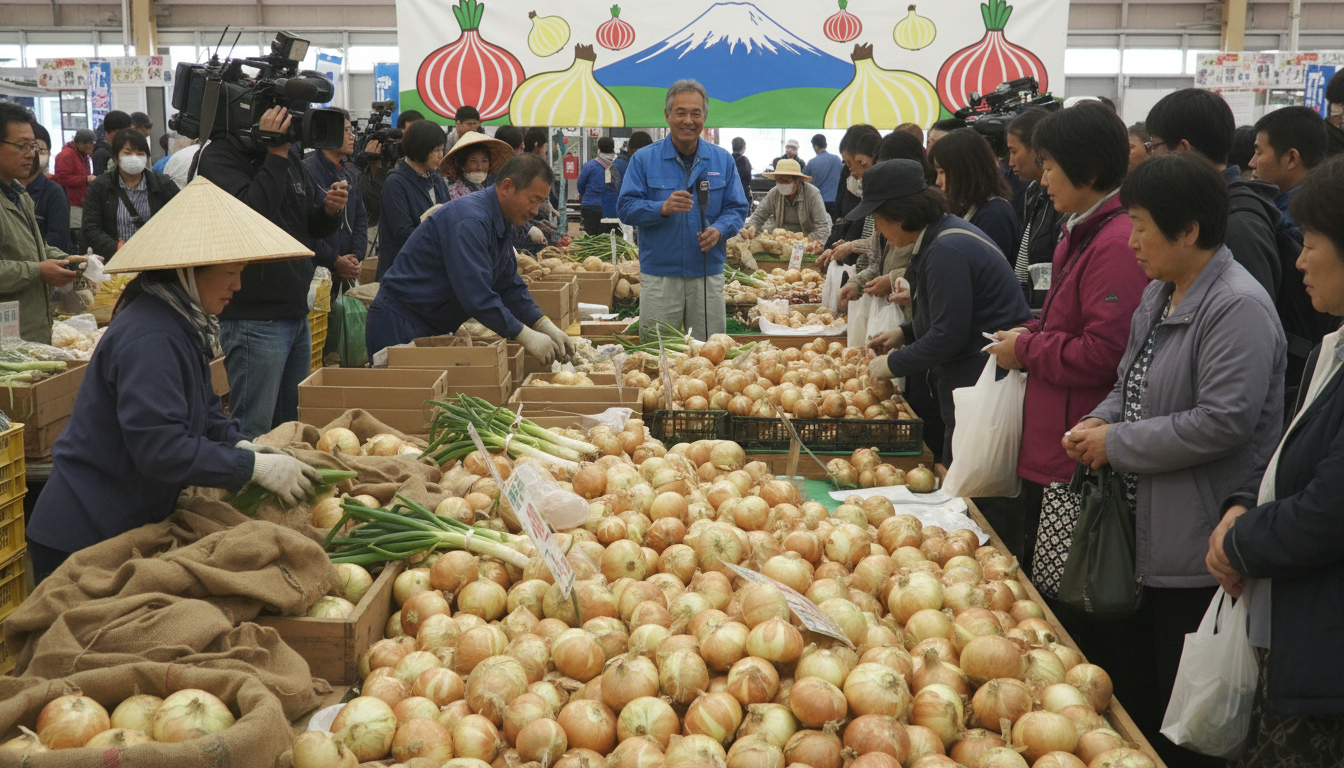
Hokkaido Drives Japan’s Tamanegi Market as Spring Shin-Tamanegi Harvest Peaks
Hokkaido supplies nearly 70% of Japan’s tamanegi as spring shin-tamanegi harvests peak, tracing the round onion’s journey from Edo-era import to staple.
Japan’s round onion, known domestically as tamanegi, has moved from a novelty introduced in the Edo Period to a staple crop dominated by Hokkaido growers, with the island now responsible for almost 70% of national production. The seasonal spotlight falls on the spring shin-tamanegi, a new-harvest onion prized for its mild flavor and freshness. As markets and kitchens prepare for the spring surge, producers emphasize quality, storage characteristics and the vegetable’s long role in Japanese food culture.
Edo Period Introduction via Nagasaki
Tamanegi arrived in Japan through the port of Nagasaki during the Edo Period, when limited foreign trade with Dutch merchants brought new crops and techniques to the archipelago. Initially the round onion was valued more for decorative and medicinal uses than as an everyday food. Its integration into Japanese agriculture unfolded gradually over subsequent centuries.
Meiji Era Adoption and Expansion
The Meiji Era marked a turning point for tamanegi as modern farming methods and a broader interest in Western-style foods spread across Japan. Nutritional messaging and changes in diet helped boost the onion’s popularity from a curiosity to an accepted foodstuff. During the same period, new farmlands opened in northern regions provided ideal conditions for expanding onion cultivation.
Hokkaido, with its cooler climate, long summer daylight and extensive arable land, emerged as a particularly suitable area for commercial onion farming. Farmers there developed techniques to maximize yield and extend shelf life, favoring varieties that withstand storage and transport.
Hokkaido Now Produces Nearly 70% of Domestic Tamanegi
Today, Hokkaido accounts for the lion’s share of Japan’s tamanegi production, supplying nearly 70% of the domestic market. The island’s output is dominated by yellow onion varieties chosen for their longer storage life and adaptability to large-scale distribution. This concentration of production has shaped national supply chains and seasonal market dynamics.
Regional specialization in Hokkaido has also encouraged investment in processing, storage facilities and logistics tailored to onion shipments. Those infrastructures support year-round availability while allowing spring-sourced shin-tamanegi to reach urban markets at peak freshness.
Shin-Tamanegi: Spring Harvest and Market Demand
The spring shin-tamanegi is the season’s most sought-after product, celebrated for its tender texture and sweeter, less pungent taste compared with onions stored over winter. Retailers and restaurants promote new-harvest onions in spring menus, and consumers often seek shin-tamanegi for dishes where a milder raw or lightly cooked onion is desired.
Market demand for shin-tamanegi typically drives short-term price movements and retail promotions. Growers coordinate planting and harvest schedules to capture that premium window, balancing yield targets with the quality standards that distinguish new-harvest produce.
Culinary Role Across Japanese Cuisine
Tamanegi occupies a central place in Japanese cooking, used across a broad range of dishes from broths and sautés to raw salads and garnishes. Its versatility has helped ensure steady consumption throughout the year, even as seasonal variations affect which types and preparations are preferred. The yellow variety’s storability supports everyday cooking needs, while shin-tamanegi provides a seasonal nuance appreciated by chefs and home cooks alike.
Chefs frequently note that shin-tamanegi’s softer bite pairs well with fresh seafood, spring vegetables and lightly dressed salads, making it a seasonal ingredient that complements Japan’s culinary rhythm.
Cultivation Practices and Varietal Preferences
Cultivators in Hokkaido and other growing regions select onion varieties based on climate resilience, storage potential and market preferences. Yellow onions remain the predominant choice for large-scale production because they retain firmness and flavor through long shipments. Farmers also adjust planting dates, soil management and harvest timing to optimize bulb quality for both long-term storage and immediate fresh-market sales.
Post-harvest handling—sorting, curing and controlled storage—plays a critical role in maintaining the qualities buyers expect from both stored and fresh shin-tamanegi. Investments in cold-storage technology and distribution networks have enabled producers to supply distant markets while minimizing waste.
The round onion’s evolution from a Dutch-introduced curiosity to a year-round staple highlights how historical exchange and regional adaptation shape contemporary food systems. As demand for shin-tamanegi rises each spring, Hokkaido’s role as the nation’s principal tamanegi supplier underscores the island’s continued importance to Japan’s agriculture and culinary scenes.

