
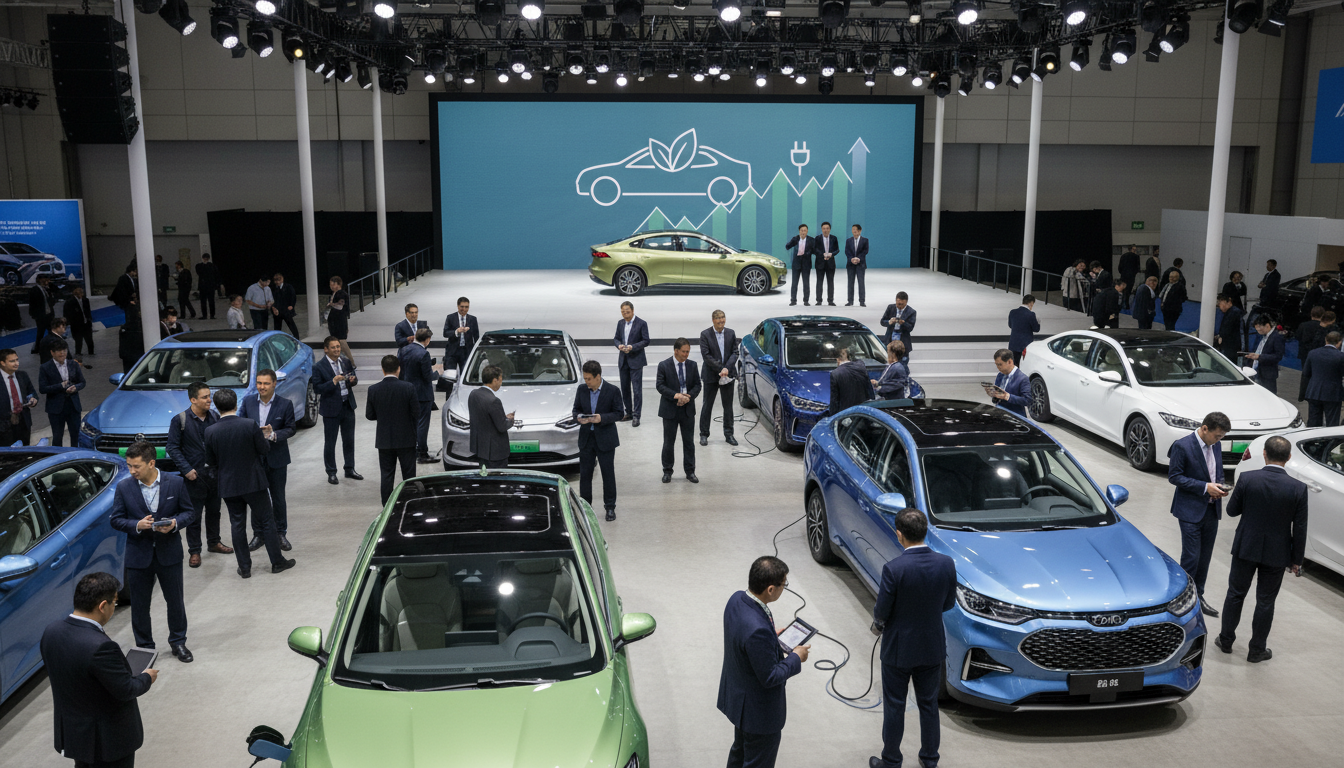
Global Dealers Target China-Made Green Vehicles at Beijing Auto Show
Global dealers at the Beijing auto show seek China-made green vehicles as rising fuel costs push demand, driving Chinese automakers to expand EVs and exports.
The Beijing auto show, opening this week, has drawn a surge of overseas dealers eager to source China-made green vehicles as dealers respond to elevated gasoline prices and shifting consumer demand. Industry executives and dealers say higher fuel costs tied to recent Middle East tensions are accelerating interest in electric and hybrid models produced by Chinese manufacturers. The event has become a focal point for manufacturers such as Geely to present new low-emission models and outline plans for greater international sales.
Global Dealers Converge on Beijing
Dealers from Asia, Europe and Africa are attending the show in larger numbers than in previous years, according to multiple industry contacts. Buyers cited fuel price pressure and competitive retail pricing for electric vehicles as key reasons to scout Chinese suppliers now.
Several dealer groups said they were prioritizing vehicles with low running costs and strong local warranties to appeal to consumers hit by higher pump prices. The concentration of manufacturers and suppliers at the Beijing show makes it easier for small and mid-sized importers to evaluate a range of China-made green vehicles in one location.
Rising Fuel Costs Drive Buyer Interest
Retailers and fleet operators described rapidly rising gasoline prices as a primary commercial stimulus for switching to electrified models. While fuel markets are affected by volatile global developments, dealers are focused on immediate cost savings for end users through electrification and improved fuel efficiency.
Sales directors at independent dealer chains explained that even modest increases at the pump can shorten the payback period for plug-in hybrids and battery EVs, making China-made options—which often undercut rivals on price—more attractive. That dynamic is pushing procurement teams to accelerate trials and negotiations during the show.
Chinese Brands Showcase New EVs and Hybrids
Major domestic automakers are using the Beijing platform to unveil refreshed EV and hybrid lineups intended for export markets. Companies including Geely and others are presenting models with updated battery systems, longer ranges and more competitive pricing to appeal to international buyers.
Manufacturers are also emphasizing aftersales support and localized service plans to reassure overseas partners about warranty, parts supply and technical training. Executives expect such assurances to be decisive for dealers weighing long-term commitments to China-made green vehicles.
Export Ambitions and Price Competition
Chinese automakers have signaled aggressive export plans, combining lower sticker prices with government incentives and economies of scale. This strategy is testing pricing dynamics in regions where imported EVs historically carried higher premiums.
Analysts say the entry of more affordable China-made green vehicles will reshape market competition, forcing established brands to rethink product mixes and pricing. Dealers attending the show see room to build margins through volume imports and targeted rental or fleet offers tailored to local fuel-price environments.
Dealer Perspectives and Procurement Plans
Several dealer groups described exploratory purchase agreements and memorandum of understandings being discussed on the show floor. Importers from Southeast Asia and Africa in particular noted interest in right-hand-drive conversions and modular platforms that suit multiple markets.
Smaller independent dealers said they plan to pilot fleets of China-made green vehicles to test resale values and customer acceptance before committing to broader rollouts. Larger groups are negotiating distributor deals that include parts logistics, training programs and joint marketing campaigns to accelerate local adoption.
Infrastructure and Regulatory Questions Remain
Despite strong interest, dealers and manufacturers acknowledged hurdles around charging infrastructure, certification and homologation for some export destinations. Regulators in importing countries may require additional safety testing and modifications, lengthening time to market for certain models.
Industry advisors at the show urged prospective buyers to consider total cost of ownership including charging access and grid readiness, rather than focusing solely on purchase price. They also recommended building phased supply agreements to align deliveries with infrastructure upgrades.
Dealers and Chinese manufacturers agree the Beijing auto show has become a critical testing ground for the next phase of global automotive trade, where China-made green vehicles will compete not only on price but on service, range and regulatory readiness.

