
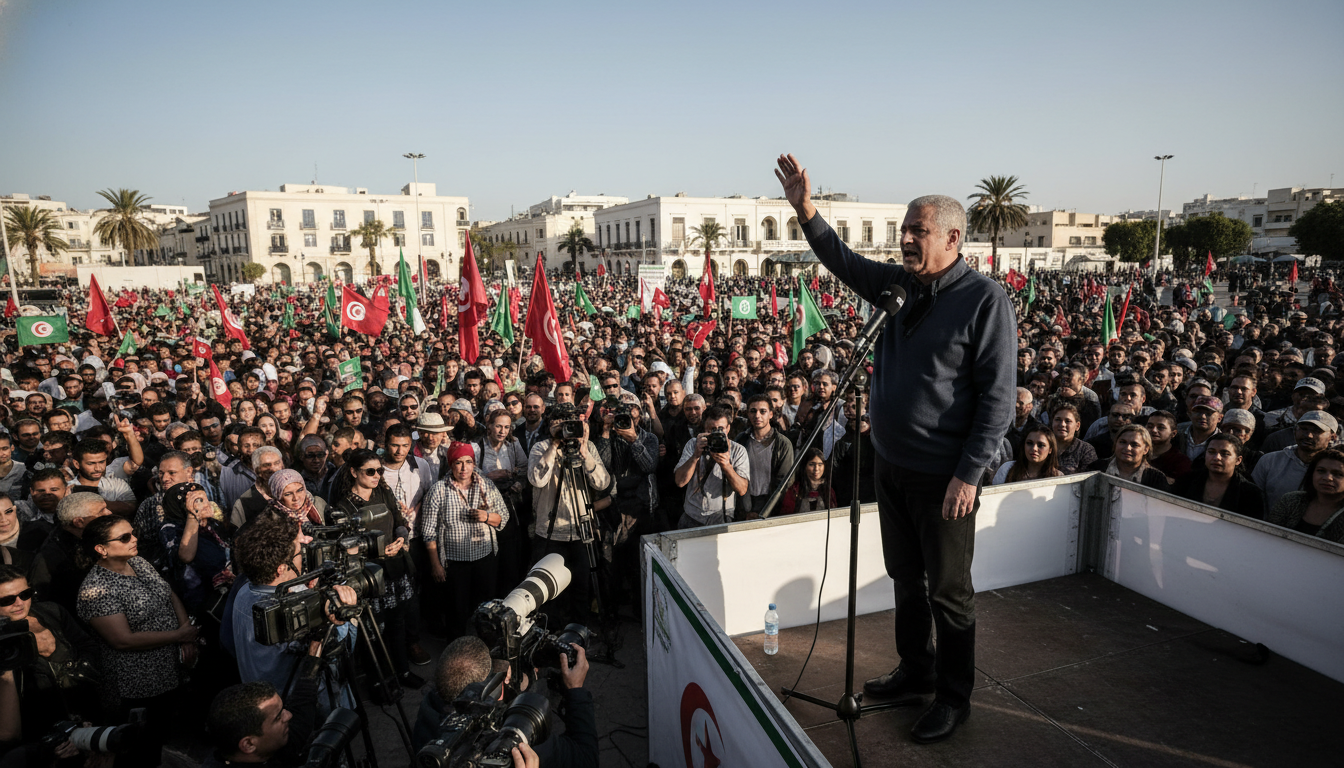
Iran will not surrender: Expert argues humiliation breeds resistance in the Middle East
Soumaya Ghannoushi warns that attempts to humiliate Iran are more likely to provoke resistance than compliance, reshaping regional diplomacy and security.
Soumaya Ghannoushi, a Middle East politics analyst, argued on April 23, 2026, that policies aimed at humiliating Iran will not yield submission but instead strengthen resistance. The assertion that "Iran will not surrender" was highlighted in a post by Middle East Eye that amplified Ghannoushi’s analysis and its implications for regional policy on the same date. Her central claim frames contemporary tensions as part of a recurring historical pattern in which external pressure hardens, rather than breaks, political will in the region.
Ghannoushi’s central argument
Ghannoushi contends that episodes of humiliation at the hands of external powers tend to produce a countervailing logic of resistance across the Middle East. She argues this pattern is not merely rhetorical but rooted in political and social responses to perceived national degradation.
Her essay, and the commentary picked up by Middle East Eye on April 23, 2026, stresses that humiliation can become a mobilizing narrative for regimes and movements alike. That narrative, she says, binds domestic constituencies to leaderships that promise dignity and retaliation rather than reconciliation.
Historical precedents and regional memory
Analysts note that the Middle East’s modern history contains repeated instances where foreign intervention, occupation or punitive measures have sparked nationalist backlashes. These episodes have left enduring memories that political actors invoke when confronted with external pressure.
Such historical memory can transform tactical pressure into a strategic liability for outside powers, according to observers who study regional identity and state legitimacy. When humiliation is perceived as collective, it often strengthens internal cohesion and delegitimizes actors seen as capitulating.
Domestic politics inside Iran
Within Iran, hardline and conservative elements have long emphasized sovereignty and resistance as pillars of legitimacy. Policymakers and political elites often frame external threats to national pride as justifications for consolidating power and pursuing asymmetric strategies overseas.
At the same time, domestic dynamics in Iran are complex, with multiple constituencies responding differently to economic strain, social change and international isolation. Yet, Ghannoushi’s thesis suggests that public sensitivity to national dignity can override other pressures when foreign humiliation is perceived as systemic.
Regional strategy and proxy networks
Observers point out that Iran’s regional posture includes leveraging alliances and non-state proxies to project influence and deter adversaries. This posture is consistent with a strategic impulse to avoid direct, conventional confrontation while signaling capability and resolve.
That approach complicates efforts that rely solely on punitive measures or diplomatic ostracism. When external actions are interpreted through the lens of humiliation, they can validate Iran’s regional tactics as defensive and necessary, reinforcing networks that asymmetrically extend Tehran’s reach.
International responses and risks of escalation
If policymakers assume that pressure alone will force capitulation, they may underestimate the likelihood of escalation and unintended consequences. Ghannoushi’s argument serves as a caution that strategies perceived as humiliating can harden positions and reduce space for negotiated outcomes.
Diplomatic actors face a delicate balance between holding states accountable for contentious actions and avoiding measures that intensify resistance. Crafting effective policy requires understanding how actions will be perceived in domestic political narratives and regional strategic cultures.
Policy options for reducing tensions
Experts suggest that combining targeted diplomacy, conditional incentives and calibrated sanctions may produce better results than blanket measures that carry a stigma of humiliation. Confidence-building steps and clear, attainable benchmarks can create openings for de-escalation without appearing coercive.
Engagement that respects a partner’s core interests and national dignity, while still pressing on specific concerns, is more likely to produce predictable policy shifts. Such an approach requires patience, sustained presence and credible enforcement of agreements.
Ghazal-style rhetoric that portrays Iran as irretrievably defiant risks becoming a self-fulfilling prophecy if it informs policy choices that alienate potential moderates. Ghannoushi’s warning underscores the need for strategies that avoid amplifying narratives of humiliation while maintaining leverage.
The debate framed by Ghannoushi and amplified on April 23, 2026, by Middle East Eye highlights a central dilemma for policymakers: how to reconcile accountability with approaches that do not unintentionally consolidate resistance. Her analysis suggests that treating Iran as a state that "will not surrender" should prompt a reassessment of tactics, prioritizing avenues that reduce humiliation and increase diplomatic traction.

