
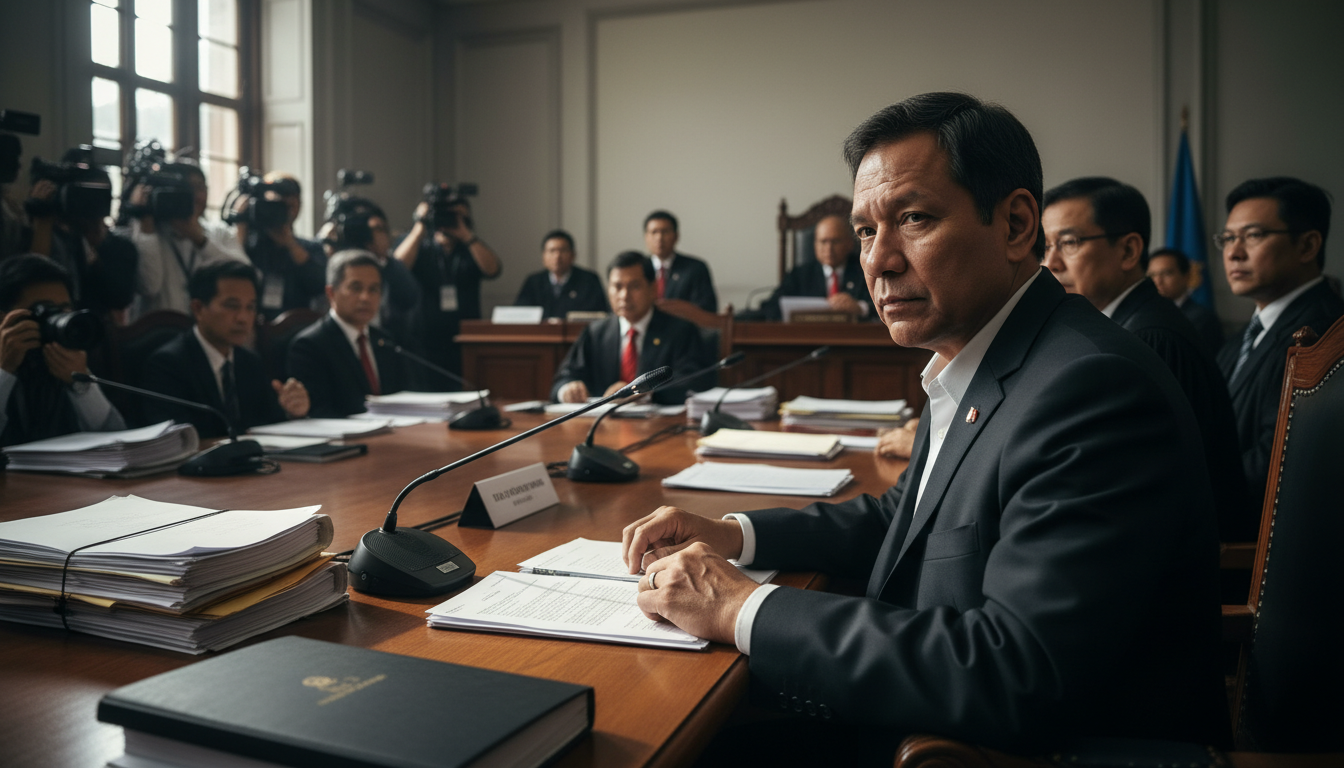
ICC Commits Rodrigo Duterte to Trial on Three Murder Counts
ICC commits former Philippine president Rodrigo Duterte to trial on three murder counts tied to his drug‑war campaign, the court ruled on April 23, 2026.
Strong start at The Hague
The International Criminal Court on April 23, 2026 committed former Philippine president Rodrigo Duterte to stand trial after a pre‑trial chamber confirmed three counts of murder linked to his anti‑drug campaign. The decision by a three‑judge panel marks a major advance in the case that has focused international attention on alleged extrajudicial killings during Duterte’s tenure. (whbl.com)
The panel found there were substantial grounds to believe the charges satisfied the threshold for trial, moving the prosecution’s allegations from the confirmation stage to a full Trial Chamber hearing. That finding formalizes decades‑long scrutiny of the campaign launched when Duterte was mayor and later as president. (icc-cpi.int)
ICC panel confirms three counts
Pre‑Trial Chamber I issued a unanimous order confirming the three counts of murder as crimes against humanity, rejecting the defense’s arguments to dismiss key elements of the prosecution’s evidence. The confirmation followed a months‑long submission and hearing process in which judges weighed witness statements, documents and legal arguments on command responsibility. (icc-cpi.int)
The charges in the document filed by prosecutors allege that actions taken during Duterte’s "war on drugs" amounted to a widespread or systematic attack on civilians. The court’s registry lists a timeframe covering incidents from Duterte’s service as mayor through his presidential term, framing the counts within international criminal law definitions. (icc-cpi.int)
Prosecutors detail alleged death‑squad networks
ICC prosecutors have argued that Duterte created, funded and enabled death‑squad activity that targeted suspected drug dealers and users, offering incentives and protection to operatives who carried out killings. Prosecutors presented evidence intended to show a pattern of policy and practice rather than isolated incidents, pointing to internal government reports and witness testimony. (apnews.com)
Government data and investigative reporting cited by the prosecution indicate thousands of killings occurred during the most intense years of the campaign, numbers that have become central to the court’s assessment of whether crimes against humanity were committed. The material submitted in The Hague included both high‑level directives and accounts from families of victims. (gmanetwork.com)
Duterte’s arrest and pre‑trial proceedings
Duterte was arrested in March 2025 in the Philippines in accordance with an ICC arrest warrant and later made available to the court in The Hague, where confirmation hearings were held earlier in 2026. His transfer to the ICC followed legal steps taken after the court issued its warrant in March 2025. (icc-cpi.int)
Defense teams have repeatedly argued that the former president acted within the limits of national law and in self‑defense, and they have challenged the court’s jurisdiction and the sufficiency of the prosecution’s evidence. Judges have heard these arguments alongside victim participation procedures established by the registry. (whbl.com)
Victims’ families and public reactions in the Philippines
Relatives of those killed in the drug war welcomed the confirmation decision and described it as a long‑sought step toward accountability, with some holding public vigils and calls for justice across metro Manila. Advocacy groups said the court’s move vindicated years of demands that deaths be investigated beyond domestic mechanisms. (gmanetwork.com)
At the same time, supporters of Duterte and some political figures in the Philippines criticized the ICC’s action as interference in sovereign affairs and warned of political repercussions. The ruling has intensified a polarized national debate over responsibility, accountability and national sovereignty. (japantimes.co.jp)
Government stance and international implications
Philippine authorities have publicly navigated a complex position: cooperating to the extent required by the court while contesting aspects of the proceedings in other forums. Earlier challenges to ICC jurisdiction were dismissed, and judges have repeatedly underscored the court’s authority to proceed under the Rome Statute framework. (apnews.com)
The commitment to trial carries implications for international justice, diplomatic relations and how future leaders face scrutiny for national security policies that result in mass casualties. Legal scholars note the case could set precedents on the scope of command responsibility in anti‑crime operations. (bloomberg.com)
Next steps and likely timetable in The Hague
With charges confirmed, the matter will now be referred to a Trial Chamber where a full trial schedule will be set and the prosecution must prove guilt beyond a reasonable doubt. Defenders may seek pre‑trial remedies or appeals on procedural issues, but the confirmation order means the case will proceed to contested hearings. (bloomberg.com)
The timeline for a Trial Chamber to begin substantive hearings is subject to procedural scheduling, witness protection needs and logistical arrangements for victims’ participation. International legal experts say a trial of this scale could take years to reach resolution, depending on the volume of evidence and legal challenges. (icc-cpi.int)
The ICC’s ruling on April 23, 2026 to commit Rodrigo Duterte to trial marks a pivotal moment in a long‑running investigation into the deadly consequences of the Philippines’ war on drugs. The decision ushers the case into a formal trial process that will test international law’s reach and the court’s capacity to adjudicate allegations against a former head of state. (whbl.com)

