
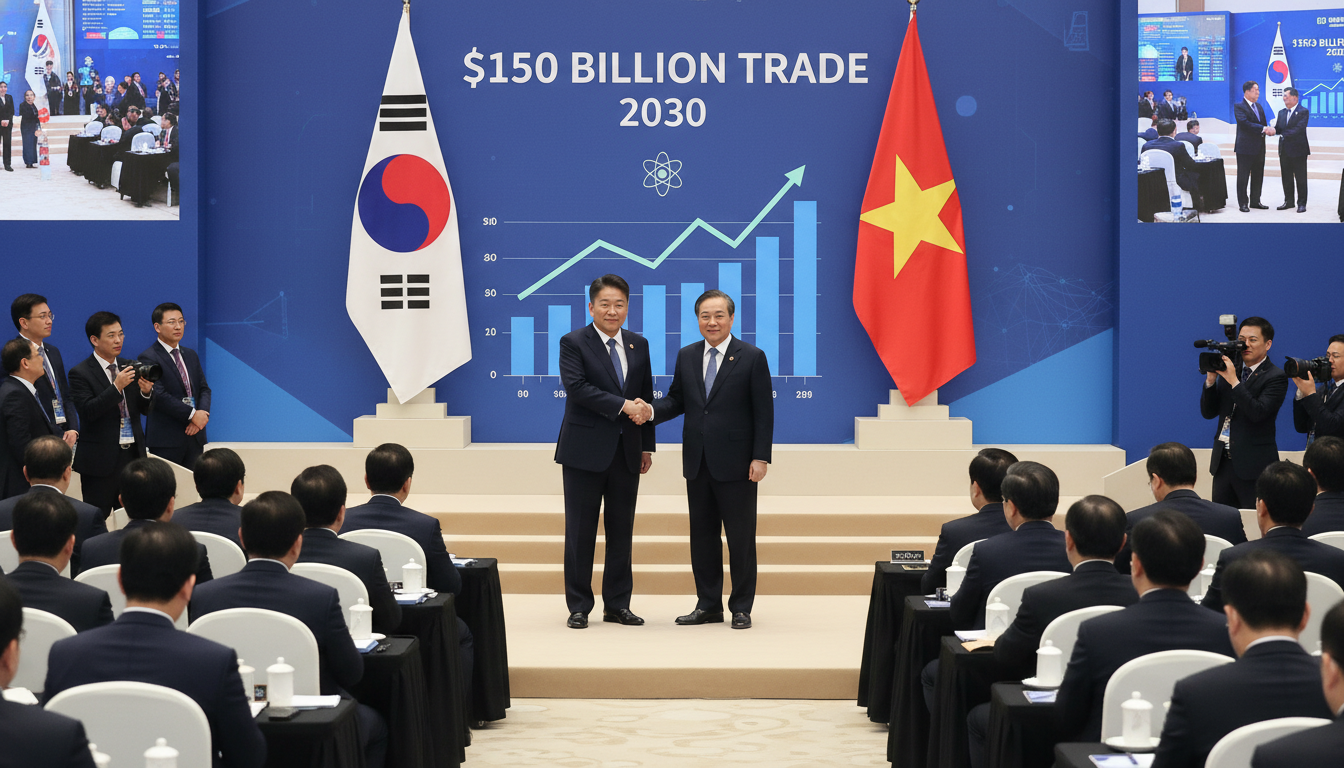
Vietnam–South Korea Nuclear Energy Cooperation and $150bn Trade Goal Agreed in Hanoi
Vietnam and South Korea pledged closer nuclear energy cooperation and set a bilateral trade target of $150 billion by 2030 after leaders met in Hanoi on April 22, 2026.
Vietnam’s Communist Party General Secretary and President To Lam met South Korean President Lee Jae Myung in Hanoi on April 22, 2026, where both countries announced an agreement to cooperate on nuclear energy and to pursue a steep expansion of trade. The meeting marked Lee’s state visit and represented a visible deepening of economic and strategic ties between Seoul and Hanoi. Officials framed the nuclear element as part of a broader energy and industrial partnership tied to the ambitious $150 billion trade target for 2030.
Details of the Hanoi Meeting
The leaders held talks at the Presidential Palace with delegations from both governments present, according to local reports. They discussed economic integration, technology cooperation and measures intended to accelerate two-way investment flows. The meeting also featured ceremonial elements that underscored the diplomatic importance of the visit for bilateral relations.
Nuclear Energy Cooperation Agreed
Both sides said they would work together on nuclear energy, signalling a move to explore civilian nuclear projects and technical collaboration. The announcements left technical specifics and timelines to follow-up negotiations, including potential studies on safety, regulatory standards and human-capacity building. Observers said the language suggests cooperation could span planning, training and regulatory alignment rather than immediate construction commitments.
Trade Target and Economic Priorities
Vietnam and South Korea set a joint target to raise bilateral trade to $150 billion by 2030, a significant increase from current levels. The pledge covers goods, services and investment linkages and aims to deepen ties across manufacturing, green energy supply chains and advanced industries. Officials indicated that increasing trade will involve new agreements and private-sector initiatives to remove bottlenecks and expand market access.
Strategic and Economic Context
The agreement comes as both countries seek to diversify energy sources and industrial partnerships amid rising regional competition for technology and investment. Vietnam has been expanding its energy mix to meet rapid domestic demand, while South Korea seeks overseas opportunities for its energy firms and high-tech industries. Analysts say the combination of economic and energy cooperation reflects complementary priorities and long-standing commercial ties.
Implementation Steps and Timelines
Leaders pledged follow-up mechanisms to translate commitments into action, including working groups and technical exchanges to iron out regulatory and financing details. Both governments said ministries and state-affiliated agencies would prepare memoranda of understanding and feasibility studies in the coming months. Implementation is likely to be phased, with initial efforts focused on feasibility, training and regulatory harmonization rather than immediate plant construction.
Regional and International Implications
Closer Vietnam–South Korea cooperation on energy and trade will attract attention across Southeast Asia and Northeast Asia, where energy security and economic connectivity are priorities. The move may open new corridors for Korean companies seeking to export technology, equipment and services to the Vietnamese market. It also positions both capitals to engage international partners and multilateral institutions for project financing and technical support.
Commercial and Diplomatic Reactions
Business groups in both countries welcomed the announcements as a platform for deeper investment and commercial ties. Energy firms and industrial manufacturers are expected to begin exploratory talks with Vietnamese counterparts on supply chains and capacity building. Diplomatically, the visit and agreements reinforce Vietnam’s expanding network of economic partnerships while underlining South Korea’s role as a regional technology and investment partner.
Vietnam and South Korea’s joint announcement on nuclear energy cooperation and the $150 billion trade target stems from mutual economic aims and shared interest in industrial modernization. The commitments set a framework for detailed negotiations and institutional work that will determine the speed and shape of future projects.

