
Takuboku Ishikawa exhibition in Morioka casts new light through Donald Keene’s perspective
Takuboku Ishikawa exhibition in Morioka explores the poet’s life through Donald Keene’s perspective, showcasing the Romazi Nikki, artifacts and public programs.
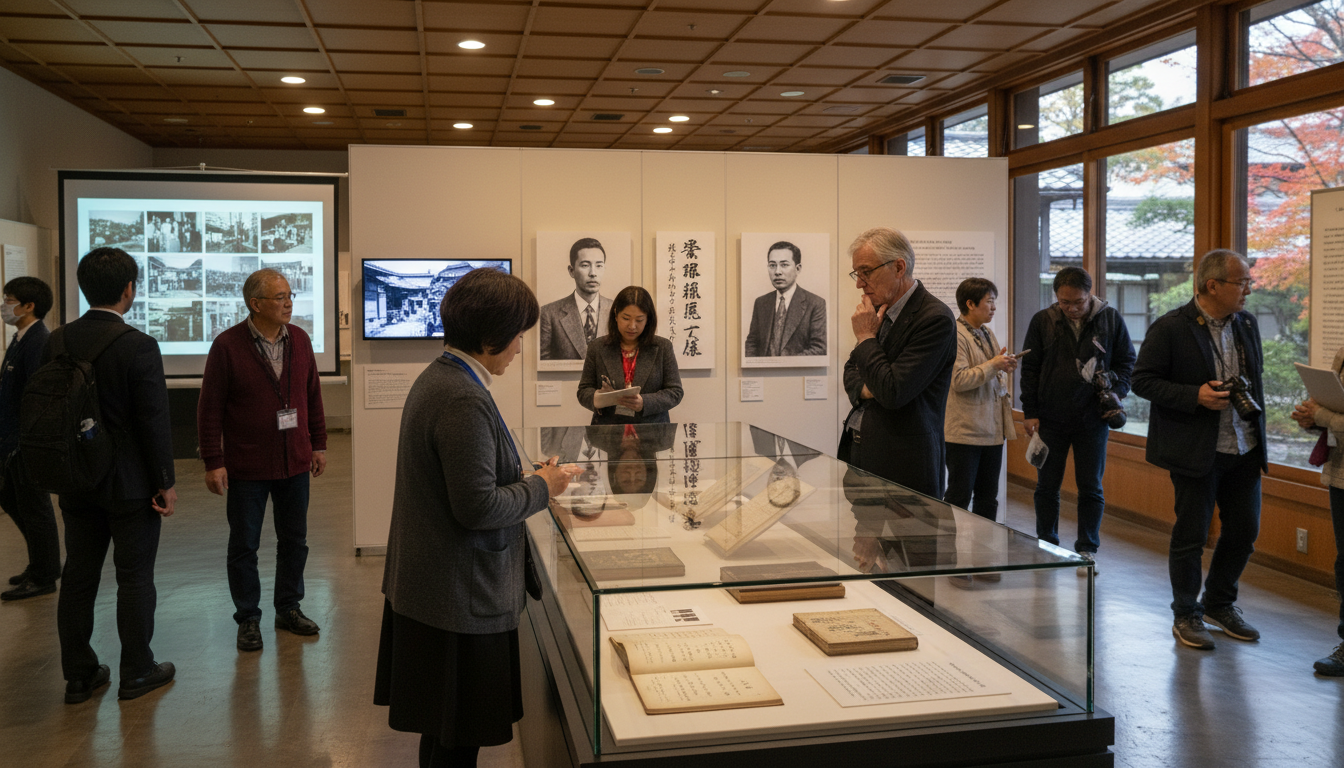
The Takuboku Ishikawa exhibition in Morioka opened with an explicit focus on the late Meiji poet’s writings and the way Donald Keene, the noted Japan scholar, interpreted them. The show, mounted at the Morioka Takuboku & Kenji Museum, was updated on Friday and runs through July 12. Visitors can view personal diaries, recreated rooms and items that trace Takuboku’s brief but prolific life while encountering Keene’s commentary throughout the displays.
Exhibition links Takuboku and Donald Keene
The exhibition arranges Takuboku Ishikawa’s manuscripts and memorabilia alongside materials that illustrate Donald Keene’s long engagement with the poet’s work. Museum director Yuichi Sakata says the intent is to use Keene’s admiration as a bridge to introduce Takuboku to a broader audience. The layout highlights how Keene’s translations and essays helped shape Western readers’ understanding of Takuboku’s writing.
The show traces Takuboku’s trajectory from his youth in Iwate to his final years in Tokyo, underlining the poet’s struggles with poverty, illness and turbulent relationships. Panels explain Keene’s assessments, including his view that Takuboku kept diaries not only as private record but as material for literary creation. The juxtaposition frames Takuboku as both a regional son and a writer of national significance.
Romaji diary on public display
A centerpiece of the exhibition is a reproduction of Takuboku’s Romazi Nikki, the diary he composed in Latin script during the spring of 1909. The manuscript, on high-quality paper and written without visible corrections, drew particular praise from Keene, who treated the diary as deliberate literary work. The replica comes from the Hakodate Takuboku Kai and this is only the second time the document has been exhibited outside Hokkaido.
Panels describe why Takuboku used Latin letters — officially to keep parts private, but also possibly as a deliberate stylistic choice — and they include English excerpts Keene translated decades ago. The diary passages recorded everyday detail with striking candor, treating matters of money, food, amusements and intimate relationships with the same unsparing eye that marks Takuboku’s tanka.
Museum setting and reconstructed spaces
The Morioka Takuboku & Kenji Museum occupies a former Meiji-era bank building in the city center, giving the exhibition an atmospheric backdrop. Curators have recreated Takuboku’s Tokyo apartment and installed objects such as the reed organ he played while acting as a substitute teacher. Biographical displays also trace Keene’s career, mapping how a scholar abroad came to champion a poet from northern Japan.
Interpretive screens and audio elements sit alongside handwritten pages, allowing visitors to move between close readings and broader historical context. The exhibition balances intimate artifacts with accessible commentary, aiming both at local audiences and to visitors coming to Morioka for literary tourism.
Local scholarship and hometown connections
Reiko Yamamoto, a Morioka-based Takuboku scholar who calls herself a “Takuboku sommelier,” has helped shape tours and commentary for the show. Yamamoto has researched Takuboku for more than three decades and runs a long-running radio program on the poet, drawing links between his diaries and Meiji-era folklore. Her guided visits led visiting guests, including Seiki Keene, Donald Keene’s adopted son, through key locations in Shibutami where Takuboku spent his childhood and early adult years.
The exhibition is complemented by preserved local sites: the Takuboku Ishikawa Memorial Museum in Shibutami reopened after renovation and local authorities have relocated Takuboku’s former elementary school and a family home to museum grounds. Those sites, together with a nearby Michi no Eki roadside station, have helped increase visitor numbers to the poet’s hometown this year, the 140th anniversary of his birth.
Programs, dates and visitor information
The “Donald Keene and Takuboku Ishikawa” exhibition is scheduled through July 12 with free admission, and the museum is open daily from 10:00 a.m. to 5:30 p.m., closed on the second Tuesday of each month. A highlight program on May 30 will feature a joruri storytelling performance by Seiki Keene followed by a discussion on Keene’s relationship with Takuboku; the event carries a ¥1,500 admission fee. Museum staff advise visitors to check current opening details before traveling and note that the exhibition contains unique materials shown outside their usual holdings.
Keene’s translations and scholarship are woven into the programming to help non-specialist audiences grasp why Takuboku’s diaries and tanka retain appeal. The museum presents the pairing of poet and scholar as an example of cross-cultural literary appreciation that continues to shape how modern readers approach Meiji-era literature.
Takuboku’s short life — he died at 26 but produced thousands of tanka and other prose — is presented in the exhibition as a study in contradictions: intense creative energy amid chronic instability. For visitors to Morioka the show offers both a compact biography and an invitation to read Takuboku’s work anew, guided by the reflections of the scholar who helped bring those words to the wider world.

