
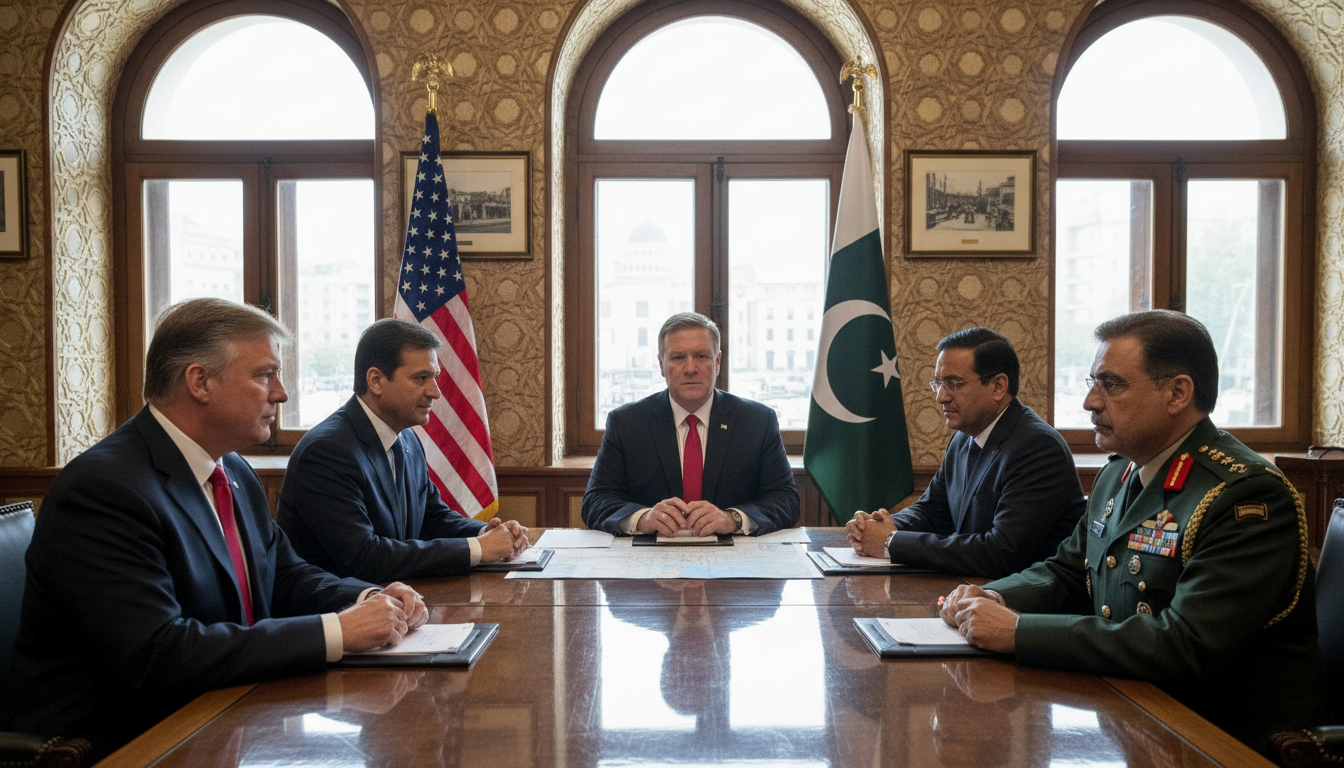
U.S. Sends Envoys to Pakistan to Advance U.S.-Iran Talks Amid Conflicting Signals
U.S. administration dispatches Middle East envoy and Jared Kushner to Pakistan on April 25, 2026, to pursue U.S.-Iran talks amid mixed responses from Tehran and regional actors.
The Trump administration announced on April 24, 2026, that it would send its Middle East special envoy, Witkof, and Jared Kushner to Pakistan on April 25 to mediate renewed U.S.-Iran talks. The move aims to revive face-to-face diplomacy under an uneasy ceasefire framework and follows earlier rounds of discussions hosted by Pakistan. U.S.-Iran talks are now being conducted through a mix of direct envoys and third-party intermediaries as officials seek to narrow outstanding gaps.
Envoys Departing for Islamabad
U.S. officials said the two envoys will travel to Islamabad on April 25, 2026, to meet with Pakistani interlocutors and representatives from Iran as part of shuttle diplomacy. The administration framed the trip as an effort to create conditions for in-person discussions between Washington and Tehran, relying on Pakistan’s role as a mediator.
A senior U.S. spokesperson, Levitt, told reporters that Iran has expressed willingness to meet face to face, and that recent responses from Tehran show “certain progress” over the past several days. U.S. spokespeople stopped short of offering details on the substance of any concessions or timelines, saying only that further diplomacy would determine next steps.
Vice President to Remain in Washington for Now
Vice President Vance, who led previous negotiation rounds, will remain in the United States for the time being but is prepared to join the talks should the situation advance to final-stage bargaining. U.S. officials described Vance’s role as one of potential escalation—able to travel to the region rapidly if preliminary consultations produce openings.
U.S. aides framed this staged approach as calibrated: lower-ranking envoys can probe sensitive areas and narrow issues, while senior leaders like Vance would enter later to conclude technical or political compromises. The administration emphasized flexibility, noting that the delegation composition could change as talks evolve.
Iran Denies Request for Direct Talks, Sends Foreign Minister to Pakistan
Iranian state-linked Tasnim news agency reported on April 24, 2026, that Foreign Minister Araghchi had arrived in Islamabad to discuss bilateral ties and regional matters with Pakistani officials. Tasnim explicitly denied U.S. claims that Tehran had formally requested direct talks with Washington, calling such reports unfounded.
The contrasting statements highlight a diplomatic split over intent and narrative: U.S. officials say Tehran signaled readiness for face-to-face engagement, while Iranian-affiliated outlets reject the idea of a direct request. Regional mediators may therefore find themselves simultaneously managing substantive issues and competing public narratives.
Regional Stakes and Military Movements
Observers caution that diplomacy is unfolding against a backdrop of regional volatility and active military deployments that complicate bargaining. While details of recent U.S. military movements were not fully disclosed in the briefings, officials acknowledged that security considerations remain tightly linked to the diplomatic track.
Analysts say that any pause in hostilities or fragile ceasefire arrangements could be reversed quickly if negotiations stall or if miscalculations occur on the ground. That prospect places a premium on rapid, discreet diplomatic progress and on clear channels between military and civilian leaders on all sides.
Logistics and the Role of Pakistan as Mediator
Pakistan’s capital, Islamabad, has emerged as the preferred venue for talks, reflecting Islamabad’s ongoing willingness to host third-party negotiations between the United States and Iran. Pakistani officials have previously hosted sessions that brought U.S. envoys and Iranian representatives into a shared diplomatic space without full bilateral normalization.
For Pakistan, facilitating dialogue offers diplomatic leverage and underscores Islamabad’s role as an interlocutor in a region where other states may be reluctant to be seen as aligned. The success of the Pakistan-hosted track will depend on its ability to keep channels open and to shield negotiations from public flare-ups.
Next steps in the U.S.-Iran talks process include preparatory meetings in Islamabad, private consultations among envoys, and the potential arrival of higher-level American officials if breakthroughs appear attainable. The coming days will test whether the competing public statements can be reconciled into constructive diplomacy or whether messaging differences will further complicate an already fragile process.

