
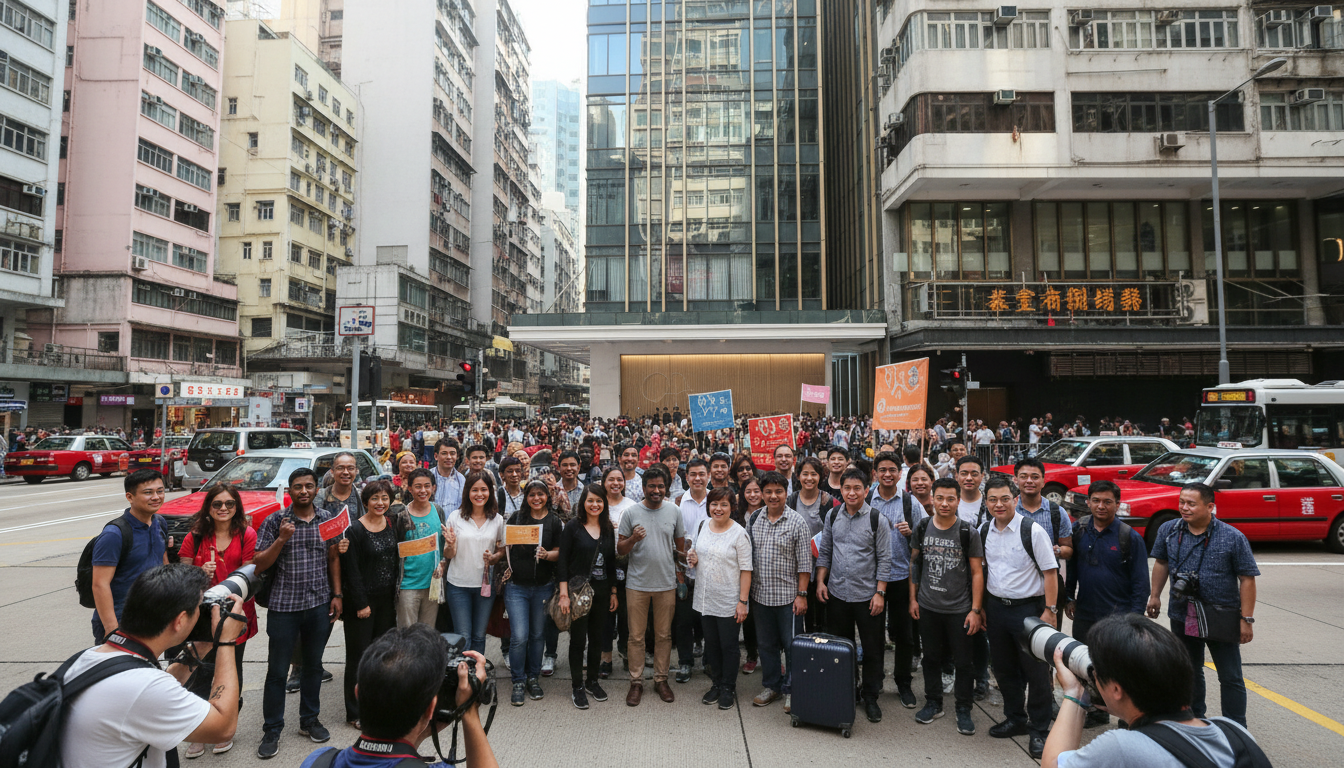
Chungking Mansions Marks 65th Anniversary as Refuge and Budget Hub in Hong Kong
Chungking Mansions, the sprawling Kowloon block known for its low-cost guesthouses and multicultural community, marks its 65th anniversary this year as renovations and renewed security reshape its image.
Historic milestone in the heart of Tsim Sha Tsui
Chungking Mansions is observing its 65th year amid a broader rethink of urban space and migrant support in Hong Kong.
Once widely portrayed as a maze of danger and squalor, the building has long served as an affordable entry point for travelers, small business owners and new arrivals to the city.
This anniversary has prompted renewed attention from city officials, civil society groups and the media on the Mansions’ evolving role in Hong Kong’s social and economic fabric.
Refuge and community for migrants and asylum seekers
For decades Chungking Mansions has functioned as what many residents describe as a “home away from home” for migrants and refugees.
Support organizations operating inside the complex provide legal advice, social services and basic necessities to people with few alternatives for shelter.
Jeffrey Andrews, who has worked at a refugee support center in the building for 17 years, says many clients continue to depend on the Mansions’ dense network of informal services and human connections.
Renovations and security overhaul change perceptions
In recent years landlords and authorities have invested in upgrades to common areas, lighting and surveillance systems that officials say have improved safety.
Physical renovations have been accompanied by stricter enforcement of fire and health regulations, and some businesses report fewer incidents that once deterred tourists and shoppers.
Those changes, together with targeted outreach by municipal agencies, have helped soften the Mansions’ reputation while also raising concerns about cost and displacement among long-term residents.
Economic lifeline for small traders and budget travel
Chungking Mansions remains a vital low-cost marketplace for traders from South Asia, Africa and Southeast Asia who operate guesthouses, eateries and import-export stalls.
Its cluster of budget guesthouses and travel agents continues to attract backpackers and short-term visitors seeking affordable accommodation near Tsim Sha Tsui.
Entrepreneurs inside the complex often rely on tightly woven informal supply chains and repeat customers, making the building an engine of micro-enterprise that sits outside mainstream retail zones.
Tension between preservation and modernization
Community advocates warn that further commercialisation or heavy-handed regulation could erode the social networks that make the Mansions resilient.
Some tenants fear rent increases and tighter rules that could push out the low-income residents and small operators who depend on the building’s unique ecosystem.
City planners and property managers, for their part, argue that bringing the Mansions up to modern safety standards is essential for the welfare of everyone who lives and works there.
Voices from inside the building
Residents and workers paint a complex picture that resists simple labels of danger or novelty tourism.
A long-term guesthouse owner highlights how gradual improvements to sanitation and security have boosted business while still keeping prices accessible.
A refugee supported by local charities describes the Mansions as a place where language, food and daily routines provide a fragile but crucial sense of belonging.
As Chungking Mansions reaches this anniversary, it stands at the intersection of policy, commerce and community, its future shaped by a mix of upgrades, enforcement and grassroots resilience.

