
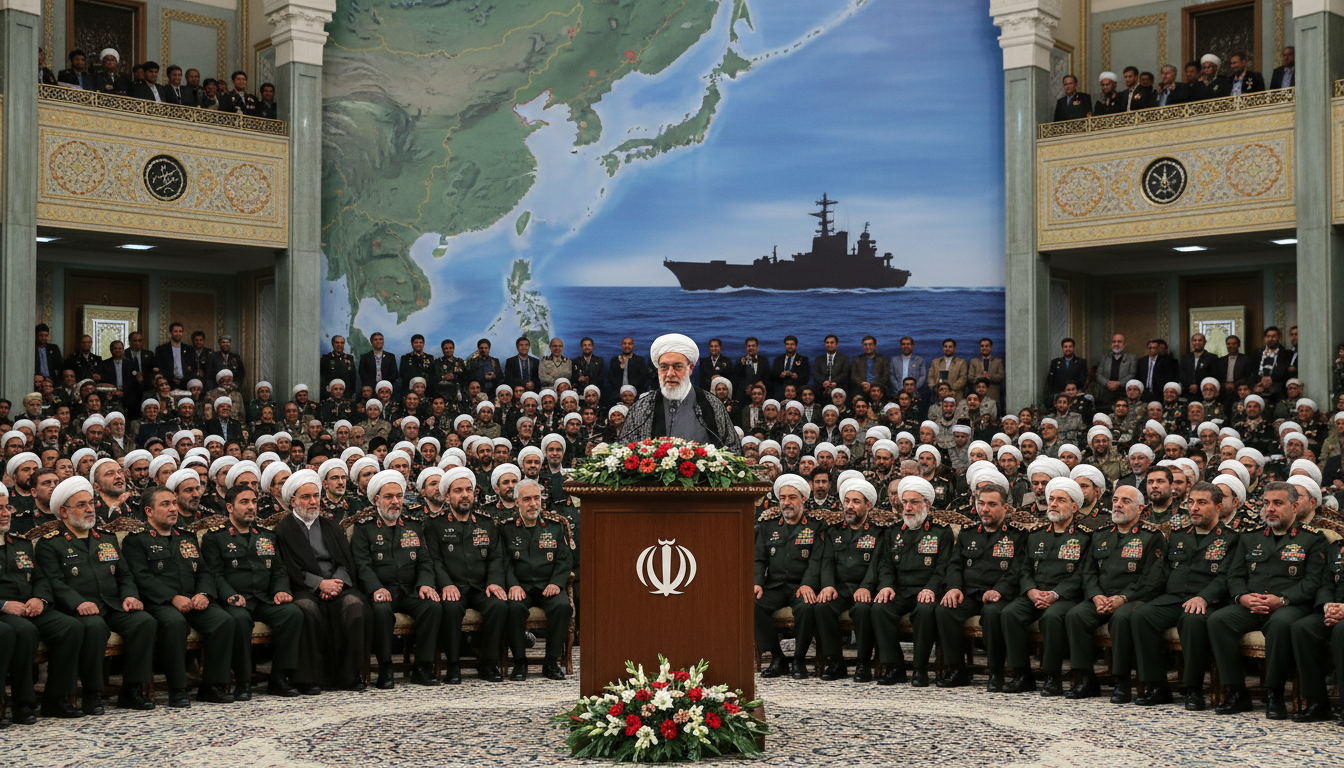
Khamenei Declares Turning Point in Strait of Hormuz after U.S. "Failure"
Khamenei says the strategic balance around the Strait of Hormuz has shifted, calling recent events a turning point after what he described as a U.S. failure.
Iran’s Supreme Leader Ayatollah Mojtaba Khamenei declared on National Persian Gulf Day that a strategic shift has occurred around the Strait of Hormuz, saying recent regional developments mark a turning point. His remarks, published by the Islamic Republic News Agency, framed the shift as emerging in the wake of what he termed a failed American campaign in the area. The statement linked contemporary events to the long history of foreign interventions in the Gulf and outlined a vision of a future regional order without U.S. presence.
Khamenei Declares Strategic Shift
Khamenei said the change in the strategic balance has become evident "two months after the world’s biggest campaign and aggression in the region," language carried by state media. He described the United States as having experienced a "shameful failure" in pursuing its objectives, a characterization offered as part of a broader political message. The Supreme Leader tied this assessment to recent confrontations and heightened tensions affecting Gulf waterways.
Remarks Delivered on National Persian Gulf Day
The comments were delivered to mark National Persian Gulf Day, a national observance that commemorates the 1622 expulsion of Portuguese forces from the strait. State media emphasized the historical continuity between past foreign interventions and what Iranian officials portray as modern attempts to dominate the waterway. Officials used the anniversary to reinforce domestic narratives about sovereignty and resistance to external influence.
Accusations of U.S. Aggression and Failure
Khamenei’s statement accused foreign powers of aggression and positioned recent events as evidence of a failed policy by the United States in the region. The language reflects Tehran’s long-standing criticism of American military and diplomatic presence in the Gulf. Iranian officials framed the outcome as a vindication of their strategy and a setback for external actors they view as destabilizing.
Iranian Forces and Domestic Messaging
In his remarks the Supreme Leader praised the "steadfastness, vigilance, and courageous struggle" of Iranian forces, saying these qualities have been visible since the onset of recent hostilities identified by Tehran. That messaging serves both to bolster public morale and to assert the government’s control over security narratives. Iranian military and political leaders often link operational posture in the Gulf to broader national resilience and domestic legitimacy.
Historical Importance of the Strait
The Strait of Hormuz has long held strategic significance as a chokepoint for global energy shipments and regional commerce, a fact underscored in state commentary during the anniversary. Iran’s reference to centuries of foreign interest in the waterway invoked a historical lineage of external interference. By drawing that line, Tehran sought to place current tensions within a wider story of contested influence and domestic defense.
Potential Regional and International Implications
By declaring a turning point, Iran is signaling a desired shift in the regional security calculus that could affect maritime operations and diplomatic postures in the Gulf. Such declarations are likely to prompt close monitoring by naval forces, commercial shippers, and regional capitals that depend on the strait’s stability. The statement also reinforces Tehran’s public posture toward a future in which it seeks greater autonomy from Western military presence.
The Supreme Leader’s remarks highlight how historical memory and contemporary events are being fused in Iranian political discourse to shape perceptions of the Strait of Hormuz. While statements by Tehran will be parsed by international observers for signs of policy change, the practical effects on shipping, security deployments, and regional diplomacy will depend on actions by multiple state and non-state actors in the weeks ahead.

