
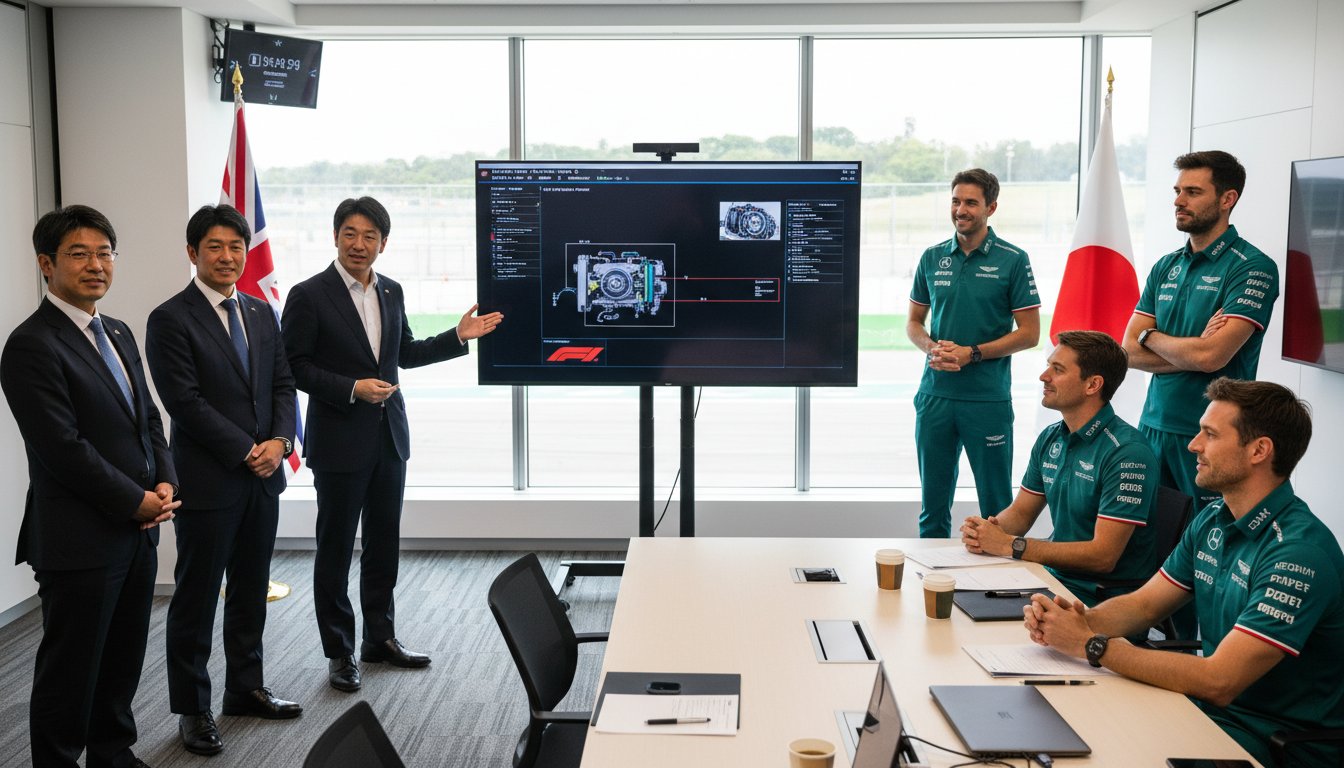
Honda Power Unit Problems: Orihara Confident Hardware Fixes Will Ease Aston Martin’s Start to 2026 F1 Season
Honda trackside chief Shintaro Orihara says hardware changes will tackle Honda power unit problems that disrupted Aston Martin’s early 2026 Formula One campaign.
Honda’s trackside racing director Shintaro Orihara told reporters in Miami that the team believes it has identified solutions to the Honda power unit problems that affected Aston Martin’s opening rounds of the 2026 Formula One season. The complaint centered on excessive vibrations that made the cars uncomfortable for drivers, notably two-time champion Fernando Alonso and team-mate Lance Stroll. Orihara said the team will introduce hardware adjustments intended to reduce those vibrations ahead of further competition.
Orihara’s assessment in Miami
Orihara spoke on the eve of the Miami Grand Prix, outlining the team’s confidence that targeted hardware changes will mitigate the issues that first emerged in the opening three races. He framed the work as technical and hardware-focused, stressing that the aim is to improve drivability rather than overhaul wider power unit architecture. The comments were delivered after a five-week break in the calendar tied to disruptions arising from the Iran war, a pause that allowed engineers additional time to analyse telemetry.
Drivers reported severe vibrations
Both Fernando Alonso and Lance Stroll reported significant vibration problems that affected comfort and control during the early events of the season. Team sources said the symptoms were noticeable enough to influence set-up choices and driver confidence, complicating Aston Martin’s attempts to extract performance. The driver complaints prompted an intensified diagnostic effort by Honda engineers working closely with Aston Martin’s trackside technical staff.
Planned hardware changes and validation
Orihara indicated that the fixes will focus on hardware components tied to the power unit’s mounting and vibration damping systems, though he stopped short of detailing specific parts. The team plans to validate any changes through a combination of bench testing and on-track simulations before full implementation during race weekends. Engineers will monitor vibration spectra and driver feedback to confirm that the adjustments produce the intended reduction in harshness without compromising reliability or performance.
Early-season consequences for Aston Martin
The vibration issues coincided with a difficult start for Aston Martin in a championship they had expected to contest more strongly. What might have been a routine opening sequence of races instead required extra engineering resource and disrupted development priorities. While the team retained faith in its long-term programme, the early disturbances forced a reallocation of attention to immediate drivability concerns, delaying other planned updates.
Timing and implications for the Miami Grand Prix
Orihara’s remarks were timed to reassure stakeholders ahead of the Miami Grand Prix, where Aston Martin will assess the effectiveness of interim measures. The upcoming race offers a near-term opportunity to test whether the hardware interventions translate into perceptible improvements for Alonso and Stroll. Team engineers will combine data from practice sessions with subjective driver reports to decide whether further refinements are needed before the next European rounds.
Broader championship impact and manufacturer focus
Manufacturers across the paddock monitor such developments closely because early-season technical problems can ripple through development timelines and competitive trajectories. For Honda, resolving the power unit problems is not only about restoring one team’s comfort in the cockpit, but also about protecting the reputation of its F1 programme and ensuring that future upgrades can be introduced on schedule. The company faces pressure to balance rapid fixes with the longer-term demands of performance and reliability.
The path forward for Aston Martin and Honda will depend on the effectiveness of the hardware changes and the speed with which engineers can validate them under race conditions. If the interventions reduce vibrations without introducing new compromises, the team can refocus on aerodynamic and chassis updates that were paused amid the early-season problems. Observers will be watching closely as Alonso and Stroll take to the track in Miami to judge whether the remedy restores the driver comfort necessary for competitive lap times.

