
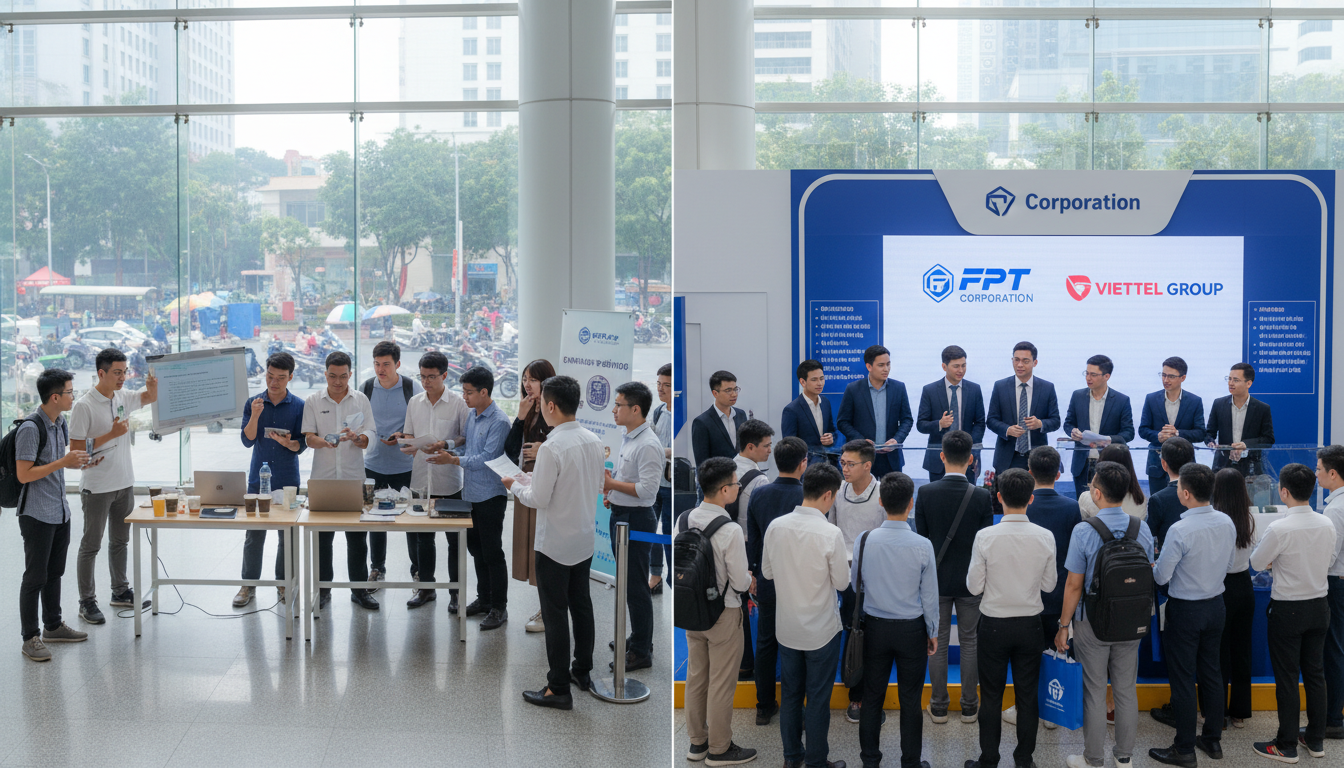
AI talent in Vietnam: Startups lose ground as conglomerates outbid rivals
Vietnam’s AI talent market is tightening as wealthy conglomerates outbid startups, forcing smaller firms to adopt inventive recruitment and retention tactics to hold onto engineers.
Market Strain on Smaller Companies
Smaller Vietnamese firms are finding it increasingly difficult to recruit and retain AI talent in Vietnam as demand surges across industries. Limited cash reserves and narrower product scopes leave many unable to match the salaries and benefits offered by larger groups. That financial gap is prompting startups and mid-sized companies to explore non-salary incentives and alternative hiring models.
Smaller companies report that candidates now weigh project ownership and workplace culture alongside compensation. Even when startups offer equity, candidates often prefer immediate, higher pay from conglomerates that promise stability and large-scale projects. The result is higher turnover and longer hiring cycles for companies with smaller budgets.
Conglomerates’ Financial Advantage
Large, diversified conglomerates are leveraging deep pockets and existing client relationships to secure top engineers. These firms can offer not only higher base salaries but also generous signing bonuses, extensive training programs, and access to vast datasets crucial for machine learning development. Their ability to bundle long-term prospects with immediate monetary rewards creates a difficult proposition for smaller rivals.
Beyond pay, conglomerates attract talent with well-resourced AI teams and visible product roadmaps that promise exposure to large deployments. For many engineers, the chance to work on widely used consumer services or enterprise systems outweighs the entrepreneurial appeal of startups. This concentration of resources risks centralizing AI expertise within a handful of corporate groups.
Engineers Seek Autonomy and Growth
Despite the clear pull of high compensation, many AI engineers express a strong preference for autonomy and rapid skills development. Younger engineers and experienced researchers alike cite the ability to own projects, make technical decisions, and learn broadly as decisive factors. Those motivations have led some candidates to accept lower pay at smaller firms in exchange for faster career progression and larger technical responsibilities.
This dynamic has also spawned a hybrid class of engineers who split time between established companies and contract work for startups. Such arrangements allow skilled workers to gain the stability of corporate employment while pursuing innovative side projects. Employers that can credibly promise meaningful technical leadership roles often win candidates who prize agency over immediate financial gain.
Creative Recruitment and Retention Strategies
Faced with fierce competition, smaller firms are adopting inventive approaches to attract AI talent in Vietnam. Common tactics include remote-first policies, accelerated promotions, bespoke training programs, and partnerships with universities to pipeline graduates. Some companies offer project-based bonuses, flexible hours, and the opportunity to publish research or attend international conferences as non-monetary draws.
Others are experimenting with cooperative models, sharing talent across networks of startups or forming consortiums to bid jointly for grants and projects. These collaborative arrangements can provide engineers with diverse challenges while distributing hiring costs. Human-resources teams are also emphasizing transparent career paths and clearer technical ownership to differentiate smaller employers from corporate alternatives.
Implications for Vietnam’s AI Ecosystem
The current talent tug-of-war carries broader implications for the country’s AI ecosystem and economic competitiveness. If skilled engineers increasingly cluster inside a few conglomerates, innovation at smaller firms could slow, reducing the diversity of AI products and services coming out of Vietnam. That concentration may also increase wage inflation in key hubs, making it harder for early-stage companies to prove concepts and scale.
Policymakers and educational institutions face mounting pressure to boost training capacity and create incentives for talent distribution. Expanded vocational programs, subsidized internships, and publicly funded research collaborations are among the measures being discussed to widen the talent pool. Without coordinated action, the imbalance risks stalling a segment of the local AI industry that relies on nimble, experimental ventures.
Corporate Responses and Collaboration
Some conglomerates acknowledge the issue and have begun cultivating startup ecosystems rather than simply outbidding rivals. Investments, incubators, and acquisition pathways allow large firms to tap into innovation while providing commercial routes for smaller teams. In turn, startups gain access to customers and capital without losing their engineering cores to direct recruitment offers.
Industry associations and private training providers are stepping in with accelerated courses and certification programs aimed at mid-career professionals. These initiatives seek to raise the supply of engineers capable of building production-grade AI systems. Companies that invest in upskilling their existing staff often report lower turnover and faster product development cycles.
The widening competition for AI talent in Vietnam underscores both the opportunity and the risk of the region’s rapid digital transformation. As the market matures, the balance between compensation, autonomy, and growth will shape where engineers choose to work and how innovation is distributed across the economy.
Longer term, the blend of corporate resources and startup agility will determine whether Vietnam can sustain broad-based AI development, or whether expertise becomes concentrated in a few dominant firms. Policymakers, educators and industry leaders will need to coordinate on training and incentive structures to ensure a deep, resilient talent pipeline that supports growth across the whole ecosystem.

