
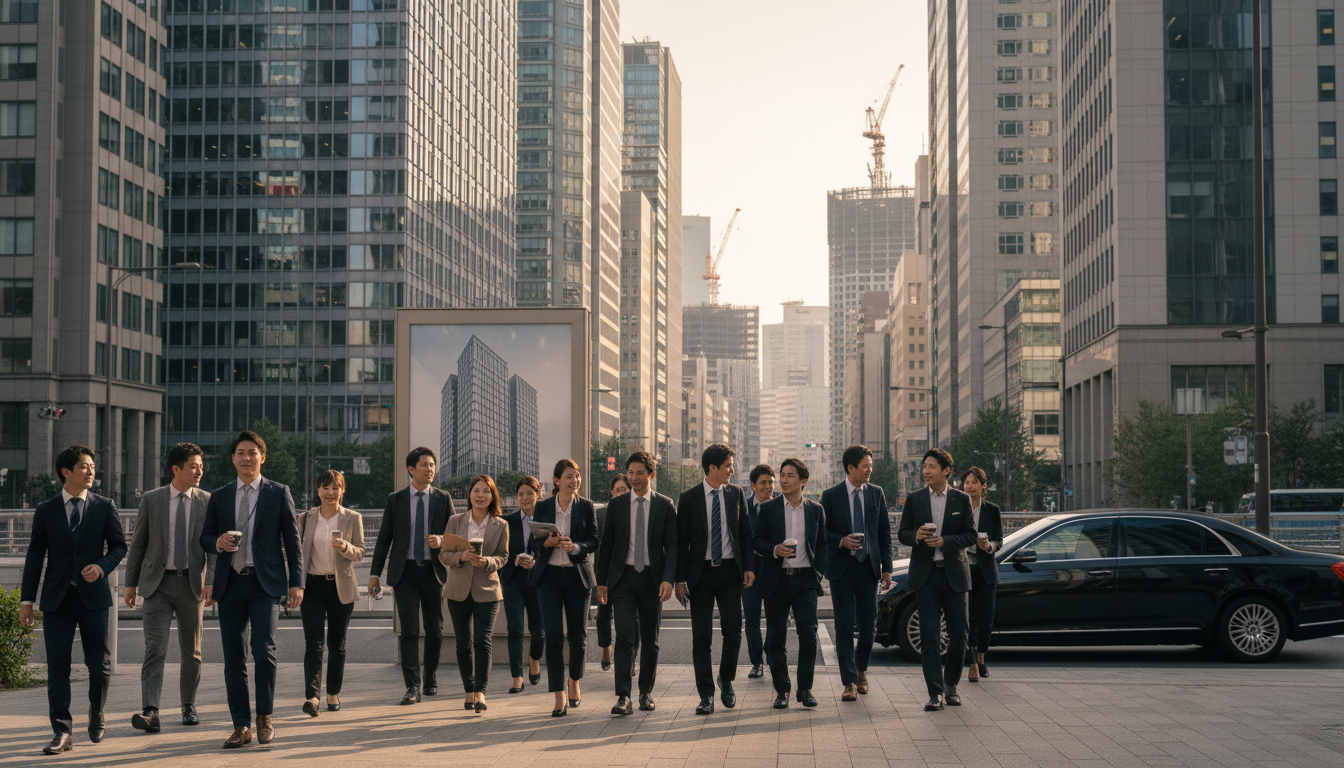
Tokyo office rents hit 31-year high as firms relocate to attract talent
Nikkei survey: Tokyo office rents hit a 31-year high as firms relocate to central hubs near Tokyo Station to attract talent and improve recruitment in 2026.
TOKYO — Tokyo office rents have climbed to their highest level in three decades, driven by a wave of corporate relocations to central, transit-connected districts, a Nikkei survey shows. Companies are moving offices to areas around Tokyo Station and other premium hubs to sharpen recruitment and retention efforts amid fierce competition for skilled workers.
Companies from finance to technology say proximity to transport and amenities is increasingly important for employees deciding where to work. The Nikkei survey attributes much of the recent rent growth to relocations aimed at offering improved workspaces and commuting convenience.
Nikkei survey records strongest rise in 31 years
A Nikkei analysis of office leasing and asking rents found the overall gauge for central Tokyo commercial space reached levels not seen since the early 1990s. The data point marks the steepest upward shift in market pricing for office space in 31 years, reflecting both stronger demand and constrained supply in prime locations.
Survey respondents cited active leasing by firms seeking modern floor plans, upgraded building facilities and locations with better access to major rail lines. Analysts say the measurement captures not only headline rent increases but also landlords’ stronger negotiating positions in top-tier districts.
Relocations motivated by talent competition
Human resources executives and corporate real estate managers report that office relocation has become a strategic tool in talent acquisition. Firms told Nikkei they are willing to pay higher rents to offer offices that appeal to younger professionals and senior hires who prioritize shorter commutes and on-site amenities.
Employers view upgraded office environments as part of a broader package—including hybrid working schedules and enhanced benefits—that helps differentiate them in a tight labor market. For many, relocating to a more prestigious address is seen as an investment in brand and culture rather than a short-term cost.
Tokyo Station area leads rent growth
The area surrounding Tokyo Station has emerged as a focal point of demand and is driving much of the reported rent growth. The station’s role as a national transport hub, combined with extensive redevelopment and high-quality office stock, has made nearby blocks particularly attractive to firms seeking prestige and connectivity.
Other central districts with similar dynamics are also recording stronger leasing activity, but Tokyo Station’s mix of corporate offices, hotels and retail creates a pull that translates into higher asking rents. Landlords in these zones have been selective, prioritizing tenants willing to commit to larger, longer leases.
Implications for smaller firms and suburban markets
While the surge in central rents favors well-capitalized corporations, smaller companies and startups face increased pressure on occupancy costs. Some smaller firms are choosing to decentralize or to take flexible workspaces outside the highest-priced zones to balance cost and accessibility.
Suburban markets and secondary business districts may see renewed interest as organizations weigh the trade-offs between premium central locations and lower-cost options. Real estate advisers say a two-tier market is likely to persist, with prime central rents rising while peripheral rents remain comparatively stable.
Developers and landlords respond with upgrades and new supply
Developers and building owners are reacting to stronger demand by accelerating refurbishment and redevelopment projects in central Tokyo. Many are positioning new office buildings with improved environmental standards, enhanced common areas and integrated retail to justify higher rents and attract blue-chip tenants.
At the same time, the pace of constructing additional premium office supply is constrained by land availability and planning lead times. Market participants warn that although new developments will add modern space, they are unlikely to ease immediate upward pressure on rents in the most sought-after districts.
Market watchers caution on sustainability of gains
Economists and real estate strategists caution that the acceleration in Tokyo office rents reflects a specific mix of labor market tightness and relocation activity, which may moderate over time. Changes in corporate hiring, macroeconomic shifts, or a return to more dispersed remote work models could dampen demand for central office space.
Nevertheless, for now the combination of companies’ willingness to relocate and landlords’ curated supply is supporting higher lease levels. Observers say close monitoring of leasing trends and vacancy data will be essential to assess whether the rally broadens or remains concentrated in a handful of premium precincts.
The Nikkei survey’s finding that Tokyo office rents have reached their highest level in 31 years underscores a significant moment for the city’s property market. As firms continue to weigh location, cost and talent priorities, decisions about where and how to base operations will shape occupancy patterns and rent dynamics across Tokyo in the months ahead.

