
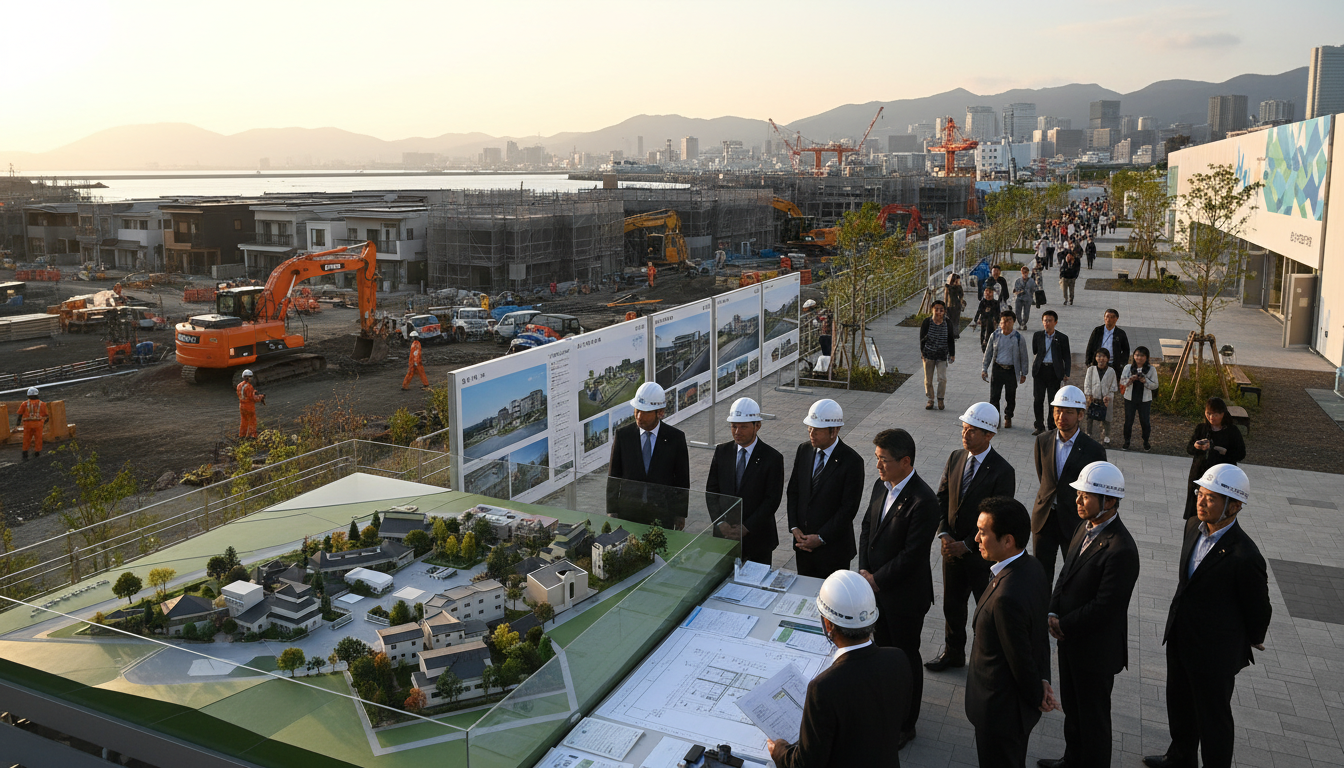
Port Island revitalization: Kobe invests more than ¥2 billion to revive aging artificial island
Kobe is spending over ¥2 billion on a Port Island revitalization project to counter depopulation and aging, aiming to renew housing, services and community networks.
A former “21st-century maritime cultural city,” Port Island off Kobe’s coast is the focus of an ambitious Port Island revitalization effort as local officials and residents confront aging housing, empty storefronts and an increasingly elderly population. The city has committed more than ¥2 billion in public funds to a “Port Island Reborn Project,” and community leaders and longtime residents are testing new approaches to preserve daily life on the reclaimed island. A reporter who moved to the island to document the changes found both practical challenges and resilient civic ties at the heart of the effort.
Origins and intended future of Port Island
Port Island was created through large-scale land reclamation that began in 1966 and took roughly 15 years to complete, with Kobe City reshaping mountain and sea to form a planned maritime district. The island was developed with container terminals, high-rise residential complexes and international exchange facilities, envisioned as a modern “future city” and at one point counted among the world’s largest artificial islands. The original planning reflected mid-20th-century optimism about urban engineering and international commerce.
Construction produced a mixed-use area designed to separate industrial, residential and civic functions, but changing economic patterns and demographic shifts have altered the island’s trajectory. Once bustling public spaces and commercial strips now show signs of underuse, and the infrastructure that supported a younger, expanding population is strained by a smaller, older cohort of residents. The gap between the original vision and present realities frames the rationale for the Port Island revitalization program.
Demographic decline and the “ghost town” concern
Like many planned urban edges in Japan, Port Island is experiencing rapid aging and population decline that have hollowed out neighborhoods and local services. Apartment towers built decades ago now house a disproportionate number of elderly residents while younger families and workers increasingly choose other parts of Kobe or the wider Osaka Bay area. Empty storefronts and reduced foot traffic have prompted media and some residents to refer to parts of the island as a “ghost town.”
The demographic shift affects everyday life: fewer neighborhood stores, reduced public transport demand during off-peak hours and rising maintenance costs for aging communal facilities. City officials cite these trends when describing the urgency of the Port Island revitalization plan, framing the challenge as both social — maintaining community ties — and fiscal, given the long-term cost of aging infrastructure.
City investment and the Port Island Reborn Project
In response, Kobe City launched the Port Island Reborn Project, allocating more than ¥2 billion in tax revenue to a combination of physical upgrades, service experiments and resident-led initiatives. The package aims to target key pinch points: accessible local services, public space activation and incentives to attract small businesses or social enterprises to vacant commercial units. Officials say the funds will support pilot programs intended to be scalable if successful.
The city’s approach blends infrastructure repair with softer investments in community programs, reflecting lessons learned from other urban renewal efforts in Japan. Rather than a single, centralized redevelopment plan, the Reborn Project includes a mosaic of smaller interventions intended to rekindle everyday life and to test formulas that can be adjusted according to resident feedback.
Residents adapt: loose networks and local initiatives
Longtime residents on Port Island describe a mixture of attachment and pragmatism. Community centers, small associations and neighborhood volunteers have become the frontline for social cohesion, organizing local events, mutual aid and basic services for older neighbors. A security guard at a community center, who helped build the island decades ago as a skilled landscaper, speaks for many when he says residents have “aged with the island” and want to preserve what remains of their neighborhood life.
At the same time, newcomers and younger residents are experimenting with different models of participation, favoring looser, less formal networks that lower the barrier to involvement. Annual membership fees for neighborhood groups and flexible volunteer schedules reflect a compromise between maintaining traditional local governance and adapting to modern lifestyles. These hybrid community models are central to the Port Island revitalization strategy, which relies on resident engagement as much as on public spending.
Housing, commerce and contested futures
One recurring debate among residents and planners is how best to reuse vacant or underused spaces — whether to repurpose units for multigenerational housing, convert commercial floors into supermarkets and clinics, or incentivize private developers to create mixed-use facilities. Local cases illustrate the tensions: proposals to replace vacant housing with retail space win support from those seeking services close to home, while families and social advocates argue for retaining residential options.
The city acknowledges trade-offs and says pilot conversions will be monitored for social impact and financial sustainability. Stakeholders note that success will require aligning zoning flexibility, subsidy models and community preferences, a complex mix that often requires time-consuming negotiation.
Reporter’s on-the-ground perspective and implications
A reporter who attended a city-hosted symposium on the Reborn Project and later moved to the island to document life found the interplay of municipal funding and grassroots effort to be decisive. Living in a more than 40-year-old two-bedroom apartment at a moderate rent and joining the local association provided immediate insight into daily routines, volunteer networks and where services fall short. These lived observations underline that physical upgrades alone will not secure Port Island’s future without sustained local participation.
The Port Island revitalization effort will be closely watched as a case study for other reclaimed or planned districts across Japan facing similar demographic pressures. Its combination of targeted public investment and resident-driven experimentation may offer transferable lessons, but the project’s long-term success will turn on whether improvements can attract a more balanced age mix and restore vital commerce and social infrastructure.
As Kobe proceeds with the Port Island Reborn Project, the challenge will be to translate initial investments and pilot programs into durable change that respects the island’s history while meeting present-day needs. The outcome will shape not only Port Island’s next chapter but also wider debates about preserving and adapting Japan’s modern, human-made urban landscapes.

