
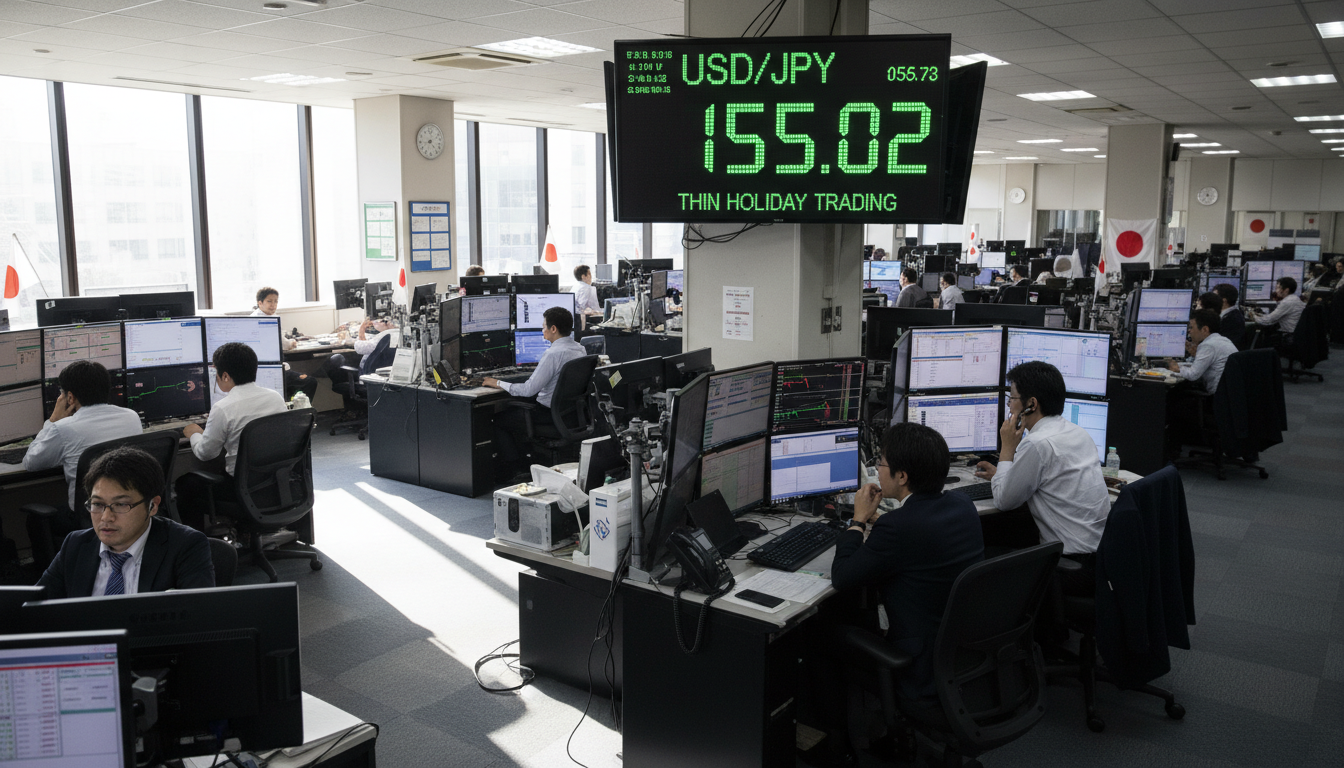
Japanese yen jumps to mid-155 per dollar amid holiday-thinned trading and intervention talk
The Japanese yen strengthened sharply on May 4, 2026, briefly reaching the high-155 per dollar as thin Golden Week liquidity and renewed speculation of government intervention drove volatility in FX markets.
The Japanese yen surged in Asia trading on Monday, May 4, 2026, moving from around 157.20 to the high-155 range against the U.S. dollar in a rapid intraday swing that left traders on alert for further action from Tokyo. The move occurred during a holiday-thinned session while markets in Japan were closed for Golden Week, amplifying the short-term impact of aggressive flows. (investing.com)
Yen surges to mid-155 in thin Golden Week trade
The dollar briefly fell to about 155.69 yen before retracing, marking the strongest intraday yen level since the prior week’s volatility. The speed of the move — roughly a 0.9 percent appreciation within minutes — underscored how quickly exchange rates can shift when domestic markets are shut and liquidity is light. Market notices indicated trading conditions were choppy and that quoted levels may not reflect deep, sustained market demand. (marketscreener.com)
Reports of prior yen-buying add to intervention speculation
Speculation that authorities were intervening resurged after reports earlier in the week that Tokyo had stepped into the market to buy yen and sell dollars, a move widely reported as the first large-scale intervention in about two years. Those accounts, and officials’ public warnings against what they described as excessive moves in the currency, have heightened expectations that the government and other agencies remain willing to act to limit rapid depreciation. Traders said memories of the reported ¥5.48 trillion of yen-buying influence perceptions of how authorities might respond to further weakness. (japantimes.co.jp)
Golden Week closures drain liquidity and magnify moves
Japan’s long Golden Week holiday left domestic markets closed and significantly reduced onshore liquidity, creating an environment where smaller orders can produce outsized price swings. Analysts and bank researchers warned that thin sessions abroad often produce volatile, transient moves that may later unwind when normal trading resumes. The combination of suspected intervention, public comments from officials, and low turnover meant that intraday highs and lows on May 4 should be read with caution. (straitstimes.com)
Traders reposition and hedge amid uncertainty
Market participants reported hurried repositioning of carry trades and short-term hedges as the yen’s rally cut through speculative long-dollar positions. Institutional desks said clients were trimming exposure to USD/JPY and buying options to guard against renewed interventions or another sharp reversal. Several currency strategists noted that stop-loss activity and electronic liquidity providers can exaggerate price moves during holiday sessions, reinforcing the need for measured sizing. (businesstimes.com.sg)
Broader market implications and policy signals
Beyond spot FX, the yen’s sudden strength affected local government bond flows and equity sentiment, with exporters and globally exposed firms closely watching exchange-rate trajectories. Policymakers face a delicate balance: public and private measures to defend the yen could conflict with the Bank of Japan’s stance on domestic monetary policy and its efforts to manage yields. Observers said the episode will test Tokyo’s willingness to combine verbal warnings with direct market intervention should volatility persist. (investing.com)
What investors and officials will monitor next
Going forward, market participants will monitor liquidity as Japanese markets reopen and watch for any official confirmation or denial of intervention that might clarify authorities’ intentions. Traders will also be watching global risk drivers — including developments in energy markets and geopolitical flashpoints — that could influence safe-haven flows into the yen. Volatility measures and option-implied skews on USD/JPY are likely to stay elevated until trading conditions normalize and a clearer policy signal emerges. (nst.com.my)
The rapid appreciation of the Japanese yen on May 4, 2026, highlights how holiday-thinned markets and recent reports of yen-buying can converge to produce sharp, short-lived currency moves, leaving investors and officials alike attentive to the next developments as normal trading resumes.

