
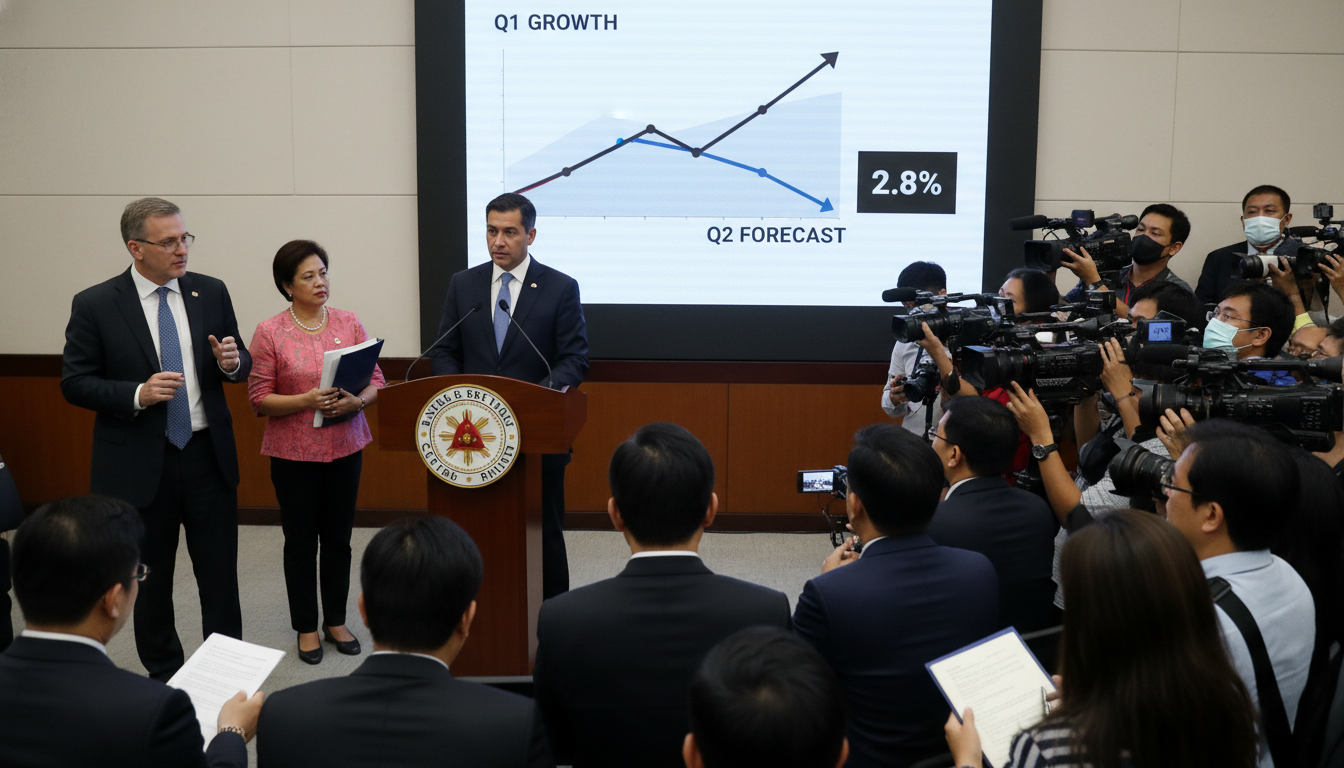
Philippine economy slowdown deepens as Q1 growth hits five-year low at 2.8%
Philippine economy slowdown: Q1 annualized growth fell to 2.8% on May 7, 2026, as the Iran war and soaring fuel costs push inflation higher and threaten a weaker Q2.
The Philippine economy continued to lose momentum in the first quarter of 2026, with official figures showing annualized growth of 2.8% in the January–March period, the slowest quarterly expansion in five years. The slowdown was attributed by authorities to external shocks linked to the Iran war, which have driven global fuel prices higher and disrupted trade, feeding into domestic inflationary pressures. Economists warned that the combination of costlier imports and weakening demand could see growth soften further in the second quarter.
Q1 growth data and immediate implications
The government released the Q1 gross domestic product estimate on May 7, 2026, reporting an annualized expansion of 2.8% for January through March. That pace marks the weakest quarterly performance since early 2021 and contrasts with stronger growth recorded in previous years. Slower output in key sectors and rising input costs were cited as primary contributors to the deceleration.
The GDP reading raises questions about near-term prospects for jobs and incomes, particularly in sectors sensitive to transport and energy costs. Slower growth typically narrows fiscal space and complicates policy choices for authorities seeking to balance support for households with inflation containment. Markets and investors will be watching subsequent releases closely for signs of stabilization.
Global spillovers from the Iran war and energy shock
Officials and analysts pointed to the Iran war as a major external driver of the economic shock, disrupting shipping routes and lifting crude prices. The Philippines imports the vast majority of its oil requirements, leaving the economy highly exposed to international fuel price swings. As a net energy importer, the country has seen transport and production costs rise, squeezing both businesses and consumers.
Higher global fuel prices also translate quickly into domestic inflation, eroding household purchasing power and dampening consumer spending. Export sectors face added strains from higher freight costs and uncertain trade conditions, while import-dependent industries confront rising input bills. The confluence of these factors has reduced the buffer that previously supported growth.
Inflation surge and the risk to the second quarter
With fuel and commodity costs elevated, headline inflation has accelerated, pushing living costs higher for ordinary Filipinos. That surge is a central concern for economists who forecast a sharper growth slowdown in the April–June quarter. Stubborn inflation can undermine real incomes, reduce discretionary spending, and limit private-sector investment, all of which would weigh on GDP.
Policymakers face a difficult trade-off: taming inflation without excessively tightening conditions that could further slow growth. Monetary authorities have limited room to maneuver when price pressures are driven by imported goods, and fiscal measures to shield vulnerable households may add to budgetary strain. The interplay between inflation dynamics and demand will be critical to how the second quarter unfolds.
Impact on transportation workers and small businesses
The immediate pain of higher fuel prices has been visible on city streets, where transport operators and commuters face rising costs. Jeepney drivers and other public transport workers have been among the hardest hit, with many relying on daily fares to meet household expenses. Government cash aid programs have reached some groups, offering temporary relief to those most affected by higher energy and food prices.
Small and medium-sized enterprises that depend on local transport and affordable logistics have also reported squeeze on margins. For many of these firms, higher fuel bills translate into increased prices for consumers or reduced profitability. Prolonged cost pressures could lead to slower hiring or even layoffs in sectors where margins are already thin.
Policy response and government measures
In response to the slowdown and rising prices, the government has rolled out targeted assistance for low-income households and affected workers while monitoring macroeconomic indicators. Officials stressed the need to protect vulnerable groups without undermining medium-term fiscal stability. The balance between direct aid and measures to stabilize prices will shape short-term political and economic choices.
Monetary authorities are likely to weigh any further policy adjustments against inflation trajectories, but action may be constrained by the imported nature of the price shock. Authorities have indicated readiness to coordinate fiscal and monetary measures where appropriate, signaling an approach that seeks to preserve growth while addressing immediate hardship. International cooperation to ease supply-chain disruptions and energy costs could also play a role in stabilizing the outlook.
Final paragraph
Analysts say the economy’s path in the coming months will depend on whether global energy markets calm and whether domestic policy can blunt the impact on households and businesses. If fuel prices recede and supply routes normalize, consumer confidence and spending could recover, helping growth regain momentum. Conversely, persistent inflation and elevated import costs would make it harder for the Philippine economy to rebound quickly, increasing the urgency of policy choices through the remainder of 2026.

