
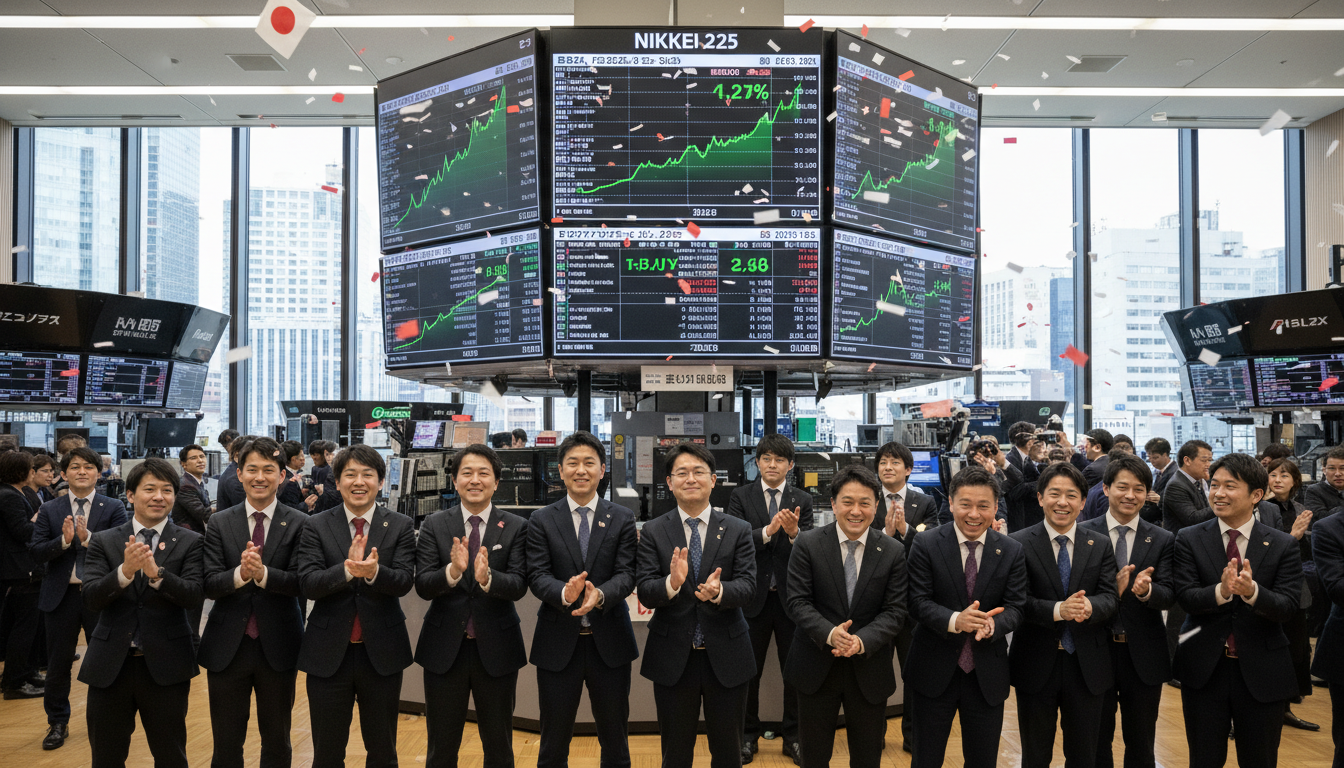
Tokyo market jumps after Golden Week; yen strengthens amid intervention fears
Tokyo market leaps back into action as investors return from Golden Week, buoyed by hopes of U.S.-Iran de-escalation and a firmer yen that has revived intervention concerns.
Market rebound as trading resumes
Japanese stocks opened sharply higher on Thursday morning as the Tokyo market recovered from the extended Golden Week holiday, with investors buying back into risk assets. The rebound reflected a combination of technical catch-up flows, renewed foreign interest, and a broader shift in risk sentiment that favored equities. Trading was characterized by heavier activity than during the holiday period, as market participants digested overseas moves and incoming domestic orders.
The market’s return to full liquidity helped narrow bid-ask spreads and gave portfolio managers room to adjust positions that had been on hold. Several institutional investors indicated they were deploying cash accumulated over the break, particularly into large-cap exporters and technology names. The catch-up dynamic pushed headline stocks higher as shorts covered and momentum traders re-entered the market.
Yen strengthens on intervention concerns
The yen firmed against major currencies early in Tokyo trading, triggering talk of potential intervention by Japanese authorities to curb rapid swings. Market participants said the currency’s move was sharp enough to revive memories of past FX operations, prompting speculation that the Ministry of Finance and Bank of Japan would monitor the market closely. That speculation in turn fed further volatility in FX and equity flows, as currency-sensitive sectors saw refreshed investor interest.
Currency traders cited a blend of safe-haven buying and flows from unwind of short-yen positions as contributing factors. While official intervention remains a high bar, the mere prospect of stepped-up monitoring by authorities can be enough to shape market behavior, particularly in the immediate aftermath of a holiday when liquidity is still settling. Analysts noted that the yen’s firmness could temper gains in exporters’ shares if it persisted, even as it supported domestic-focused stocks.
Geopolitical hopes lift risk appetite
A key driver cited by traders was growing optimism around diplomatic progress between the United States and Iran, which market participants said could reduce geopolitical risk in the region. Investors reacted to reports suggesting both sides were engaging in talks that might lessen the prospect of wider conflict, and that easing of tensions would support global growth expectations. The sense of de-escalation helped push riskier assets higher and encouraged reallocations into equities in Tokyo.
Strategists observed that even tentative signs of reduced conflict can have an outsized impact on markets, by lowering oil-price risk premia and diminishing flight-to-safety flows. The Tokyo market’s response was therefore partly driven by global sentiment improvements rather than purely domestic news. That linkage between geopolitical headlines and equity moves underscores how closely Japan’s market remains tied to international developments.
Winners and losers among sectors
Sectors that stand to gain from a softer yen and improved global demand — including exporters, electronics suppliers, and selected manufacturers — attracted the bulk of buying interest. Technology-related firms saw renewed attention as investors positioned for improved overseas orders and narrowing supply-chain disruptions. Conversely, defensive plays and utilities saw more muted activity as traders moved back into cyclical exposure.
Domestic-oriented areas such as retail and consumer services experienced mixed flows, with some names benefiting from seasonal demand and others lagging amid caution over uneven spending patterns. Financial stocks showed sensitivity to both bond-market moves and institution-driven flows, reflecting investor evaluation of rate outlooks and profit prospects. Market-watchers emphasized that sector rotation could continue as the yen’s level and external news unfold.
Policy watchers eye Bank of Japan and Ministry of Finance
Market participants were also focused on the policy backdrop, with attention on any comments or actions from the Bank of Japan and the Ministry of Finance. The BOJ’s stance on yield control and potential hints about future monetary policy normalisation remain central to investor calculations. Meanwhile, the Ministry of Finance’s posture on FX stability is being watched for any sign it might act to smooth disorderly moves in the yen.
Analysts cautioned that while short-term moves are being driven by sentiment and liquidity, medium-term trends will hinge on macro data and policy signals. Investors are likely to pace re-entry into risk assets until they have greater clarity on central bank communications and incoming economic indicators. That cautious approach could lead to episodic volatility as the market balances optimism with potential policy shifts.
The early-week rebound in Tokyo highlights how quickly markets can reorder after holidays when fresh information and renewed trading interest converge. As investors settle positions and monitor geopolitical and policy developments, market participants expect trading to remain active but sensitive to incoming news flows.

