
Hachirogata mayor no-confidence passed unanimously after family resignation declared invalid
Hachirogata mayor no-confidence passed unanimously after Mayor Kikuo Hatakeyama fell unconscious from a cerebral hemorrhage on Feb. 6; council acted on May 8.
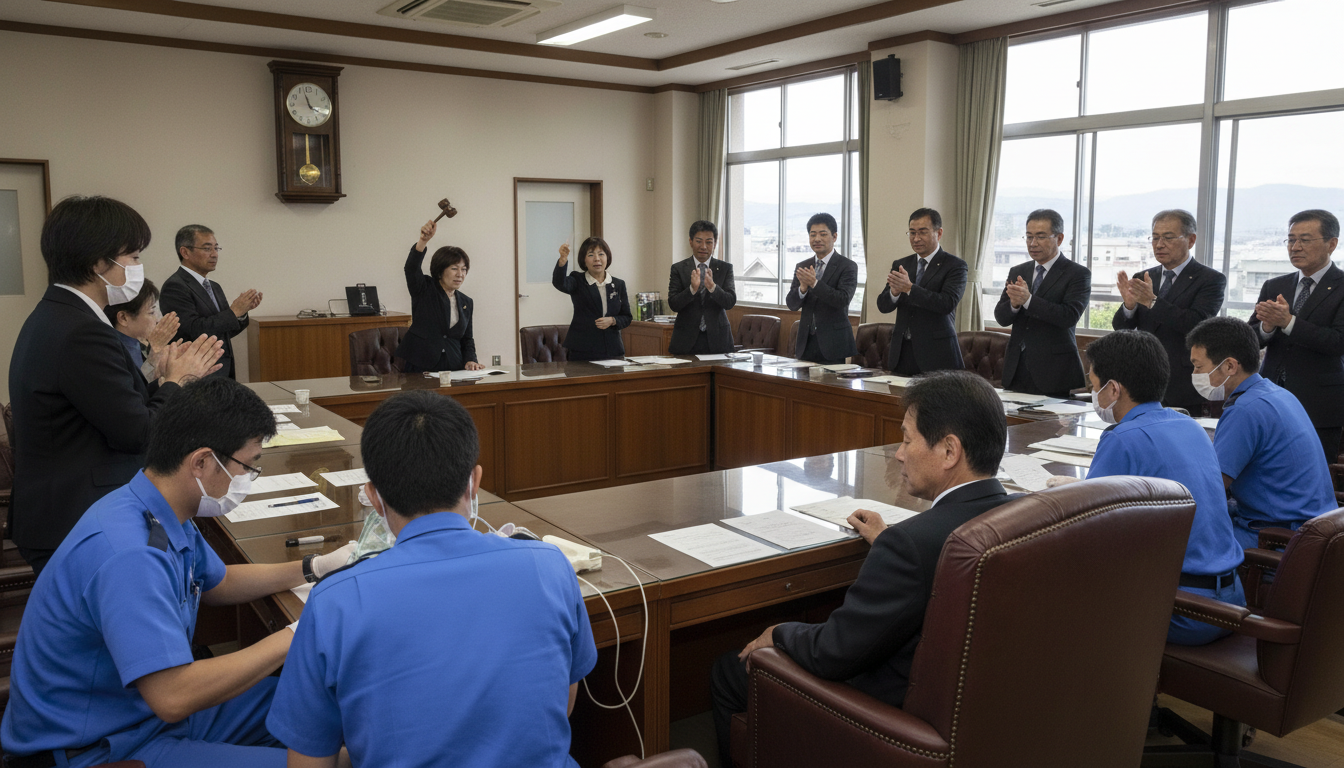
The Hachirogata town council in Akita prefecture on May 8 approved a no-confidence resolution concerning Mayor Kikuo Hatakeyama in a unanimous vote. The Hachirogata mayor no-confidence measure formalizes the assembly’s response after the 72-year-old mayor has been medically unable to express a resignation, town officials said. The decision follows a family request and legal guidance that a proxy resignation would be invalid under local rules.
Town assembly unanimously approves no-confidence resolution
The special session convened by the Hachirogata town assembly resulted in a unanimous adoption of the resolution, council members said. The motion was presented and passed without dissent after deliberations about how to address the prolonged absence of the elected mayor.
Council leaders emphasized that the vote did not reflect a political confrontation with the mayor but was taken to resolve an administrative impasse caused by his incapacitation. The assembly framed the action as a procedural step aimed at maintaining stable town administration rather than a punitive measure.
Mayor Hatakeyama hospitalized since Feb. 6 after cerebral hemorrhage
Town records show Mayor Kikuo Hatakeyama was taken by ambulance on Feb. 6 after falling ill while on official duty and was diagnosed with a cerebral hemorrhage. He underwent emergency surgery and has remained unconscious since the operation, according to the municipality. The mayor’s extended hospitalization has left him unable to perform official duties or to formally indicate any intention to resign.
Following his hospitalization, the deputy mayor assumed the functions of the office as the acting chief executive to ensure continuity of municipal services. Town officials have repeatedly stated their priority is to keep essential services running for residents while the legal status of the mayor’s office is clarified.
Mayor’s wife submitted a request to the assembly on April 20
On April 20, Hatakeyama’s wife submitted a written request to assembly chair Yuhei Yanagida asking the council to decide the mayor’s future, citing medical assessments. In the letter, she relayed that doctors had informed the family it would be difficult for the mayor to make an early, full recovery and that even if consciousness returned, maintaining the health required to carry out mayoral duties would be unlikely. The letter asked the assembly to take responsibility for determining the appropriate course of action in the interests of the town.
Family members told council leaders they believed it would be best for the mayor to step down to avoid imposing further burdens on town governance, but they also acknowledged that they could not submit a resignation on his behalf under the current legal framework.
Town sought guidance from central government and municipal association
To determine the correct legal handling of the family’s request, the town consulted the Ministry of Internal Affairs and Communications and the Japan Association of Towns. Both bodies advised that, under the Local Autonomy Law and related regulations, a sitting mayor must personally submit a resignation or otherwise indicate an intention to leave office; a family member’s submission is not legally equivalent. The town received this guidance before the assembly moved to consider alternative measures.
Officials said the consultations were intended to avoid taking actions that could be challenged later and to ensure any steps taken would protect the town’s administrative functions and legal standing. The advice from national authorities shaped the assembly’s decision to pursue a no-confidence resolution rather than accept a family-submitted resignation.
Assembly chair describes vote as reluctant but necessary
Assembly chair Yuhei Yanagida told reporters the council did not take the motion lightly and that members would have preferred to avoid a formal no-confidence step if a lawful resignation could be submitted. He said the decision was driven by practical concerns about governance and the need to prevent disruption to town services and finances. Yanagida added that the assembly sought to act in a way that minimizes inconvenience to residents while respecting the dignity of the mayor and his family.
Council members reiterated that the vote was an extraordinary measure prompted by exceptional circumstances, noting the strain on municipal operations created by the prolonged vacancy in active leadership. They also expressed sympathy for Mayor Hatakeyama’s family and affirmed a desire to handle the matter with care and respect.
Acting leadership and administrative continuity going forward
With the no-confidence resolution adopted, the deputy mayor continues to serve as the acting head of the town government to oversee routine administration and emergency responses. Town officials said they will now work to follow the legal procedures needed to address the leadership gap in accordance with national guidance. The assembly indicated it will coordinate with prefectural authorities and legal advisors to determine next steps that comply with statutory requirements.
Local councillors emphasized that ensuring uninterrupted public services and financial stability remains the immediate priority, while municipal leaders said they will keep residents informed about developments. The council also noted that any change in the formal status of the mayor’s office must proceed through established legal channels.
The unanimous vote in Hachirogata underscores the dilemma small municipalities face when an elected official becomes medically incapacitated and family requests for resignation collide with statutory requirements. The town has signaled it will continue consulting legal authorities as it seeks a lawful path to restore a fully functioning executive leadership for residents.

