
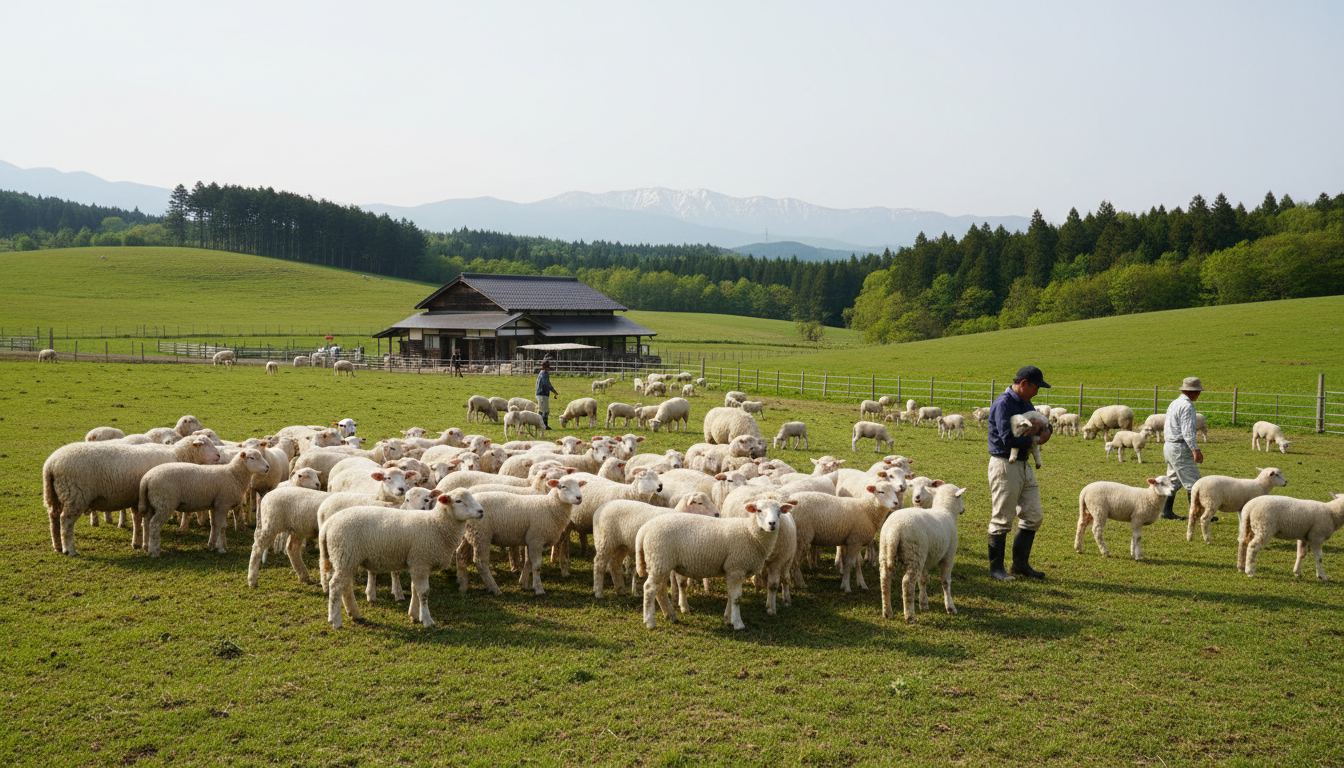
Lambing Season in Eniwa: More Than 340 Lambs Born at Eco-rin Village
Lambing season at Eco-rin Village in Eniwa, Hokkaido: more than 340 Poll Dorset lambs born since late February. Pastures open mid-May; public access limited.
ENIWA, Hokkaido — Lambing season at Eco-rin Village has produced more than 340 baby lambs since it began in late February, farm officials said on May 11, 2026. The farm, which raises Poll Dorset sheep prized for their white wool, expects births to continue through around May 20. Staff report lively pens where newborns bleat and nurse, and the operation is preparing to move animals to nearby pastures in mid-May.
Lambing totals and timeline
Eco-rin Village recorded the first lambs of the season in late February, with births continuing at a steady pace through spring. More than 340 lambs have been counted to date, and farm managers anticipate additional deliveries until approximately May 20.
The lambing sheds remain closed to the public for now, according to the farm, with a planned transfer of the flock to grazing areas beginning in the middle of May. Officials cited animal health and acclimation needs as reasons for restricting early access.
Breed characteristics and husbandry
The flock at Eco-rin Village is predominantly Poll Dorset, a breed chosen for its white fleece and adaptability to local conditions. Poll Dorsets are known for hardiness and consistent maternal instincts, traits the farm says help maintain steady lambing outcomes.
Farm staff described routine husbandry practices during the season, including assisted deliveries when needed and close monitoring of newborns for vitality and weight gain. Veterinary staff conduct regular checks to ensure vaccinations and parasite controls are up to date.
Pasture transfer and animal welfare preparations
Handlers plan to move the lambs and their mothers to nearby pastures starting in mid-May, weather permitting. The transition includes gradual exposure to open grazing and supervised turnout to minimize stress and reduce the risk of injury.
Preparations for pasture grazing include fence inspections, water supply checks, and rotational grazing plans to preserve pasture quality. Farm managers emphasized that biosecurity measures remain in place during transfers to protect both the flock and surrounding farms.
Public access and visitor arrangements
Eco-rin Village currently keeps its lambing sheds closed to visitors to protect the animals during the neonatal period. The farm indicated that public viewing of lambs will be possible after they settle into pasture, but precise dates and access rules have not been finalized.
When visits are permitted, the farm expects to impose simple hygiene measures such as hand washing and controlled pathways to prevent disruption. Local tourism officials noted that many farms in Hokkaido follow similar cautious approaches during lambing season to balance visitor interest with animal welfare.
Local economic and agricultural impact
Spring lambing contributes to the seasonal rhythm of Eniwa’s agricultural community, supporting wool production and local markets. Eco-rin Village supplies both wool and replacement lambs to regional buyers, and successful lambing seasons help stabilize farm income into the summer months.
Farm managers said demand for locally raised lambs and wool has remained steady, with occasional spikes tied to agricultural events and regional craft markets. The seasonal movement of livestock to pastures also supports related services, including fencing, veterinary care, and feed suppliers.
Veterinary oversight and health monitoring
Veterinarians affiliated with the farm perform routine postnatal examinations and advise on nutrition and parasite management. Newborn lambs are checked for congenital issues and receive targeted care when necessary to improve survival and growth rates.
The farm maintains records of births, health interventions, and treatments to track flock performance across seasons. Officials stressed that early detection and treatment are central to maintaining herd health during the concentrated lambing period.
As the lambing season progresses toward the estimated May 20 close, Eco-rin Village will oversee the gradual shift to pasture life and monitor lamb development ahead of summer grazing. The farm invites local residents to follow updates about public viewing and pasture opening dates through community channels.

