
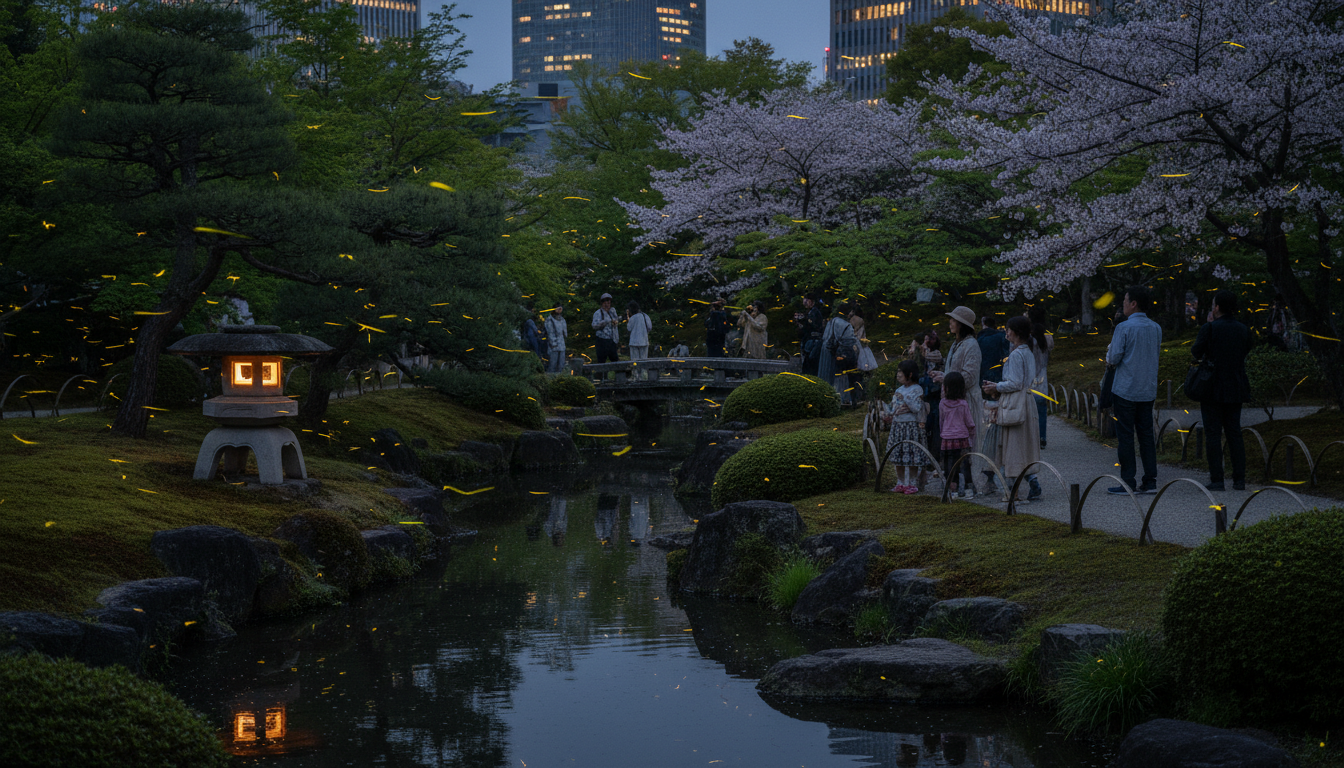
Tokyo firefly events 2026: Where to see fireflies near Tokyo this summer
Discover the best Tokyo firefly events this summer, with dates, access details and viewing tips for Hachiōji, Fussa, Yomiuriland, Adachi and nearby prefectures.
The Tokyo firefly events season is underway across the capital’s outskirts and neighboring prefectures, with organized displays and riverside viewings running through May, June and into July. These seasonal programs range from garden-led night openings to community firefly festivals and independent river spots, giving residents and visitors multiple chances to see genji-botaru and heike-botaru in their natural glow. This guide summarizes schedules, access routes, ticketing and practical tips for attending the most notable firefly viewings near Tokyo.
Major Tokyo-area firefly events and dates
Yuyake Koyake Fureai no Sato in Hachiōji will host its firefly nights from June 7 to June 22, with a modest admission fee. The site is a camping and recreation facility that offers a countryside atmosphere within easy reach of western Tokyo, and organizers recommend arriving after dusk for the best sightings. For many Tokyo residents, Yuyake Koyake provides a convenient alternative to longer day trips while still offering the sense of rural night viewing.
Fussa’s Firefly Festival is scheduled for June 1 and is organized around Firefly Park and the Tamagawa Josui area near Ushihama and Kumagawa stations. The festival is typically free and includes food stalls and traditional stage performances that accompany the firefly viewing after sunset. Yomiuriland’s HANA・BIYORI hosts a longer-running Hotarubiyori program from May 23 to June 29, though it is closed on June 12 and requires timed tickets for the firefly sessions.
Other notable events include Manyo Park in Yugawara from May 30 to June 8, Sankeien Garden’s firefly evenings which are usually scheduled in early June, and Nagusa Firefly Village in Ashikaga running June 7 to June 22. Hirai River offers an informal but reliable stretch of sightings from mid-June to mid-July for those willing to travel by bus from Musashi-Itsukaichi. Adachi Biological Garden stages a separate Firefly Night across late May with limited, advance-ticketed entries and special anniversary programming.
Yuyake Koyake Fureai no Sato (Hachiōji) — June 7–22
Yuyake Koyake Fureai no Sato positions itself as a countryside experience within Tokyo prefecture and opens its grounds for firefly viewing each season. Entry is shown at a nominal fee and the program is best experienced after dusk when the surrounding greenery dims and fireflies become visible. The site is particularly attractive to families and visitors seeking a short overnight or evening trip without leaving the metropolitan area.
Public transport access requires riding from Takao Station on JR or Keio lines, then taking the Nishi-Tokyo bus bound for Jimba Kogen-Shita and alighting at the Yuyake Koyake stop about 30 minutes later. Because the facility is not immediate to a train station, attendees should plan bus schedules and consider earlier arrival to secure parking or a campsite where applicable. Local rules typically ask visitors to keep the grounds quiet and to avoid using flashlights that could disturb the fireflies.
Organizers commonly advise checking weather and site notices before departure, since rain and strong wind reduce visible activity. Summer humidity and warm, calm evenings usually coincide with peak firefly displays, so selecting a night with those conditions increases the likelihood of a memorable sighting. Visitors should also respect any on-site conservation signage to protect breeding areas and preserve habitat for future seasons.
Fussa Firefly Festival and Yomiuriland Hotarubiyori
Fussa’s Firefly Festival centers on a compact display of roughly 500 fireflies and combines the natural spectacle with food booths and cultural performances such as Okinawan eisa, taiko drumming and soran bushi. The festival typically takes place at night; organizers recommend arriving after sunset when the insects’ bioluminescent displays become visible. Because the event is open to the public and free, expect local crowds and plan transit accordingly.
Yomiuriland’s Hotarubiyori runs across a multi-week schedule and stages timed firefly sessions nightly from 7:40 p.m. to 9:00 p.m., with a closure date on June 12. Entry to the firefly sessions requires a timed ticket priced at a modest fee for school-aged visitors and older, while preschoolers enter free; in addition, admission to HANA・BIYORI or Hanakei no Yu is required. The Yomiuriland program emphasizes species variety, with genji-botaru appearing earlier in the evening and heike-botaru showing subtler glows later on.
For both Fussa and Yomiuriland, light management is critical: venues reduce ambient lighting to enhance visibility and protect habitats. Visitors should follow venue guidance, avoid white lights or flash photography near viewing areas, and remain on designated paths to prevent habitat disturbance. Timed entries and event gates help manage crowding; purchasing tickets in advance when available is recommended.
Riverside and park viewings: Hirai River, Manyo Park and Nagusa
Hirai River, accessed by a short bus from Musashi-Itsukaichi Station, is a popular informal location for families and small groups seeking riverside firefly sightings between mid-June and mid-July. There is no formal event schedule, and visitors are advised to arrive around 7–8 p.m. on warm, clear evenings when firefly activity peaks. Since parking is limited or nonexistent, public transportation is the recommended option and visitors should confirm bus return times before they travel.
Manyo Park in Yugawara organizes a timed program from May 30 to June 8, with evenings running from about 7:30 p.m. to 9 p.m., and often features local food trucks and lantern displays that frame the firefly walks. The park deliberately minimizes illumination during the event to prioritize the insects’ visibility, creating a darkened promenade that highlights the natural glow. Manyo Park’s location near Hakone’s onsen district makes it an appealing pairing for visitors who want an overnight stay combined with evening viewing.
Nagusa Firefly Village in Ashikaga is a conservation-success story and has been recognized for efforts to revive local firefly populations; its viewing window typically runs June 7 to June 22. The village charges no entrance fee but encourages donations to support habitat protection and breeding ponds. Given Nagusa’s distance from central Tokyo—around three hours by public transit for many travelers—attendees should budget for longer travel times and consider combining the trip with other regional sightseeing.
Sankeien Garden evenings and other Kanagawa highlights
Sankeien Garden in Yokohama traditionally holds late-evening openings for firefly viewing, usually in early June, and extends garden hours until around 9 p.m. for these special nights. The garden recommends arriving between 7:30 p.m. and 9 p.m., when visibility for fireflies is at its highest, and warns that rainy nights make sightings difficult as insects shelter beneath foliage. Sankeien’s manicured setting provides a contrasting backdrop to the woodland and river locations closer to Tokyo, drawing visitors who prefer a garden environment.
Manyo Park in Yugawara and Sankeien in Yokohama represent the range of experiences available in Kanagawa: from darkened park promenades to historic garden evenings with curated lighting. Each venue manages visitor flow and lighting to balance public access with species protection. Travelers should check each site’s announcements for precise dates and any weather-related changes before departing.
Access, tickets and practical tips for Tokyo firefly events
Most organized events around Tokyo use timed entries, limited tickets or advance reservations to control crowds and protect habitats, so check each venue’s admission rules before traveling. Prices vary from free community events to modest admission fees—examples include Yuyake Koyake’s small charge, Yomiuriland’s timed firefly ticket for children and adults, Sankeien’s typical event fee, and Adachi Biological Garden’s advance-ticketed slots that have sold out in some years. Always confirm exact ticket prices and availability with organizers or official channels ahead of your visit.
Public transport is the safest option for most sites, especially those without dedicated parking or those close to residential neighborhoods. Many viewing spots advise arriving by train and transferring to local buses or walking from the nearest station, so plan schedules and allow time for night-time transfers. For those driving, be mindful that some areas have limited or no parking and that late-night roads may have reduced services.
On-site behavior matters: keep noise to a minimum, avoid flash photography and do not use mobile phone lights near viewing zones. Wear insect-appropriate clothing, bring a small torch with a red filter if needed for safety, and carry water and light jackets for cooler nights. Finally, choose evenings with warm, still weather for the best chance of sightings, and have a backup plan in case rain or wind disperses the fireflies.
This summer’s Tokyo firefly events offer multiple ways to experience one of Japan’s most evocative seasonal traditions, whether you prefer a short outing within the capital’s outer wards or a longer excursion into neighboring prefectures. Plan your trip around the dates and ticketing details provided, prioritize public transport when possible, and follow venue guidance to protect habitats so these displays remain available to future visitors.

