
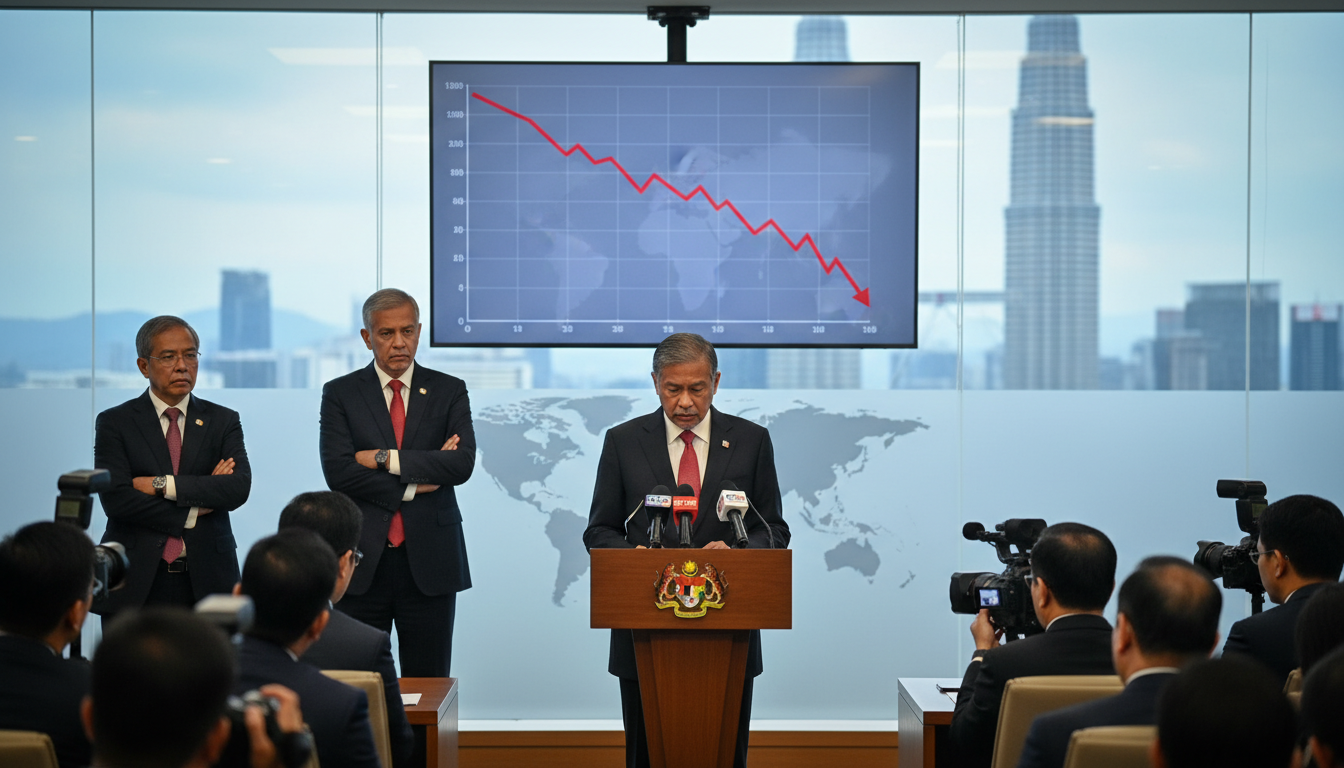
Malaysia economy slows in Q1 2026 as Middle East conflict and rising costs sap momentum
Malaysia economy edges lower in Q1 2026, growing 5.3% year-on-year as external shocks and higher energy costs begin to weigh on activity. Officials warn of second-half headwinds.
Malaysia’s economy grew at a slower pace in the January–March quarter of 2026, the government’s advance estimates showed, as higher energy prices and supply disruptions linked to the Middle East conflict started to strain activity. The modest moderation from late‑2025 momentum was driven by cooling gains in some key sectors even as domestic demand and exports provided support. (au.investing.com)
Official Q1 figures and pace of moderation
The Department of Statistics’ advance estimate put year‑on‑year growth at around 5.3% for Q1 2026, moderating from the stronger expansion recorded at the end of 2025. Quarter‑on‑quarter seasonally adjusted measures showed slower sequential growth, reflecting a normalization after robust late‑2025 gains in manufacturing and services. Final detailed GDP components and the revised print were expected with the official release schedules in mid‑May. (au.investing.com)
Central bank signals and energy‑price risks
Bank Negara Malaysia has flagged the prolonged Middle East conflict as a key risk to both growth and inflation, noting that higher global oil prices and potential supply disruptions could lift costs for households and firms. The central bank maintained its policy rate in early May while stressing that an extended rise in fuel prices and logistical bottlenecks would dampen the economic outlook. Policymakers have stressed vigilance, warning that a severe or prolonged shock to maritime routes could amplify headwinds. (businesstimes.com.sg)
Domestic demand and export resilience
Despite external pressures, domestic demand remained an important growth pillar in the quarter, with consumer spending and tourism partially offsetting weaker pockets of activity. Exports continued to underpin the shock absorption capacity of the economy, supported by semiconductor and electronics shipments as well as steady demand from major trading partners. Officials and local agencies pointed to sustained household consumption and resilient services activity as factors keeping overall expansion intact. (bernama.com)
Monetary policy stance and inflation outlook
Bank Negara’s decision to keep the overnight policy rate unchanged reflected a cautious balance between supporting growth and guarding against imported inflation from rising energy costs. Headline inflation remained relatively contained in the first quarter, but central bankers signalled that second‑round effects from higher fuel and commodity prices could push core inflation upward later in the year. The monetary authority has reiterated its readiness to adjust policy if inflationary pressures become persistent. (businesstimes.com.sg)
Economists’ expectations for the remainder of 2026
Economists surveyed by market outlets expect growth to ease in the second half of 2026 as rising costs weigh on households and businesses, trimming real disposable income and investment. Forecasts generally project a moderation from the first‑half pace, with downside scenarios tied to a sharper‑than‑expected jump in energy prices or renewed global trade disruptions. Policy watchers say domestic fiscal support and targeted measures for vulnerable industries could help contain the slowdown if external pressures intensify. (au.investing.com)
Risks to the outlook and contingency considerations
Key downside risks highlighted by analysts include sustained high oil prices, further shipping disruptions, and potential contagion to financial markets if geopolitical tensions widen. A closure or significant disruption of key shipping lanes could have an outsized impact on trade flows and production inputs for Malaysia’s export‑dependent sectors. Authorities and business groups are monitoring supply‑chain developments and energy markets closely to prepare contingency plans. (cariasean.org)
Looking ahead, Malaysia’s near‑term growth profile will hinge on the interplay between resilient domestic demand, the performance of export sectors, and the trajectory of global energy prices, with policymakers signaling readiness to act if imported cost pressures translate into broader inflation or weaker economic momentum.

