
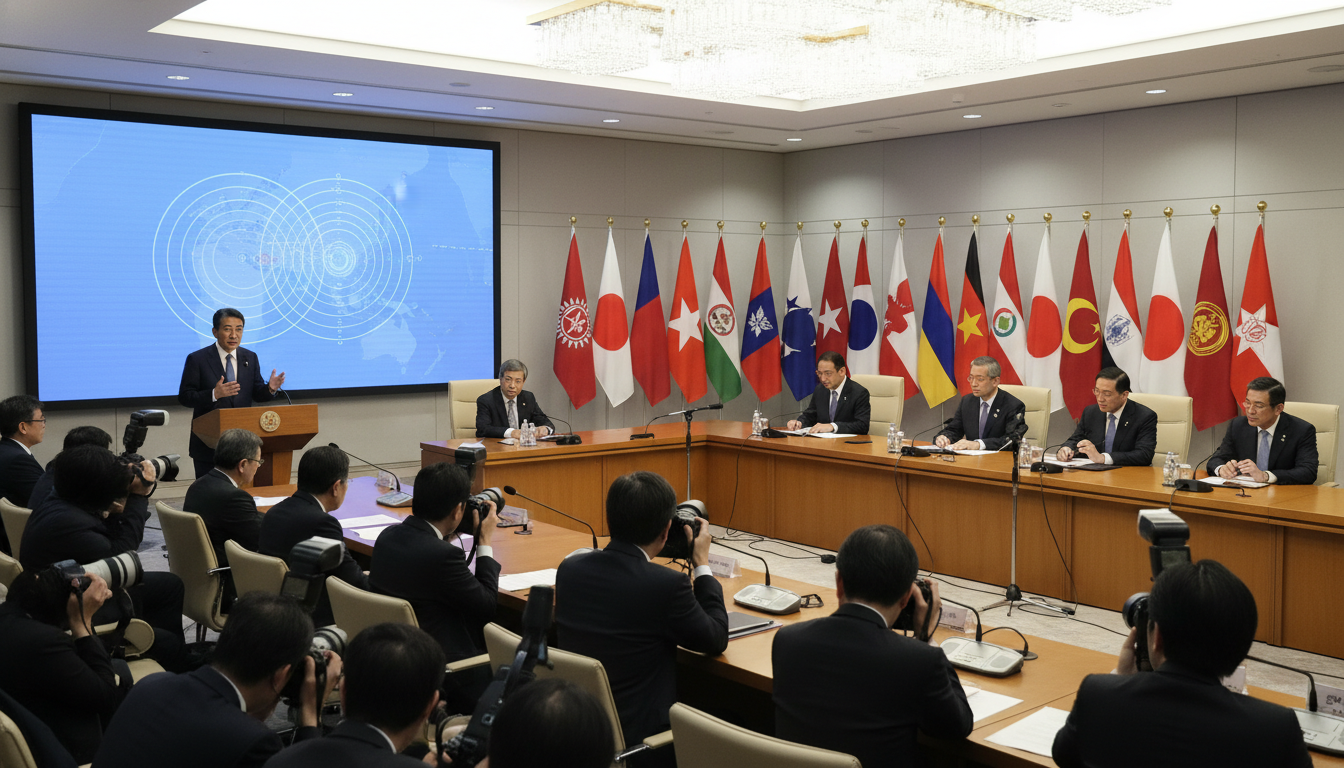
Japan to share maritime vessel monitoring data with Southeast Asia
Japan to share maritime vessel monitoring data with Southeast Asian nations to promote Japanese MDA services and strengthen regional maritime security and supply-chain resilience.
Japan will begin sharing maritime vessel monitoring information with Southeast Asian countries as part of a government-led push to expand the use of maritime domain awareness services provided by Japanese firms. The initiative aims to improve real-time tracking of commercial and state vessels across regional waters while encouraging partner nations to procure MDA platforms and analytical tools from Japanese suppliers. Officials describe the move as a response to growing concerns about transit disruptions and procurement vulnerabilities in global shipping routes.
Tokyo announces data-sharing pilot with regional partners
The Japanese government said the program will initially provide partner governments with vessel tracking feeds and analytic summaries to help monitor busy sea lanes and exclusive economic zones. The pilot is intended to be interoperable with existing national systems and to respect sovereignty, offering configurable data-sharing arrangements and technical assistance.
Japanese officials see the pilot as a way to lower barriers for Southeast Asian states to adopt commercial maritime domain awareness services, while building confidence in Japanese technology and standards. The announcement follows informal consultations with several capitals that have expressed interest in improving maritime monitoring capabilities without increasing military dependence.
Goal: expand adoption of Japanese maritime domain awareness services
A central aim of the program is to promote Japanese MDA products — including satellite data, coastal radar integration and vessel-identification software — to governments and commercial operators in the region. By coupling information sharing with procurement support, Tokyo hopes to create a stable demand pipeline for domestic companies supplying sensors, platforms and data analysis.
Japanese firms have been active in supplying maritime equipment to the region, and officials say the new approach blends commercial diplomacy with capacity-building. The government will offer guidance on procurement best practices to help partners manage contract risks and ensure long-term maintenance and interoperability.
Hormuz disruption highlights procurement and transit risks
Officials cited recent disruptions to major shipping routes, including the effective closure of the Strait of Hormuz at times, as evidence of how geopolitical shocks can expose procurement and transit vulnerabilities. Such incidents have underscored the strategic value of accurate, timely vessel monitoring for both commercial continuity and maritime safety.
Tokyo argues that improved maritime domain awareness can help governments and industry anticipate rerouting needs, detect suspicious activity and coordinate search-and-rescue or pollution responses more effectively. The emphasis on information sharing is meant to provide near-term operational benefits while supporting longer-term modernization of coastal surveillance infrastructures.
Japan Coast Guard and private sector to provide technical support
Implementation will draw on the Japan Coast Guard’s operational experience and a range of private-sector partners that supply sensors, satellite services and analytic platforms. The coast guard has previously worked with Southeast Asian counterparts and supplied patrol vessels and training to several countries, creating channels for technical cooperation and personnel exchanges.
Private companies will be invited to demonstrate systems and offer service contracts tailored to partner needs, with government-backed frameworks to limit procurement risk. Tokyo plans to accompany data feeds with training modules and system-integration assistance to smooth adoption and reduce maintenance challenges.
Regional capitals weigh benefits and sovereignty concerns
Southeast Asian governments have reacted with measured interest, balancing the operational advantages of enhanced monitoring against concerns over data sovereignty and strategic dependencies. For many countries in the region, upgrading maritime surveillance is a priority, but decisions about suppliers are influenced by long-term maintenance costs and geopolitical relationships.
Diplomats say Tokyo’s emphasis on configurable data-sharing and commercial procurement options is designed to reassure partners that they can protect sensitive information while benefiting from improved situational awareness. Analysts note that offering flexible arrangements may broaden appeal beyond those seeking security partnerships to include primarily commercial maritime users and resource managers.
Industry outlook and implications for regional security markets
If the initiative expands, it could create new export opportunities for Japanese maritime-tech firms while accelerating the modernization of coastal monitoring across Southeast Asia. Greater diffusion of standardized tracking tools may also improve maritime safety, fisheries management and anti-smuggling operations, according to observers.
At the same time, increased reliance on commercial MDA providers raises questions about long-term sustainment and interoperability with allied military systems. Japan’s strategy of pairing data-sharing with procurement guidance aims to mitigate those risks by encouraging transparent contracting and local capacity development.
Japan’s new data-sharing program is both a commercial push and a practical response to vulnerabilities exposed by recent disruptions to global sea lanes. By offering vessel tracking feeds, technical training and procurement advice, Tokyo is seeking to strengthen regional maritime awareness while promoting Japanese industry standards.
The success of the effort will depend on the willingness of Southeast Asian governments to embrace externally supplied services and on Japan’s ability to address concerns over cost, data control and system sustainment. Observers say the coming months of pilot cooperation will be closely watched by regional capitals and industry, as they weigh the trade-offs between enhanced maritime visibility and strategic autonomy.

