
China to buy $17 billion in US agricultural products, White House fact sheet says
China to buy US agricultural products annually through 2028, with purchases and aerospace deals outlined in a White House fact sheet released after the Trump–Xi summit. (150–160 characters)
Opening summary
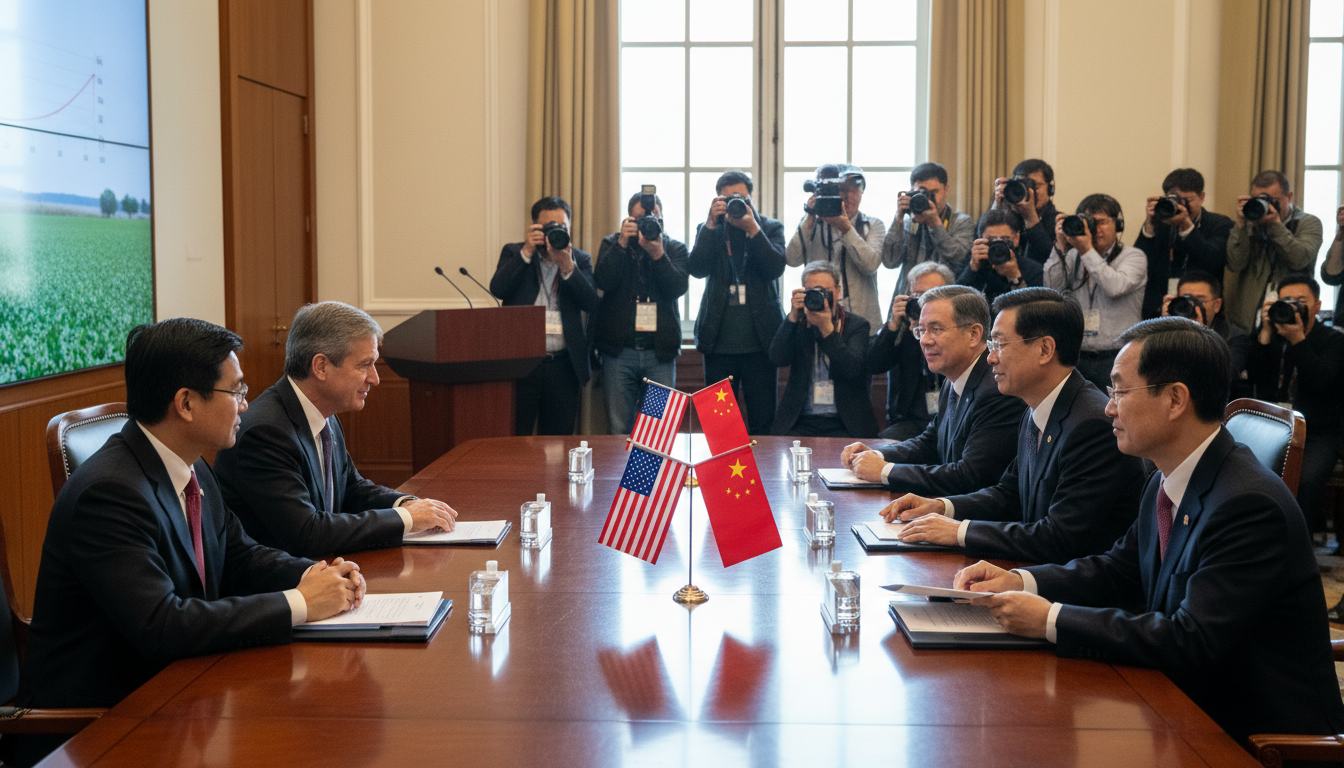
The White House on May 17 published a fact sheet saying China will buy at least $17 billion a year in US agricultural products in 2026 (prorated), 2027 and 2028, a commitment announced after President Trump’s summit in Beijing. The pledge, described by US officials as part of a broader economic package that also included aircraft purchases and regulatory steps, adds to earlier soybean purchase commitments. (whitehouse.gov)
Fact sheet outlines new bilateral trade bodies
The fact sheet sets out a framework that includes two new government-level entities: a U.S.–China Board of Trade and a U.S.–China Board of Investment, intended to manage non-sensitive trade and investment issues. US officials framed the boards as mechanisms to address market access, sanitary and phytosanitary barriers, and other friction points that have constrained agricultural sales. (whitehouse.gov)
Purchase volume and soybean commitments
According to the White House document, the $17 billion annual figure is intended to run through 2028 and is in addition to a previously announced soybean purchase agreement reached in October 2025. The fact sheet states the agricultural purchases are aggregate and could include additional soybean buys alongside other commodities, a detail that leaves scope for shifting product mixes between years. (whitehouse.gov)
Boeing order highlighted as job driver
The White House noted that China approved an initial purchase of 200 Boeing aircraft, a sale U.S. officials say will support high-wage, skilled manufacturing employment in the United States. Boeing confirmed the order after the summit, though company statements and U.S. officials provided limited detail on aircraft types and delivery schedules. The aircraft purchase was widely cited by U.S. sources as part of the administration’s presentation of the trip’s economic outcomes. (whitehouse.gov)
Rare earths and regulatory assurances
The fact sheet also addresses US concerns over China’s controls on rare earths and other critical minerals, saying Beijing agreed to “address” US worries about production and sales restrictions. The statement frames the move as part of a wider set of measures intended to reduce supply-chain vulnerabilities for technologies that rely on those materials. (whitehouse.gov)
China’s commerce ministry calls deals ‘preliminary’ and signals tariff talks
Separately, China’s commerce ministry issued a statement on May 16 describing the tariff, agricultural and aircraft outcomes as “preliminary” and said trade and investment councils would negotiate reciprocal, product-specific tariff reductions. That Chinese statement flagged a reciprocal tariff-reduction framework but did not provide a detailed list of cuts or an implementation timetable. The White House fact sheet did not directly refer to that May 16 announcement on tariff measures. (investing.com)
Market reaction and implementation questions
Analysts and market participants noted the distinction between high-level commitments and binding contracts, stressing that implementation will depend on the boards’ negotiations and on follow-through by both governments. Observers have highlighted uncertainties over product mixes, timing for deliveries and whether private Chinese buyers will match government-level pledges, particularly for commodities where tariffs and domestic procurement policies matter. (investing.com)
The White House document also said leaders agreed to pursue restoration of market access steps, including listing and relisting U.S. beef facilities and resuming poultry imports from states cleared by U.S. authorities, measures aimed at removing technical barriers to trade. Those regulatory renewals are positioned in the fact sheet as immediate steps to expand agricultural flows while broader tariff discussions proceed. (whitehouse.gov)
Implementation will hinge on the new trade and investment boards, and on follow-up negotiations that officials in Beijing described as ongoing and preliminary. Both sides will face domestic scrutiny: US farmers and exporters will press for concrete, verifiable sales and regulatory certainty, while Chinese authorities will weigh domestic industry needs and strategic considerations as details are finalized. (whitehouse.gov)
The White House said both leaders agreed to maintain high-level engagement, including an invitation for President Xi to visit Washington later this year, signaling that the bilateral agenda will be tested by forthcoming meetings and the operational work of the boards. Observers said the pace and transparency of those next steps will determine whether the headline figures translate into sustained changes in U.S.–China agricultural trade. (whitehouse.gov)
Officials and market participants will now watch for implementing documents, purchase schedules, tariff schedules negotiated by the trade council and the first deliveries under the pledges to assess the real impact on US agricultural exports and on aviation trade ties.

