
Chiyoda Ward ramps up Mt. Fuji ashfall preparedness as FY2026 disaster plan is revised
Chiyoda Ward strengthens Mt. Fuji ashfall preparedness in FY2026, revising its disaster plan, expanding public guidance, and planning ash removal, evacuation timelines, and public stockpiles.
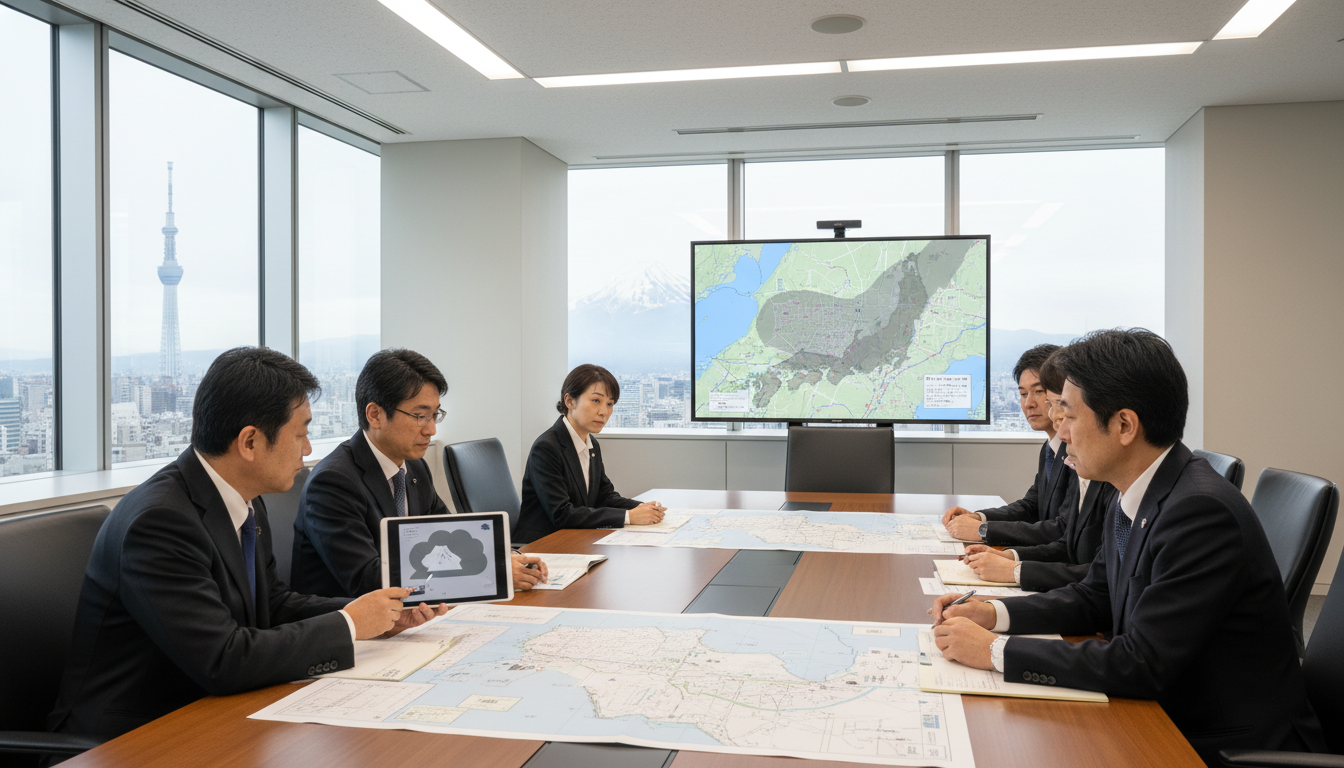
Chiyoda Ward announced on May 20, 2026, a stepped-up program to prepare for Mt. Fuji ashfall, saying it will revise its local disaster management plan this fiscal year (FY2026) and enhance online public guidance. The move targets the ward’s large daytime population and aims to reduce disruption to businesses and residents should ash from an eruption affect central Tokyo.
Plan revision to address high daytime population
Chiyoda officials said the revision will incorporate specific measures tailored to a daytime population that can reach roughly 900,000 people, despite a resident base of about 69,000. The ward cited the need to maintain economic activity and essential services while protecting vulnerable groups who may be unable to return home after an eruption.
The updated plan will include detailed timelines for action before and after ashfall, clearer evacuation triggers, and a retooled disaster-preparedness website to give residents and businesses step-by-step instructions. Officials emphasized coordination with central government agencies and private-sector stakeholders located in the ward.
Government panel guidelines set ashfall levels and response rules
National experts have proposed a four-tier ashfall classification that underpins the ward’s planning, with categories ranging from trace deposits to severe accumulations exceeding 30 centimeters. The tiered scheme separates light ash from moderate accumulations (3–30 cm), with subcategories to reflect whether damage is likely to be minor or major, and designates 30 centimeters or more as the most severe level.
Under the guidance published by a government panel in March 2025, ash accumulations up to about 30 centimeters generally pose limited immediate threats to human life, so large-scale evacuations are not the default response. The panel advises residents to shelter in place unless ash causes significant disruption to infrastructure, access, or supplies; when ash reaches 30 centimeters or more, evacuation is prescribed because of risks such as roof collapse and impaired mobility.
Modeling indicates rapid ash arrival and growing accumulation over weeks
Chiyoda is roughly 100 kilometers from Mt. Fuji’s summit, and modeling used by the ward suggests measurable ash could reach central Tokyo within hours of an eruption under certain wind conditions. Projections cited by officials indicate at least a few millimeters of ash within three hours and the potential for several centimeters to accumulate over days to weeks, depending on eruption size and prevailing winds.
Planners say those rapid timeframes create particular challenges for central Tokyo districts where many people work but do not live. The ward is developing procedures to assist commuters, temporary workers, and visitors who might be stranded, and to manage the flow of people to designated shelters or transit hubs if necessary.
Health and infrastructure measures emphasized: masks, goggles, and removal strategies
Volcanic ash is composed of tiny glassy particles that irritate eyes and airways and can damage electronic equipment and vehicles. Chiyoda’s program will promote stockpiling of protective equipment — notably dust masks and goggles — and will distribute guidance on safe cleanup techniques and indoor air protection.
The ward also plans to investigate operational approaches for clearing ash from roads and public spaces, including the possible establishment of temporary storage sites for removed material. Officials said they will evaluate mechanical sweepers, vacuuming systems, and prioritized routes for emergency and supply vehicles.
Learning from Sakurajima and private-sector logistics planning
To refine its approach, Chiyoda will commission external specialists to study preparedness and response measures from cities that regularly face volcanic ash, notably Kagoshima, where Sakurajima produces frequent fallouts. The ward intends to adapt proven practices for an urban, high-density central Tokyo environment and to assess supply-chain resilience for food, water, and fuel.
Business continuity is a priority; the ward will work with major corporations and central government ministries housed in the district to confirm contingency plans for staff safety, IT resilience, and essential service operations. Coordination with transport operators and logistics companies is planned to preserve supply lines and prioritize routes for critical deliveries.
Chiyoda officials stressed public communication will be central to the effort, with an improved disaster-prevention website planned to host up-to-date ashfall forecasts, personal safety steps, and lists of shelters and support services. The site will incorporate the timeline and triggers the ward is developing so residents and businesses can understand when to shelter, when to relocate, and when normal activity can resume.
The ward’s short-term steps also include public education campaigns on ash hazards, recommendations for workplace preparedness, and consultations with community organizations that support elderly and mobility-impaired residents. By combining technical modeling, lessons from other volcanic regions, and localized logistics planning, Chiyoda aims to reduce the human and economic toll if Mt. Fuji produces significant ashfall.

