
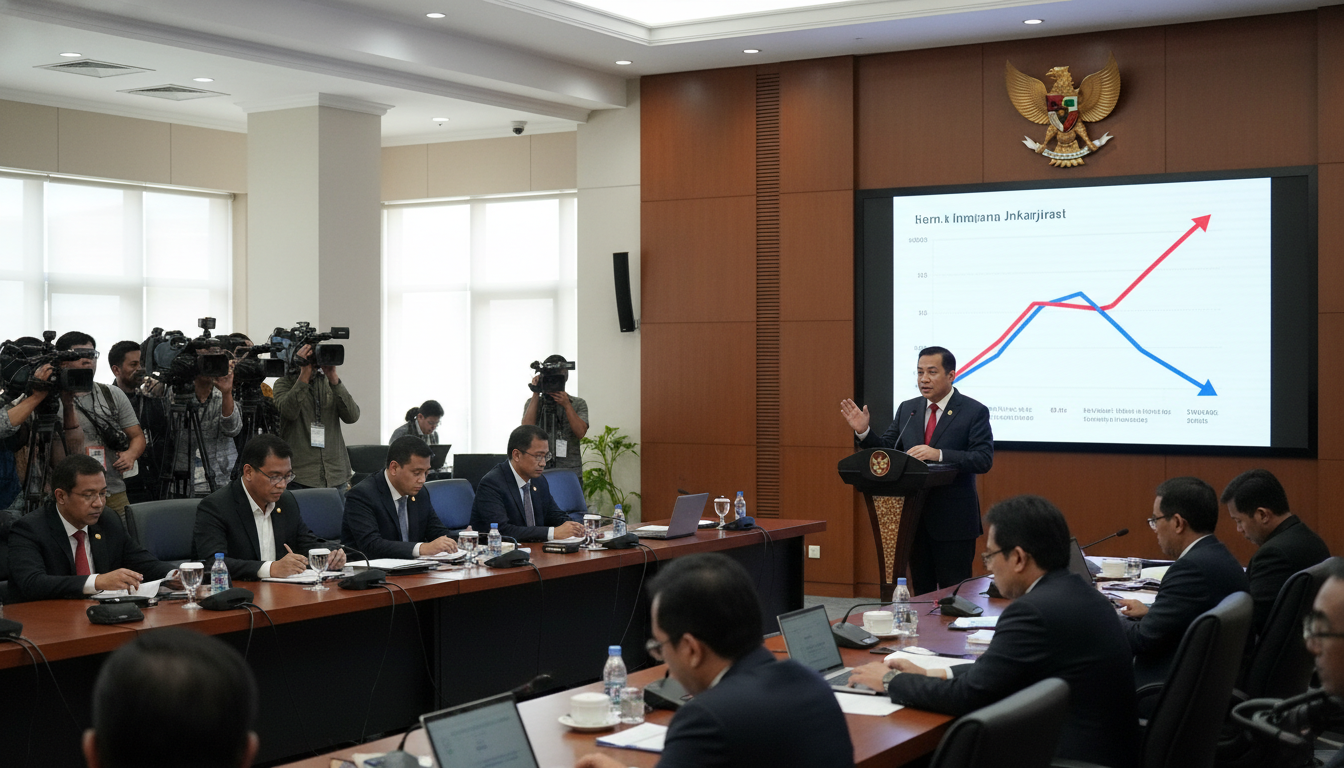
Bank Indonesia rate hike aims to stabilise rupiah after 25 months of pause
Bank Indonesia raised its key rate on May 20, 2026, in a move described as a Bank Indonesia rate hike to stabilise the rupiah and curb capital outflows. The central bank ended a 25-month pause and a seven-month streak of unchanged policy as officials sought to attract foreign portfolio inflows. The decision follows a sustained depreciation of the rupiah and mounting pressure on external financing conditions that policymakers said warranted a recalibration of monetary settings.
Bank Indonesia Seeks to Curb Rupiah Slide
Bank Indonesia framed the rate decision primarily as a response to currency weakness and capital flight, stressing the need to restore market confidence. Officials signalled that the Bank Indonesia rate hike was intended to make Indonesian assets more attractive to foreign investors and to slow the pace of rupiah depreciation. The move was taken after a two-day policy meeting that concluded on May 20, 2026, reflecting a shift from the central bank’s prior emphasis on accommodative settings.
Reason for the First Hike in 25 Months
The central bank cited deteriorating portfolio flows and a weaker exchange rate as the most immediate drivers behind the policy move. After keeping rates unchanged for seven consecutive months, policymakers judged that a change was necessary to stem outflows and anchor inflation expectations. The timing underscores how exchange-rate dynamics and cross-border capital movements can prompt a faster pivot in monetary policy even when domestic activity remains uneven.
Policy Meeting and Decision Details
Bank Indonesia convened a two-day meeting to weigh international and domestic developments before announcing the rate increase on Wednesday. Officials emphasised that the decision balanced the need to stabilise the currency against the risks of tightening credit conditions for businesses and households. While the central bank did not tie the action to a single indicator, it said ongoing monitoring of capital flows, inflation, and economic growth would guide future steps.
Immediate Market Response
Market participants reacted to the Bank Indonesia rate hike with a mix of relief and caution, according to traders and analysts watching currency and bond markets. The announcement helped temper some of the near-term volatility in the foreign-exchange market as investors reassessed risk premia on Indonesian assets. Analysts noted, however, that sustained improvement in capital flows will depend on both domestic fundamentals and the global interest-rate environment.
Implications for Borrowing Costs and Economic Growth
The rate increase is likely to push up short-term borrowing costs across the economy, with implications for businesses that rely on bank credit and for households carrying variable-rate debt. Policymakers face the familiar trade-off between stabilising the currency and supporting growth, particularly as sectors sensitive to interest rates still seek recovery momentum. Financial institutions and corporations may see financing costs rise, while the central bank will aim to calibrate further moves so as not to derail the nascent recovery.
Outlook for Monetary Policy and External Risks
Going forward, Bank Indonesia indicated it will remain data-driven and responsive to shifts in portfolio inflows and exchange-rate pressure. External risks — including global rate adjustments, shifts in investor risk appetite, and commodity-price swings — were highlighted as key factors that could prompt additional policy action. Domestic indicators such as inflation trajectory and credit trends will also play a central role in determining whether this rate move represents a single adjustment or the start of a broader tightening cycle.
The Bank Indonesia rate hike marks a significant policy shift intended to defend the rupiah and shore up investor confidence amid cross-border pressures. While the move should help narrow the gap with major markets and attract some portfolio interest, its ultimate effectiveness will depend on broader global conditions and how quickly capital flows respond. Policymakers face the task of balancing currency stability with economic growth as they watch incoming data and global developments ahead.

