
Sanae Takaichi’s visit to South Korea ends with Andong summit and gift exchange featuring Sabae eyeglass frames
PM Sanae Takaichi returned from a two-day visit to South Korea after an Andong summit with President Lee Jae Myung, gifting Sabae eyeglass frames and masks.
Prime Minister Sanae Takaichi concluded her two-day diplomatic trip to South Korea on May 21, 2026, returning to Tokyo after a summit in Andong with President Lee Jae Myung. The visit, described by officials on both sides as a reciprocal exchange of leadership visits, featured a symbolic gift exchange and public photo opportunities that underscored efforts to strengthen bilateral ties. Takaichi’s visit to South Korea focused on cultural diplomacy and reaffirming channels of communication between Tokyo and Seoul.
Return to Tokyo after a two-day trip
Takaichi flew back to Japan on a government aircraft, landing at Haneda Airport on May 21, 2026, following the conclusion of formal meetings in Andong the previous day. Japanese government sources confirmed the timing and logistical details of the flight and the delegation accompanying the prime minister. The return marks the close of an official visit framed as part of a sequence of mutual leader exchanges between the two neighboring governments.
Andong summit held on May 20, 2026
The summit between Prime Minister Takaichi and President Lee took place on May 20, 2026, in Andong, the South Korean city where President Lee was born. Discussions at the meeting emphasized cultural ties and the symbolic elements of the visit, with both leaders taking part in a public exchange intended to signal a thaw in bilateral atmosphere. The choice of Andong, known for its cultural heritage, framed the encounter within broader efforts to highlight shared historical and cultural connections.
Sabae eyeglass frames presented to President Lee
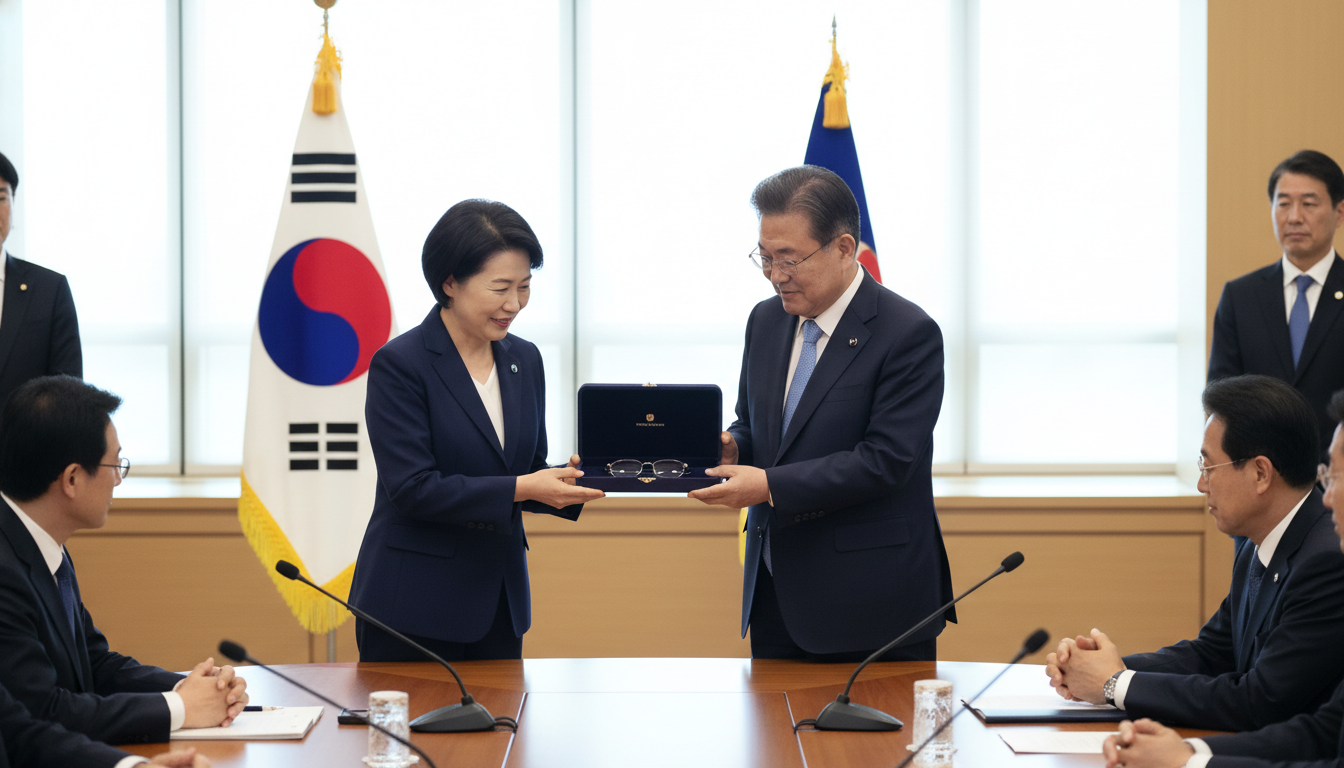
During the Andong meeting, Takaichi presented President Lee with a pair of eyeglass frames produced in Sabae, Fukui Prefecture, a Japanese hub for eyewear manufacturing. When Lee removed his own glasses to try on the Sabae frames, Takaichi borrowed his prescription glasses and the two posed for photographs, creating a light-hearted public moment captured by officials. The selection of Sabae frames was intended to showcase regional craftsmanship and to deliver a tangible, locally rooted gift during the diplomatic exchange.
Gift of nine masks symbolizes warming ties
President Lee returned the gesture by presenting Takaichi with a set of nine traditional masks, a gift the South Korean presidential office said was meant to express a wish for continued warming of relations. The masks are associated with Andong’s mask dance drama, which has been recognized by UNESCO as an element of intangible cultural heritage, and the gift was framed as a cultural offering with symbolic resonance. South Korean officials described the presentation as an expression of goodwill and shared cultural respect between the two nations.
Leaders’ photo opportunity and public gestures
A photograph of the leaders, published by Japan’s Cabinet Public Affairs Office on its X account, captured the moment the two exchanged and tried on eyewear, underscoring the ceremonial and personal aspects of the visit. The image and accompanying captions highlighted the informal tone of parts of the summit, while official statements focused on diplomatic objectives and the symbolic intent behind the gifts. Such visual moments are often used by both governments to signal accessibility and positive interpersonal relations at the highest levels.
Implications for Japan–South Korea relations
Officials in Tokyo and Seoul characterized the trip as part of ongoing efforts to rebuild and deepen bilateral dialogue through a mix of formal talks and cultural diplomacy. While the meeting featured no public release of detailed policy accords, the exchange of regionally significant gifts and the leaders’ visible cordiality are likely to be read as a step toward stabilizing ties. Observers note that reciprocal visits and symbolic exchanges can create openings for more substantive negotiations on trade, security, and people-to-people exchanges, but concrete follow-up actions will determine whether this visit yields lasting policy outcomes.
Both governments indicated the visit was part of a rhythm of engagement intended to sustain lines of communication and reinforce mutual respect through cultural exchange. Cabinet officials in Tokyo and aides in Seoul are expected to brief their respective parliaments and prepare for potential follow-up meetings, while regional stakeholders will watch for any concrete initiatives that grow out of the leaders’ encounter. The visit in Andong, and the small but visible gestures it produced, will likely be cited in coming weeks as a reference point in the evolving Japan–South Korea relationship.

