
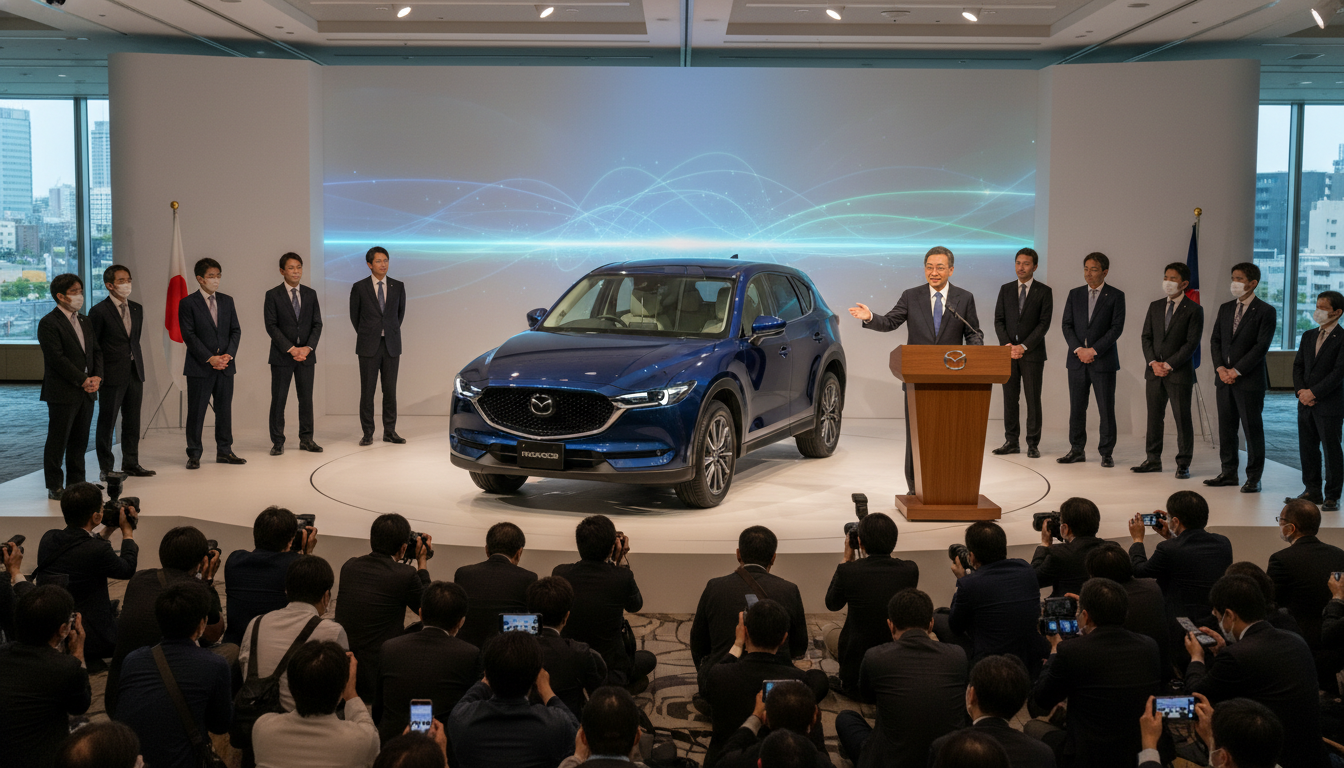
Mazda CX-5 Updated in Tokyo as Automaker Shifts Toward Hybrids Over EVs
Mazda unveils an updated Mazda CX-5 in Tokyo, bolstering hybrid options while trimming EV investment as competition from Chinese automakers intensifies.
Mazda on Thursday unveiled an updated Mazda CX-5 in Tokyo as part of a strategic push to drive global sales growth while refocusing engineering and capital toward hybrid technology. The company presented the refreshed flagship SUV against a backdrop of tougher competition from Chinese brands and shifting electric-vehicle regulations. Mazda positioned the CX-5 update as central to near-term growth, emphasizing expanded hybrid offerings and a more conservative approach to battery-electric vehicle spending.
Launch and Tokyo Presentation
The refreshed Mazda CX-5 was revealed at a Tokyo press conference on May 21, where company executives framed the model update as a response to changing market dynamics. Officials highlighted the SUV’s role in stabilizing sales in key markets while improving fuel-efficiency credentials through hybridization. The presentation combined product details with a clear message about Mazda’s broader strategy to balance customer demand and regulatory pressure.
Hybrid Lineup Expansion
Mazda said it will strengthen the CX-5’s hybrid options, integrating new or improved electrified powertrains across more trim levels. The move reflects the company’s view that hybrids offer a pragmatic path to lower emissions while preserving range and customer familiarity. By doubling down on hybrid systems, Mazda aims to deliver better mileage and lower running costs without committing the same level of capital required for full battery-electric rollouts.
Reduced Focus on Full EV Investment
Alongside the CX-5 launch, Mazda signaled a deliberate scaling back of its investment in full battery-electric vehicles. Executives attributed the shift to uncertain returns on large EV investments, evolving regulatory landscapes, and competitive pressures that make a rapid, high-cost pivot risky. The company plans to reallocate resources toward hybrids and core model development while maintaining selective EV projects where strategic partnerships or market conditions justify them.
Design, Comfort and Technology Updates
The new CX-5 carries subtle exterior and interior refinements intended to keep the model competitive in the crowded SUV segment. Mazda emphasized improvements in cabin materials, ride comfort and driver-assistance technology aimed at premium buyers seeking value in a mid-size package. While the automaker did not announce extensive platform changes, the updates are presented as a targeted refresh to sustain sales momentum without a full generational overhaul.
Competitive Pressure from Chinese Automakers
Mazda’s strategy change comes as Chinese automakers broaden their reach with aggressive pricing and a growing roster of electrified models. Those entrants are pressuring traditional brands across Asia and Europe, compressing margins and accelerating product cycles. Mazda’s emphasis on hybridization and measured EV commitments appears designed to protect profitability while competing on product quality and brand appeal rather than head-to-head price wars.
Regulatory Shifts Influencing Strategy
Changes in electric vehicle rules and incentives in several markets also influenced Mazda’s approach, the company indicated during the Tokyo event. With regulations evolving unevenly across regions, Mazda prefers flexible technologies such as hybrids that can meet a variety of regulatory regimes. The automaker’s recalibrated plan seeks to navigate policy uncertainty while meeting emissions targets and customer expectations.
Sales Targets and Global Market Outlook
Mazda said the CX-5 refresh is integral to its global sales ambitions, particularly in markets where SUVs remain the fastest-growing segment. Strengthening the model’s hybrid options is expected to broaden its appeal to eco-conscious buyers without alienating traditional internal-combustion customers. The company is projecting that measured investment and product refinement will help stabilize unit volumes and margins as it charts a course through a turbulent competitive landscape.
The updated Mazda CX-5 release underscores a broader recalibration of priorities at the company: an emphasis on hybridization, cautious EV investment, and targeted model updates to sustain competitiveness. As Chinese competitors expand and regulations evolve, Mazda’s strategy aims to keep the CX-5 relevant for a wide range of buyers while protecting financial resilience in an uncertain market.

