
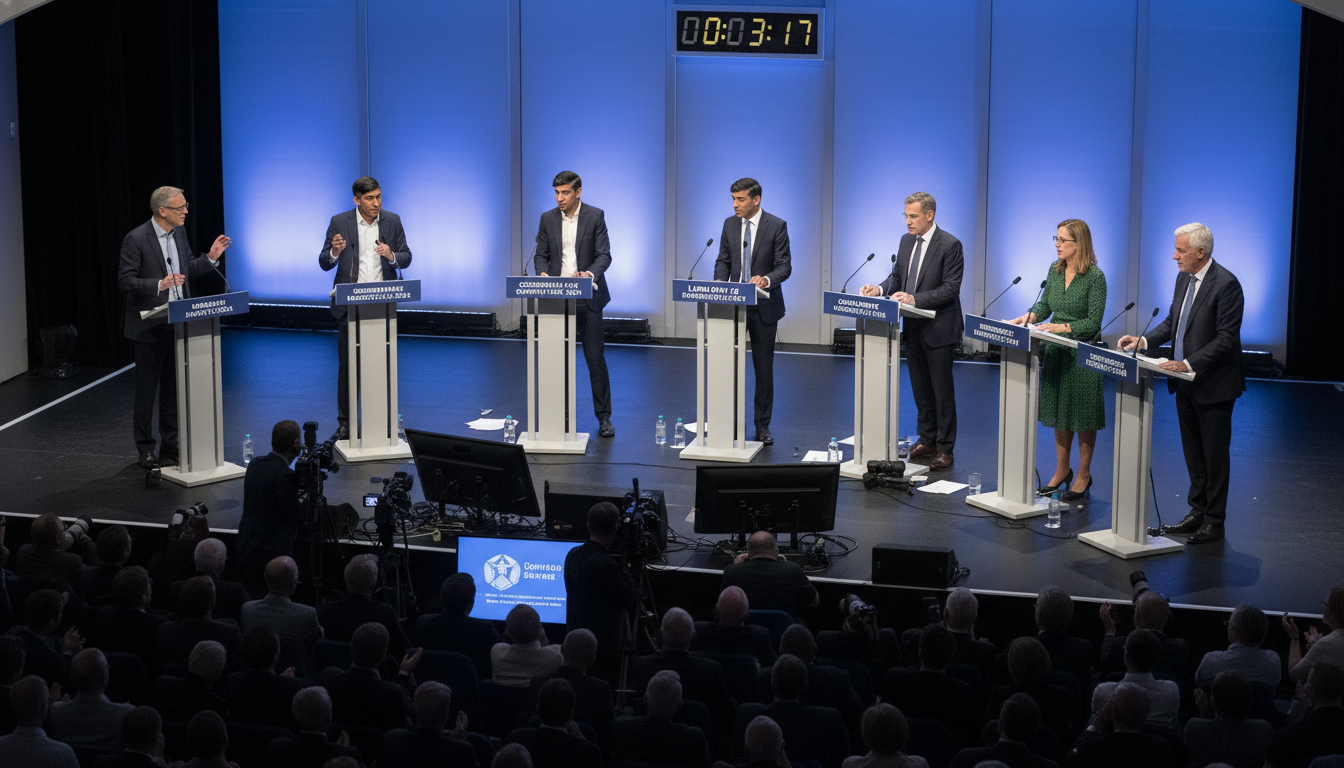
Party leaders’ debate on May 21, 2026 draws criticism after only 45 minutes with six leaders
Party leaders’ debate on May 21, 2026 lasted 45 minutes with six leaders, sparking criticism and calls to extend time and clarify funding for fuel subsidies.
The party leaders’ debate held on May 21, 2026 brought Prime Minister Sanae Takaichi and five opposition leaders together for a tightly scheduled session that lasted just 45 minutes. The compressed timetable and a record number of eligible parties left many observers questioning whether the format allowed for substantive policy discussion. Lawmakers and commentators have urged changes to ensure future debates provide meaningful scrutiny of government policy.
Record number of eligible parties divides limited time
When the leaders took the podium, the session reflected a post-election shift in Diet composition that increased the number of parties meeting the eligibility threshold. Under current rules, any party holding at least 10 seats in either chamber qualifies for participation, lifting the count to six parties for this session. The allocation of speaking time followed seat-based formulas, producing disparities in individual leader blocks.
The longest allotment went to the Democratic Party for the People leader, who received 12 minutes, while the smallest party on stage was given just three minutes. That range magnified concerns that a six-way rotation within a 45-minute window would preclude in-depth exchanges on complex fiscal and energy issues.
Fuel subsidies and exit strategy debated briefly
Fuel subsidies emerged as a focal point in the limited discussion, with opposition figures warning that prolonged blanket support risks encouraging consumption amid supply uncertainties. One party leader urged the government to present a clear exit strategy and proposed phased cuts to subsidy levels to reduce budgetary strain and temper demand. The prime minister acknowledged the point but offered measured remarks rather than a detailed roadmap.
Observers noted a change in tone from some opposition quarters, which had previously sought tax adjustments to lower retail fuel prices. The shift toward advocating reduced consumption underscores the gravity of supply and fiscal pressures informing the debate.
Cash benefits proposal aired without funding details
During the tight exchange, a proposal for ¥50,000 cash payments to low- and middle-income workers was advanced by an opposition leader as a measure to offset rising prices. The plan drew attention for lacking an explicit funding source, prompting questions about fiscal responsibility and feasibility. Another party leader recommended financing a supplementary budget by reallocating existing government funds rather than increasing reliance on deficit-financing bonds.
The prime minister indicated an intention to limit new bond issuance "as much as possible," but the session did not yield concrete commitments on how proposed benefits or subsidy adjustments would be funded. That absence of fiscal detail left analysts cautions about the viability of several proposals aired during the debate.
Procedural concerns highlighted over debate format
The compressed schedule prompted calls from several quarters to reconsider the structure of party leaders’ debates. Suggested remedies include expanding total time, adjusting the eligibility criteria to reduce the number of participants, or splitting the session across two days to allow longer exchanges with each leader. Proponents argue such changes would better serve the Diet’s deliberative purpose and give voters clearer contrasts on policy choices.
A related procedural oddity drew attention: representatives from parties that coordinate in the lower house nonetheless spoke separately, reflecting the complex party alignments that followed the recent election. That fragmentation may complicate efforts to streamline future debates unless parties agree on joint representation or alternate formats.
Implications for Diet deliberations and public information
Critics say the short, multi-party format risks reducing leaders’ debates to soundbites rather than providing the public with substantive information on policy trade-offs. Key issues facing the government—such as the trajectory of fuel subsidies, the composition of any supplementary budget, and household relief measures—require more time for detailed cross-examination and evidence-based argument. Without procedural reform, the debate’s capacity to invigorate Diet deliberations and inform voters may remain limited.
Lawmakers from both the ruling bloc and opposition have a shared interest in preserving the debate’s legitimacy, even if they disagree on outcomes. Negotiations over format, timing, and speaking rules ahead of the next Diet session will be central to determining whether party leaders’ debates regain their deliberative function.
Unless the ruling and opposition parties agree to extend or restructure future sessions, the party leaders’ debate risks becoming a series of abbreviated statements rather than a forum for rigorous policy scrutiny and public accountability.

