
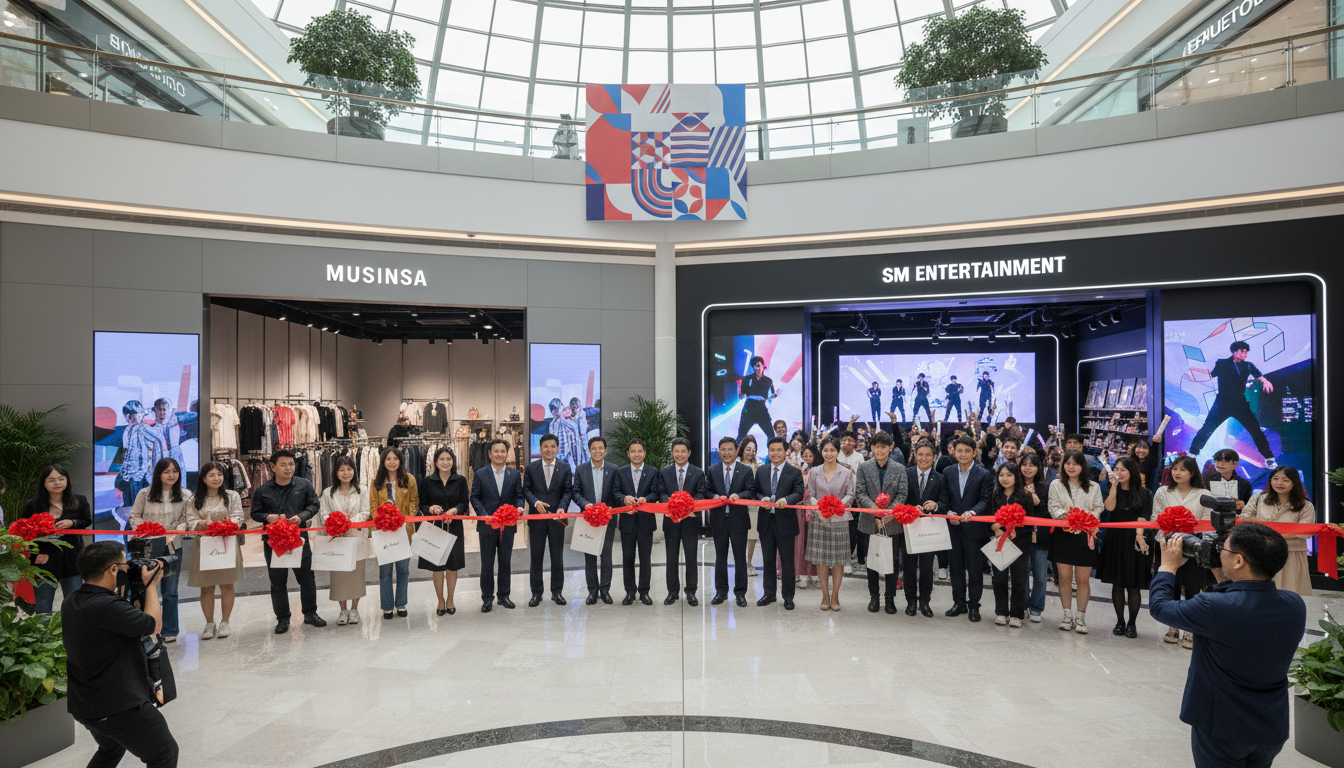
South Korean brands expand in China as Musinsa and SM Entertainment open stores
South Korean brands expand in China as Musinsa and SM Entertainment open stores in Shanghai, leveraging improved ties and rising tourist flows.
South Korean consumer brands are moving back into China, with Musinsa opening a Musinsa Standard location in Shanghai and entertainment-linked retailers from SM Entertainment also entering the market. The renewed push reflects improving diplomatic relations and growing numbers of Chinese visitors to South Korea, which executives say create cross-border demand for fashion and lifestyle goods. Retailers are testing a mix of flagship stores, pop-ups and local partnerships to capture younger shoppers and tourists who already show strong appetite for Korean labels.
Musinsa opens first Shanghai Musinsa Standard
Musinsa has launched its Musinsa Standard concept store in Shanghai as part of a wider strategy to convert online popularity into physical retail presence. Company representatives describe the Shanghai location as a showcase for the brand’s core menswear and basics lines, aimed at urban consumers seeking affordable, trend-driven staples. The move follows Musinsa’s long-running success on e-commerce platforms and reflects a broader trend of Korean digital-first brands seeking brand-building payoffs from brick-and-mortar exposure.
The Shanghai opening is intended to serve both local shoppers and visiting Chinese consumers who are familiar with the Musinsa name from social media and cross-border shopping. Executives are expected to monitor footfall and conversion closely, using the store as a testing ground for assortments and store experience that can be scaled elsewhere in China.
SM Entertainment and lifestyle retailers target fan-driven demand
SM Entertainment and other entertainment-linked companies have launched retail initiatives aimed at K-pop fans and lifestyle customers in major Chinese cities. These stores blend merchandise tied to artists and broader lifestyle collections, designed to capture fan loyalty and impulse purchases tied to concert tourism and pop-culture events. For entertainment companies, physical stores also function as marketing hubs that strengthen direct engagement with audiences beyond digital channels.
Retailers are packaging music-related goods with apparel, accessories and limited-edition collaborations to drive repeat visits. The strategy relies on fan communities and social media buzz to amplify product launches and in-store activations.
Improving bilateral ties and tourism underpin expansion
Retailers cite a thaw in diplomatic relations and a rebound in tourism as key factors prompting renewed investment in China. Increased flight frequencies and relaxed visa procedures have helped revive travel flows, which in turn boost spending on fashion, beauty and lifestyle categories that are central to South Korean exports. Many brands see returning Chinese tourists to South Korea—and outbound Chinese shoppers in metropolitan centers like Shanghai—as complementary channels for growth.
Industry analysts say the timing allows South Korean brands to re-enter with more targeted formats after a period of heavy online experimentation. Store openings are being staged to coincide with seasonal travel peaks and cultural events that generate higher foot traffic.
Local partnerships and omnichannel tactics shape market entry
To mitigate regulatory and operational risks, several South Korean companies are partnering with Chinese retailers, landlords and franchise operators. These partnerships provide local market knowledge, established supply chains and faster real estate access for flagship and pop-up locations. Brands are also leveraging cross-border e-commerce and local marketplaces to maintain visibility when physical expansion is staged gradually.
Omnichannel strategies are central: stores are designed not just for sales but as content-producing spaces that feed social channels and livestream commerce. Retailers are combining in-store exclusives with digital promotions and limited drops to optimize inventory turnover and maximize social media engagement.
Competition, compliance and brand differentiation remain challenges
Despite the opportunity, South Korean brands face intense competition from domestic Chinese labels and international chains that have also recalibrated their China strategies. Differentiating on design, price and customer experience is pivotal as younger Chinese consumers explore both homegrown and foreign options. Brands must also navigate local regulations, consumer protection rules and varying regional tastes across China’s vast market.
Operational costs such as city-center rents and staffing can be high, prompting some firms to favor smaller-format stores or temporary pop-ups rather than large flagship investments. Maintaining consistent brand messaging across platforms and languages is another practical hurdle for companies expanding quickly.
Early consumer response and commercial signals
Initial reports from the Shanghai openings indicate healthy foot traffic and strong interest from younger shoppers, particularly those influenced by social media and K-pop culture. Shoppers have responded to curated assortments and limited releases, with some products selling out during launch windows. Retailers will be watching repeat purchase rates and the performance of integrated digital campaigns to judge longer-term viability.
Sales metrics from pilot stores will inform whether to scale additional locations in other Chinese cities or to increase investment in local marketing and logistics. For many brands, the Shanghai presence is the first step in a deliberate, data-driven expansion plan rather than an immediate wide-scale rollout.
The renewed wave of store openings signals a pragmatic recalibration by South Korean brands in China: leveraging cultural influence, targeted retail formats and local partnerships to reconnect with consumers and convert online popularity into stable, real-world sales.

