
Mori’s Adoption Remark Spurs Clarification as Imperial Succession Debate Intensifies
Mori’s assertion that an adopted male-line descendant could hold Imperial succession rights has been clarified, prompting renewed debate over Japan’s Imperial succession law and parliamentary consensus efforts.
Summary of Mori’s Statement and Immediate Clarification
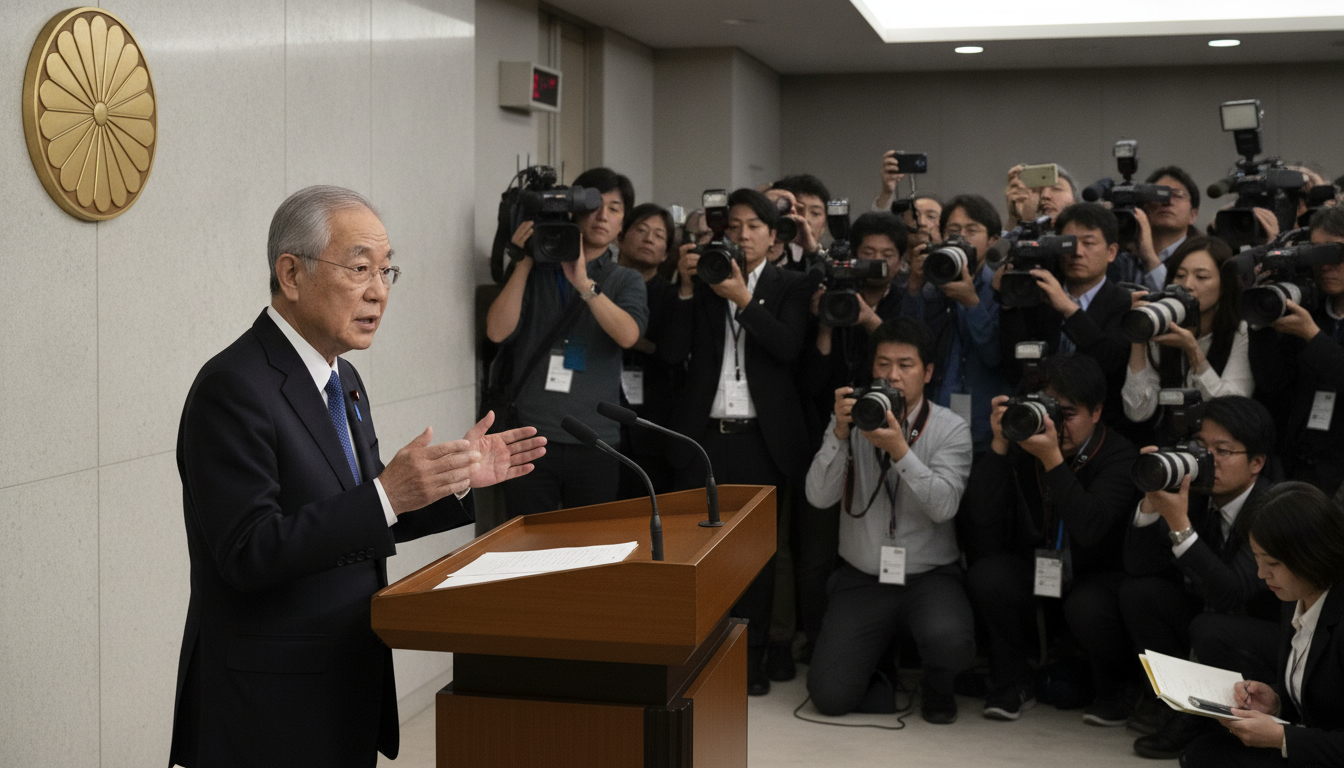
On June 9, 2026, House of Representatives Speaker Mori Eisuke issued a written statement clarifying comments he made about Imperial succession and adoption. Mori said his earlier remark—that “if a boy is born to an adopted line he would have succession rights”—was an interpretation of the current Imperial Household Law rather than a policy decision.
He emphasized the comment was not intended to pre-empt or constrain future parliamentary deliberations on succession policy. The statement came after opposition lawmakers raised objections and demanded explanation, prompting the speaker to publicly restate the context of his remarks.
Legal Tension Between Article 1 and Article 9 of the Imperial Household Law
Under Article 1 of the Imperial Household Law, succession is limited to male-line males belonging to the imperial line, a clause central to debates about the continuity of the Chrysanthemum Throne. However, Article 9 restricts adoption into the Imperial family, creating an apparent legal gap on whether a male born to an adopted line would be regarded as eligible.
Legal experts and lawmakers note the two provisions were not drafted to envisage adoption as a mechanism for replenishing the male-line pool of imperial heirs. The tension between the articles is now at the heart of political discussions, with differing interpretations of whether current law can accommodate adoption-linked succession without legislative amendment.
Parliamentary Proposal for ‘Legislative Consensus’ on Succession Measures
On June 8, 2026, the presiding officers of both houses proposed a “legislative consensus” package to secure the ranks of the Imperial family. The proposal put forward two principal options: allow female members of the Imperial family to retain their status after marriage, and admit male-line descendants from former princely houses as adopted members of the Imperial family.
The presiding officers described the package as a framework for cross-party discussion rather than a finalized policy. The initiative aims to produce a unified approach from the Diet, reflecting the need to address the dwindling number of imperial family members and the long-term viability of male-line succession.
Opposition Criticism and Political Pushback
Several opposition figures sharply criticized Mori’s earlier phrasing, arguing it suggested a predetermined interpretation that could bias forthcoming deliberations. Former Prime Minister Noda Yoshihiko said on June 9 that Mori’s comment made it difficult for him to support the proposed consensus, signaling potential fractures within parties over how to proceed.
Opposition lawmakers have called for clearer legal and constitutional grounding before any move to recognize adoption as a route to succession. They argue that such a significant shift should be the result of transparent legislative debate, not offhand remarks by parliamentary leaders.
Implications for Constitutional and Public Debate
Constitutional scholars say any formal change to succession rules—particularly one that would rely on reinterpreting existing statutes—may invite legal challenges and broader public scrutiny. Japan’s postwar constitution and the Imperial Household Law have shaped the modern institution for decades, making adjustments politically sensitive and legally complex.
Public opinion is likely to factor into lawmakers’ calculations as the Diet seeks a path that maintains both constitutional integrity and public confidence in the Imperial institution. Observers note that the debate touches on national identity and the symbolic role of the Imperial family, intensifying calls for a deliberative, transparent process.
Next Steps in Representative Talks and Parliamentary Timeline
The presiding officers signaled their intent to consolidate a “legislative consensus” at the representative talks scheduled for June 10, 2026. Mori’s clarification on June 9 was aimed at calming immediate political tensions ahead of that session, while leaving substantive decisions to collective deliberation.
Lawmakers expect further exchanges among party representatives during the June 10 meeting, where negotiators will attempt to reconcile divergent positions on adoption, the status of female members after marriage, and possible statutory revisions. Any movement toward legislative change would require careful drafting and cross-party agreement.
Japan now faces a narrow window for constructive negotiation on Imperial succession, and parliamentary leaders have framed the representative talks as a test of the Diet’s capacity to produce a stable, widely accepted plan. The coming days will reveal whether clarifications from the speaker and continuing consultations can bridge the current political divides.
The speaker’s statement underscored that his remarks reflected an interpretation of existing law and not a definitive policy shift, but political actors and constitutional experts say only legislative or judicial clarification can settle the matter conclusively.

