
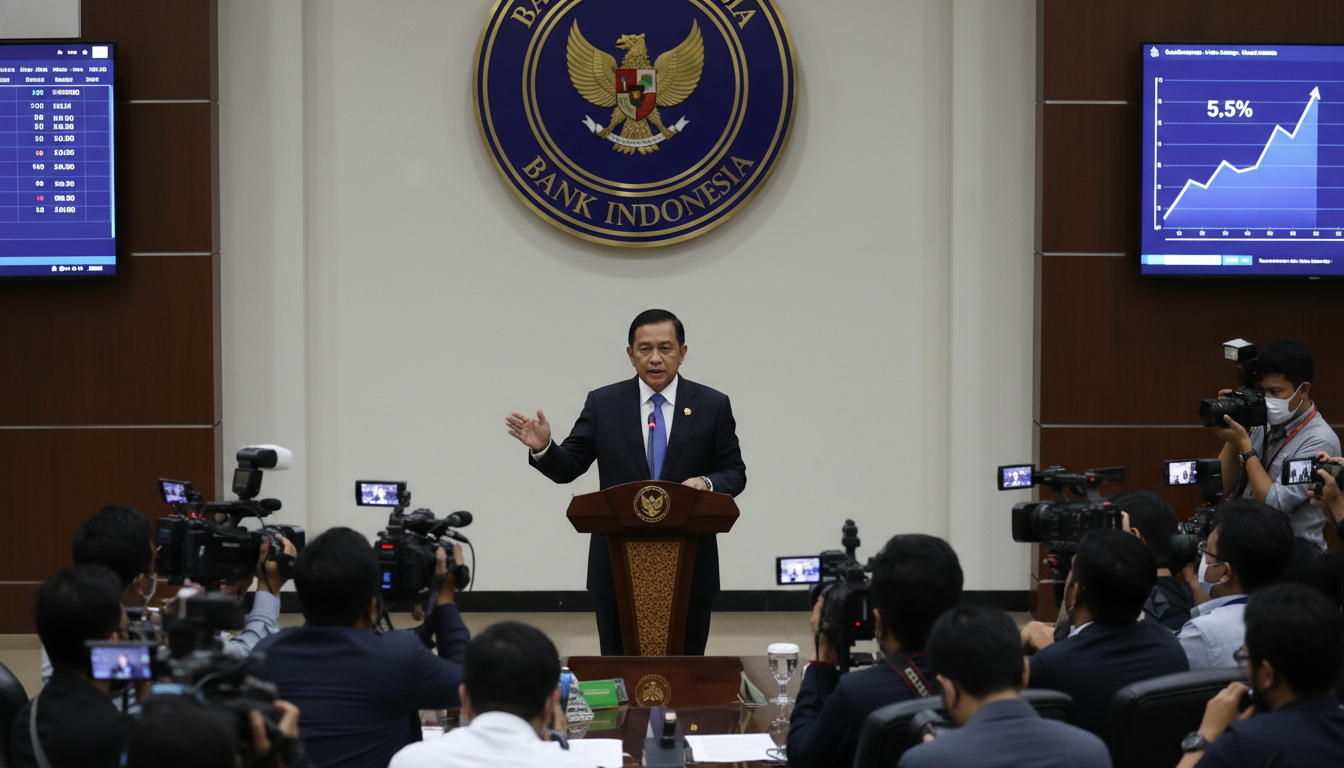
Bank Indonesia Emergency Rate Increase: Policy Rate Raised to 5.5% to Defend Rupiah
Bank Indonesia emergency rate increase of 25 basis points to 5.5% on June 9, 2026 aims to stabilise the rupiah amid persistent selling and two-year low forex reserves.
Bank Indonesia on June 9, 2026 announced an emergency rate increase of 25 basis points, lifting the policy rate to 5.5% after an unscheduled meeting. The central bank said the move was intended to shore up the rupiah as sustained currency selling pushed foreign-exchange reserves to their lowest level in two years. Markets reacted to the surprise decision with heightened attention on Indonesia’s external buffers and the outlook for monetary policy.
Bank Indonesia raises policy rate by 25 basis points
Bank Indonesia convened an unscheduled meeting on June 9 and decided to raise the benchmark interest rate by 25 basis points to 5.5%. The emergency rate increase is the central bank’s most immediate policy response to recent pressure on the currency. Officials framed the action as a defensive step to restore orderly market conditions and support external stability.
Forex reserves fall to lowest level in two years
Data released around the emergency decision showed foreign-exchange reserves at their lowest level since mid-2024, reflecting sustained outflows and intervention needs. The decline in reserves heightened concern among policymakers that the central bank’s room to smooth volatility had narrowed. Analysts say dwindling reserves can force more frequent or larger policy responses if capital movements persist.
Rupiah slides as currency selling persists
The rupiah had come under renewed downward pressure in recent sessions, with market participants pointing to increased selling by non-resident investors and hedging flows. The government and central bank moved quickly after the sell-off to signal that stabilisation measures were available. While the rate move is intended to address expectations, currency markets can remain volatile until investor confidence recovers.
Central bank cites external pressures and capital outflows
Bank Indonesia underscored that external pressures and cross-border capital flows were key factors behind the emergency meeting and the rate rise. Global rate dynamics and risk-off sentiment have amplified the impact on emerging-market currencies, the central bank noted, prompting a pre-emptive tightening. Officials publicly emphasized that the decision balances the need to defend the currency with the commitment to price stability.
Impact on markets, borrowers and fiscal outlook
The interest-rate increase is likely to ripple through debt markets and borrowing costs, lifting yields on government and corporate bonds as investors reprice risk. For households and businesses, higher policy rates generally translate into more expensive loans and refinancing costs, which could weigh on consumption and investment. At the same time, a firmer currency and steadier reserves would ease pressure on import prices and the fiscal burden of currency-linked obligations.
Monitoring window: what to watch next
Investors will now watch foreign-exchange reserve reports, rupiah trading ranges and any further central bank statements for signs of a sustained turnaround. Market participants will also closely follow capital flow data and foreign investor participation in Indonesia’s bond market over the coming weeks. Any additional interventions, whether through swaps or outright FX sales, would signal continued readiness to stabilise markets.
The emergency rate rise on June 9, 2026 marks a clear shift in Bank Indonesia’s immediate policy stance aimed at defending the rupiah and arresting reserve depletion. Authorities face the dual task of calming markets while managing the economic costs of tighter financial conditions.

