
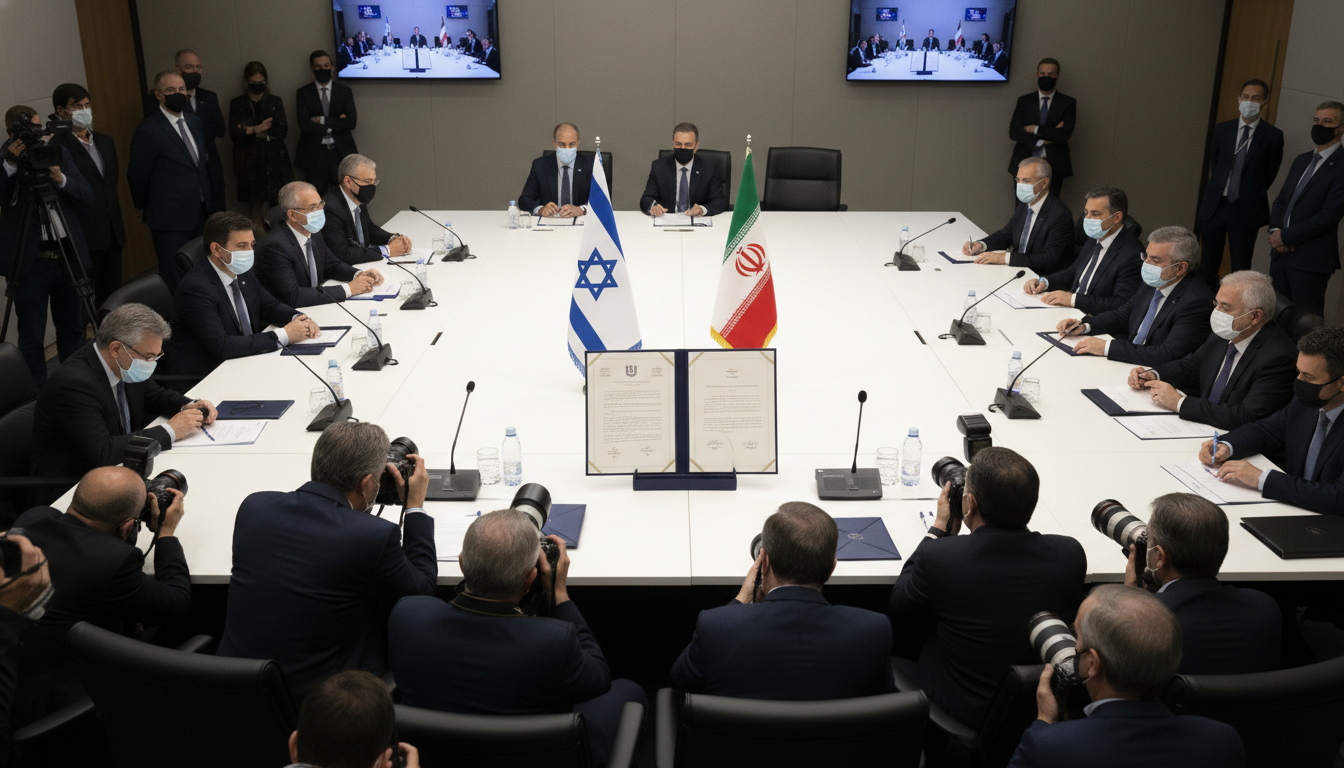
Israel-Iran ceasefire announced after two days of strikes, both sides keep option to resume
Israel-Iran ceasefire announced June 8, 2026 after two days of strikes; both sides warned they could resume attacks as Lebanon and Hormuz tensions persist.
Iran and Israel announced on June 8, 2026 that they would halt the reciprocal missile and air strikes that surged over the previous 48 hours, declaring an Israel-Iran ceasefire while each side kept the option to reopen hostilities. The two-day exchange began on June 7 and marked the most serious confrontation between the rivals since a temporary truce was negotiated on April 8. Despite the pause, leaders in Tehran and Jerusalem issued conditional warnings, and regional flashpoints in Lebanon and the Strait of Hormuz continue to stoke instability.
Chronology of the June 7–8 exchanges
Iran and Israel traded strikes across land and sea over June 7–8, 2026, in an escalation that involved missiles and aerial bombardment. Iranian forces said their operations were in response to Israeli strikes on southern suburbs of Beirut, where Hezbollah maintains positions.
Israel replied by targeting what it described as Iranian military facilities, signaling that the exchange had moved beyond proxy clashes into direct state-to-state attacks. Both sides reported material damage, and there were calls for restraint from external actors amid fears of wider regional spillover.
Leaders’ statements and conditional ceasefire
Israeli Prime Minister Benjamin Netanyahu said on June 8 that the pause in fighting would not prevent a forceful response if Iran resumed attacks, framing the halt as tactical rather than final. His office emphasized that Israel would defend its territory and interests “with overwhelming force” should further aggression occur.
Iranian officials likewise described the cessation as conditional, warning that continued strikes by Israel — including those affecting southern Lebanon — would prompt a return to military action. Iran’s parliamentary speaker stressed that Tehran would both negotiate and fight as circumstances required, underscoring the fragile nature of the truce.
Lebanon and Hezbollah’s role in the flare-up
Analysts and regional statements point to Lebanon, and in particular Hezbollah’s presence in the Beirut suburbs, as the immediate trigger for the confrontation. Israeli officials cited operations against Hezbollah sites as justification for strikes that, in turn, were used by Iran to justify broader retaliation.
Hezbollah’s entrenchment in southern Beirut and southern Lebanon keeps the Israel-Lebanon front volatile, complicating attempts at de-escalation. The group’s alignment with Tehran and its capacity to strike northward adds a layer of risk to any Israel-Iran dynamic that spills over onto Lebanese soil.
Maritime tensions in the Strait of Hormuz and nearby incidents
The crisis has coincided with heightened activity in the Strait of Hormuz, a strategic chokepoint for global energy shipments, where confrontations between Iran and Western naval forces have increased in recent months. Commercial and military shipping in the area faces elevated danger as both sides test maritime rules of engagement.
Reports of a U.S. military helicopter crash off the coast of Oman during the period of heightened tension further amplified international concern, drawing attention to the risks that localized strikes can generate for third-party forces operating in the region.
Diplomatic moves and the role of the United States
Diplomacy played a visible role in pressing for an end to the immediate exchanges, with Washington engaged in shuttle communications aimed at calming the confrontation. Officials said the pause on June 8 came in part at the request of the United States, which has sought to contain escalation between Tehran and regional adversaries since the April truce.
Despite those efforts, the path to a durable ceasefire remains unclear. Talks between Washington and Tehran have produced temporary agreements in the past, but mutual distrust and competing regional agendas make comprehensive de-escalation difficult without broader contingency measures.
Implications for regional security and global markets
Security analysts warn that even a short-lived Israel-Iran ceasefire can leave dangerous seams in the region’s stability, as commitments given under duress are often time-limited and tied to local events. The dual pressure points of Lebanon’s battlefronts and maritime risks in Hormuz mean flare-ups could recur with little notice.
Global markets, particularly energy markets, are sensitive to such episodes. Disruptions or the perception of instability near crucial shipping lanes can drive spikes in oil and gas prices, with knock-on effects for inflation and central bank policy in affected economies.
The temporary halt in strikes declared on June 8, 2026 offers a breathing space but not a settlement; both Tehran and Jerusalem have made clear that the truce hinges on immediate developments, and regional actors will be watching closely for signs of renewed aggression.

