
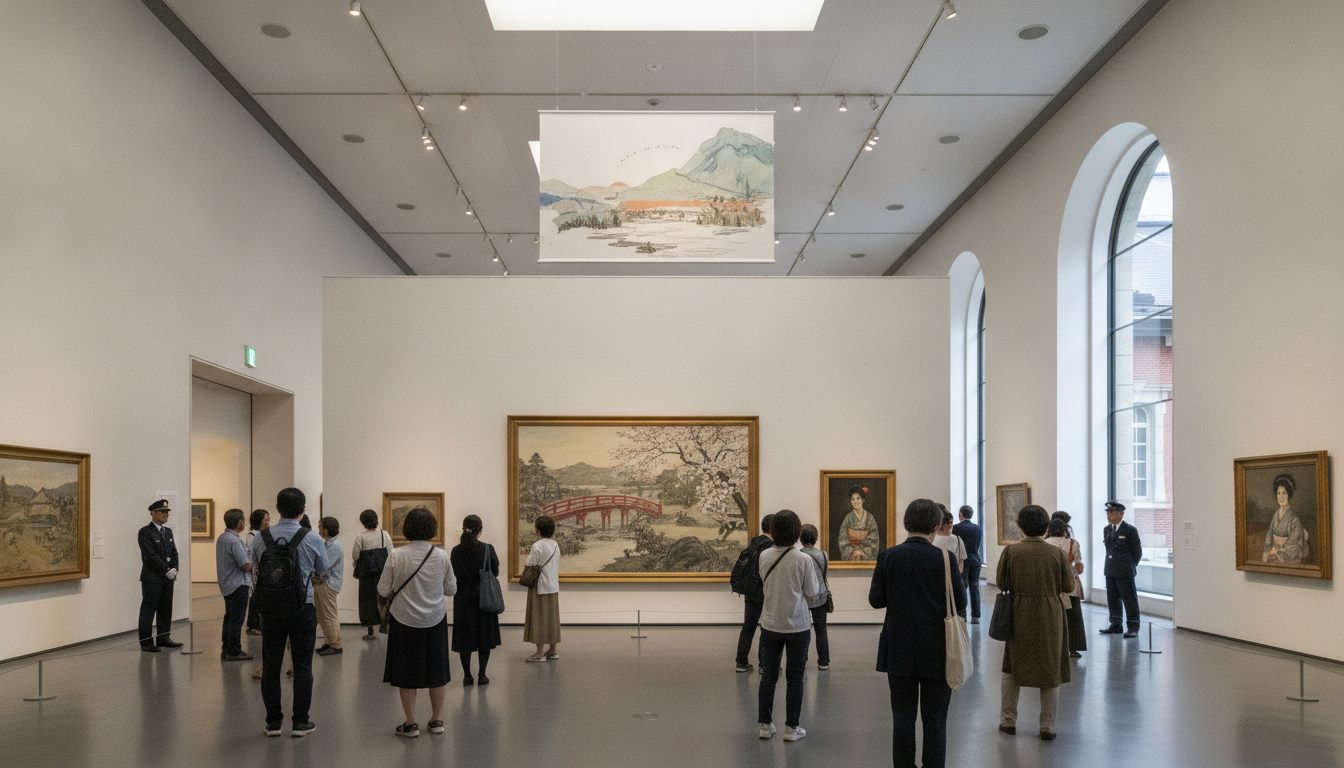
Karl Walser exhibition opens at Tokyo Station Gallery, featuring works from his 1908 Japan visit
Karl Walser exhibition at Tokyo Station Gallery features works from the Swiss artist’s 1908 Japan visit, including Kamo River scenes, on view through June 21.
The Tokyo Station Gallery has opened a Karl Walser exhibition that brings together paintings and sketches the Swiss artist produced during a prolific 1908 stay in Japan. The show, on view through June 21, presents intimate studies of urban life and riverside leisure, anchored by works such as "Summer Terrace Seating Along the Kamo River, Pontocho, Kyoto." The exhibition reintroduces a relatively little-known episode in Walser’s career to contemporary Japanese audiences and international visitors.
Tokyo Station Gallery mounts Karl Walser exhibition through June 21, 2026
The gallery’s program notes that the Karl Walser exhibition focuses on works made in Japan during a brief but intensive period of travel in 1908. Visitors can see watercolors, drawings and studies that record both everyday scenes and the artist’s impressions of place. The show is timed to offer a compact survey of the material Walser produced while in Kyoto and other locations.
Works from the 1908 Japan visit on prominent display
Many of the pieces on view date directly to Walser’s 1908 itinerary and were created in situ, according to the exhibition label. The selection emphasizes immediacy and observation, with a concentration on small-format works that capture light, weather and transient street life. Curators have grouped drawings and paintings to trace Walser’s movements and the development of particular motifs across the visit.
Scenes of Kyoto and the Kamo River highlighted
Central to the exhibition is the depiction of Kyoto’s riverfront and alleyway terraces, most notably the work titled "Summer Terrace Seating Along the Kamo River, Pontocho, Kyoto." That piece exemplifies Walser’s attention to human activity set against architectural and natural backdrops. The composition and palette suggest an artist working to reconcile European painting traditions with the visual cues he encountered in Japan.
Curatorial focus and exhibition layout
The gallery arranges the works chronologically and thematically to emphasize both the artist’s method and the specificity of place. Wall texts and captions contextualize the pieces within Walser’s broader output and the visual culture of the early 20th century. Exhibition design favors close viewing, allowing visitors to study brushwork, pencil marks and color experiments up close.
Public response and programming in Tokyo
Early audience reaction has highlighted the exhibition’s intimacy and the freshness of Walser’s observational style. The gallery has scheduled gallery talks and guided tours aimed at unpacking the historical context of Walser’s visit and the technical aspects of the works. These programs are intended to engage both specialist visitors and a general public curious about cross-cultural artistic encounters.
Karl Walser’s 1908 Japan visit is presented here not as a footnote but as a formative episode that produced a substantial body of work, according to the exhibition framing. The show invites reappraisal of a foreign artist’s engagement with Japanese urban scenes at a moment of modern transition. By focusing on the drawings and smaller paintings from that season, the Tokyo Station Gallery highlights how travel shaped Walser’s approach to representation.
The exhibition positions Walser within a wider history of artists who traveled to Japan and recorded their experiences in varying media. Rather than offering grand narratives, the display privileges moments of observation — terraces, riversides, market streets — that reveal the day-to-day rhythms Walser encountered. This narrower lens allows viewers to trace the artist’s eye across different locales and moments.
For readers and visitors, the Karl Walser exhibition provides an opportunity to see works that have rarely been shown in Japan and to consider how early 20th-century travel influenced European artists’ visual vocabularies. The gallery’s selection and layout foreground direct encounters with place and the painterly choices such encounters produced. Those who wish to view the exhibition should note it closes on June 21, and public programs run alongside the display through its final weeks.

