
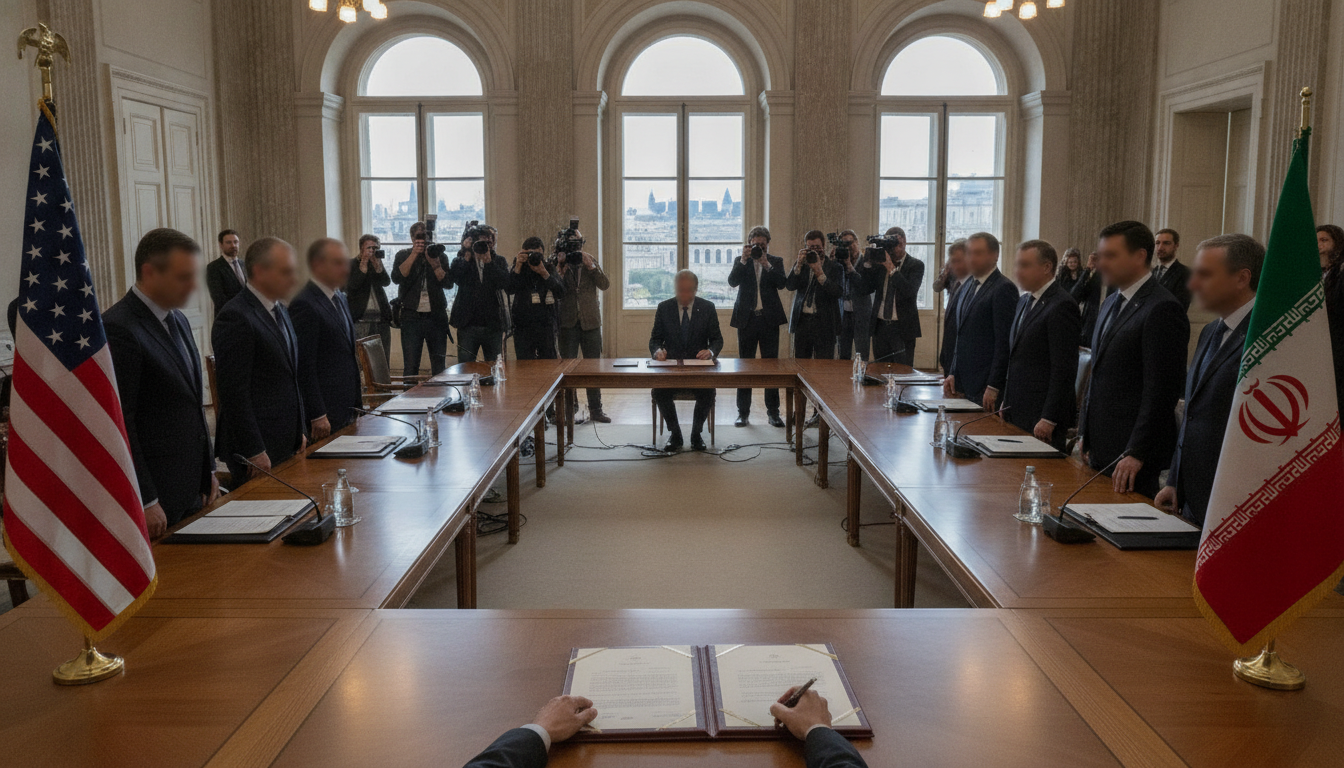
US and Iran Close In on Memorandum to End Hostilities
Washington and Tehran say a memorandum to end hostilities could be signed within days as talks near completion, raising hopes for regional de‑escalation.
The Trump administration and Iranian officials signaled on June 12–13 that negotiations over a memorandum to end hostilities have entered their final stage and could be formalized in the coming days. A U.S. official speaking by telephone described the goal as “very close,” saying the likelihood of reaching an agreement had risen from about 75% in the morning to roughly 85% by the afternoon. Iranian Foreign Minister Araghchi told local media that once the final round of consultations ends, the agreement text will be signed, indicating parallel momentum on both sides.
Agreement Nearing Signature
A senior U.S. official outlined progress in a brief press call, emphasizing that negotiators were resolving remaining technical and procedural issues. The official did not provide a draft text but said the contours of the memorandum were broadly settled and that remaining work focused on implementation mechanisms.
The official also noted that elements of Iran’s leadership, including hard‑line components of the Islamic Revolutionary Guard Corps, appeared to accept the direction of the deal. That apparent domestic consensus in Tehran would ease the path for formal endorsement and reduce the risk of last‑minute political objections.
U.S. Assessment of Prospects and Timing
The Trump administration official portrayed the talks as punctuated by steady movement rather than dramatic breakthroughs, with negotiators narrowing differences on verification and sequencing. The increase in the official’s stated probability over the course of a single day reflected confidence in the pace of diplomacy, though no firm signing date was announced.
U.S. officials have emphasized that a memorandum is distinct from a comprehensive treaty; it is expected to be a framework aimed at ending active combat and setting out steps to prevent renewed escalation. Legal and political reviews, both inside the administration and among partners, are expected before any public ceremony.
Iranian Statements and Domestic Consensus
Iranian Foreign Minister Araghchi told domestic media on the same day that the negotiating teams were in the final stage and that a signing would follow once those talks concluded. His comments suggested the Tehran leadership was preparing domestically for the diplomatic milestone.
Analysts say Iranian officials must balance external commitments with internal politics, particularly reassurance to military constituencies and hard‑line political factions. Public acceptance by military leaders would be a critical factor to ensure that any halt to hostilities is observed on the ground.
Core Elements Reportedly Under Discussion
While full details of the memorandum have not been released, officials described it as laying out a sequence of steps to halt offensive operations and reduce the risk of miscalculation. Provisions are expected to include temporary operational pauses, coordination mechanisms to avoid accidental engagements, and procedures for addressing violations or incidents.
Negotiators are also reported to be discussing verification arrangements and the involvement of third‑party monitors or liaison channels to ensure compliance. The precise scope—whether the memorandum will include timelines, geographic limits, or force posture language—remains subject to final drafting.
Regional and International Reactions Anticipated
Diplomats across the Middle East and beyond have been closely watching developments, with governments urging restraint and calling for a durable cessation of fighting. A memorandum that effectively ends active hostilities would be met with relief in neighboring capitals concerned about spillover and humanitarian consequences.
International organizations and Western allies have stressed the importance of transparent implementation and robust mechanisms to prevent a relapse. At the same time, some regional actors are likely to press for guarantees that their security concerns will be addressed in subsequent diplomacy.
Next Steps Toward Implementation
If the memorandum is signed within days as officials suggested, attention will shift quickly to verification and enforcement of its terms. Both sides must finalize legal language, set timelines for operational pauses, and agree on monitoring roles before a stable ceasefire can take hold.
Domestic ratification processes and military directives will determine how faithfully commitments on paper translate into behavior in the field. Observers warn that even with a signed memorandum, fragile trust and sporadic incidents could test the accord in its early days.
The pending memorandum, if implemented, would mark a crucial step toward de‑escalation between the United States and Iran, but negotiators and capitals will need to move carefully to translate diplomatic momentum into lasting stability.

