
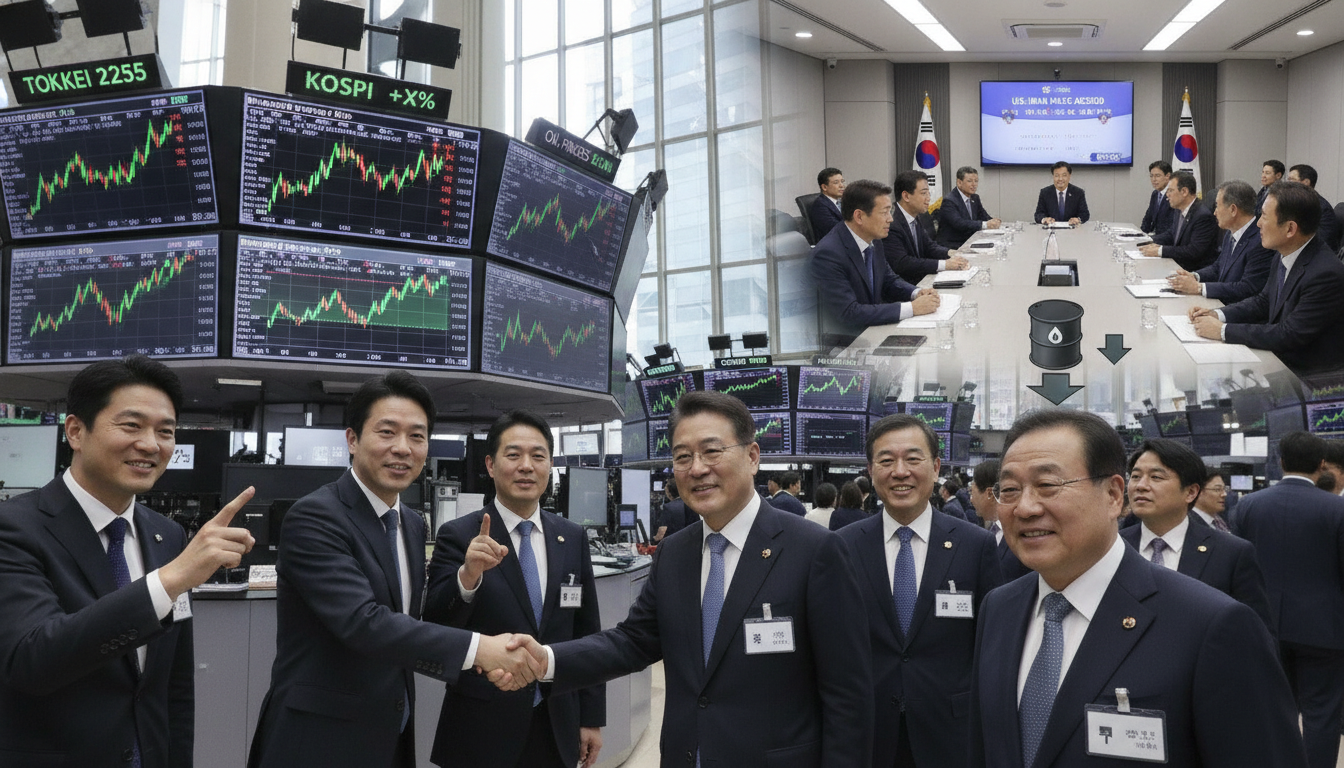
U.S.-Iran peace deal lifts Tokyo and Seoul markets as oil prices retreat
Market optimism over a U.S.-Iran peace deal sent Tokyo and Seoul stocks higher on Monday, while oil prices eased after comments from President Trump that the Strait of Hormuz would reopen following an official signing. The U.S.-Iran peace deal dominated investor attention, prompting broad-based gains in Asian equities and a shift in energy market expectations.
Tokyo and Seoul stocks surge on arms-ending agreement
Tokyo and Seoul opened sharply higher as investors reacted to reports that Washington and Tehran had reached an agreement to end the months-long military confrontation. Traders cited reduced geopolitical risk and a likely normalization of trade and shipping routes as key factors behind the advance. Demand for cyclical and export-linked stocks strengthened, reflecting hopes for smoother global supply chains.
Market participants said relief buying was broad-based rather than limited to a single sector, with financials and industrials among the most active. Analysts noted that the jump came after a period of persistent volatility driven by regional tensions. Liquidity returned to markets as investors re-priced risk premia in equities and bonds.
Oil prices retreat after Trump’s Strait of Hormuz comments
Global crude benchmarks fell as investors recalibrated supply-risk expectations following comments by President Donald Trump that the Strait of Hormuz would reopen after an official signing of the deal. The prospect of secure shipping lanes diminished fears of a prolonged disruption to Middle East oil flows, easing the risk premium that had supported elevated prices. Energy traders reacted quickly, trimming long positions and pushing futures lower in early Asian trade.
Refiners and energy-intensive industries welcomed the softer crude backdrop, which can help margins and input costs if the price move holds. Market strategists cautioned that oil remains sensitive to implementation details and any flare-ups during a transition period. Hedging activity and short-term supply adjustments could produce further volatility.
Washington and Tehran move toward formalizing the agreement
Officials in both capitals signalled rapid steps toward formal ratification after negotiators announced a framework to halt military operations between U.S.-led forces and Iran-backed elements. Washington described the pact as a path to “permanent” cessation of hostile actions, while Iranian statements framed the accord as an end to direct military confrontation. The timeline focuses on an initial formal signing followed by verification mechanisms, according to people familiar with the talks.
Diplomats from allied nations were reported to be coordinating follow-up measures, including inspections and confidence-building steps. Markets interpreted the diplomatic momentum as likely to reduce uncertainty across shipping, insurance and defence-related sectors. Observers said the speed and transparency of implementation will be crucial to sustaining market confidence.
Regional security and the Strait of Hormuz outlook
The Strait of Hormuz, the chokepoint for a significant share of global crude shipments, became a central element of investor thinking after the deal was announced. U.S. assurances that the waterway would reopen erased a major logistical worry for traders and commodity buyers. Shipping insurers and freight-forwarders will be watching for official guarantees and operational changes that restore pre-conflict transit patterns.
Restoration of navigational safety could lower freight rates and insurance premiums, improving margins for oil exporters and importers. Yet security analysts cautioned that localised incidents or delays in implementing de-escalation measures could still cause intermittent disruptions. Long-term stabilization will depend on both military deconfliction and diplomatic follow-through among regional actors.
Investor sentiment, currency and bond market reactions
Risk-on sentiment spread beyond equity markets, with some investors rotating out of safe-haven assets and into stocks perceived as beneficiaries from reopening. The yen and won showed modest moves as currency traders balanced capital flows with monetary-policy differentials among central banks. Government bond yields in the region edged higher on the view that reduced geopolitical risk could support a moderate rise in real yields.
Foreign investor flows, which had been cautious amid the conflict, appeared to resume in Asia, supporting index gains. Portfolio managers highlighted that the sustainability of inflows will depend on concrete signs of reduced trade and transit frictions. Analysts said central banks and fiscal authorities might adjust communication if market calm endures and growth expectations firm.
Final paragraph
While markets priced in immediate relief from the U.S.-Iran peace deal, analysts emphasized that the long-term impact hinges on how quickly and transparently the agreement is implemented, and whether follow-up diplomatic and security measures stabilize regional commerce and energy flows.

