
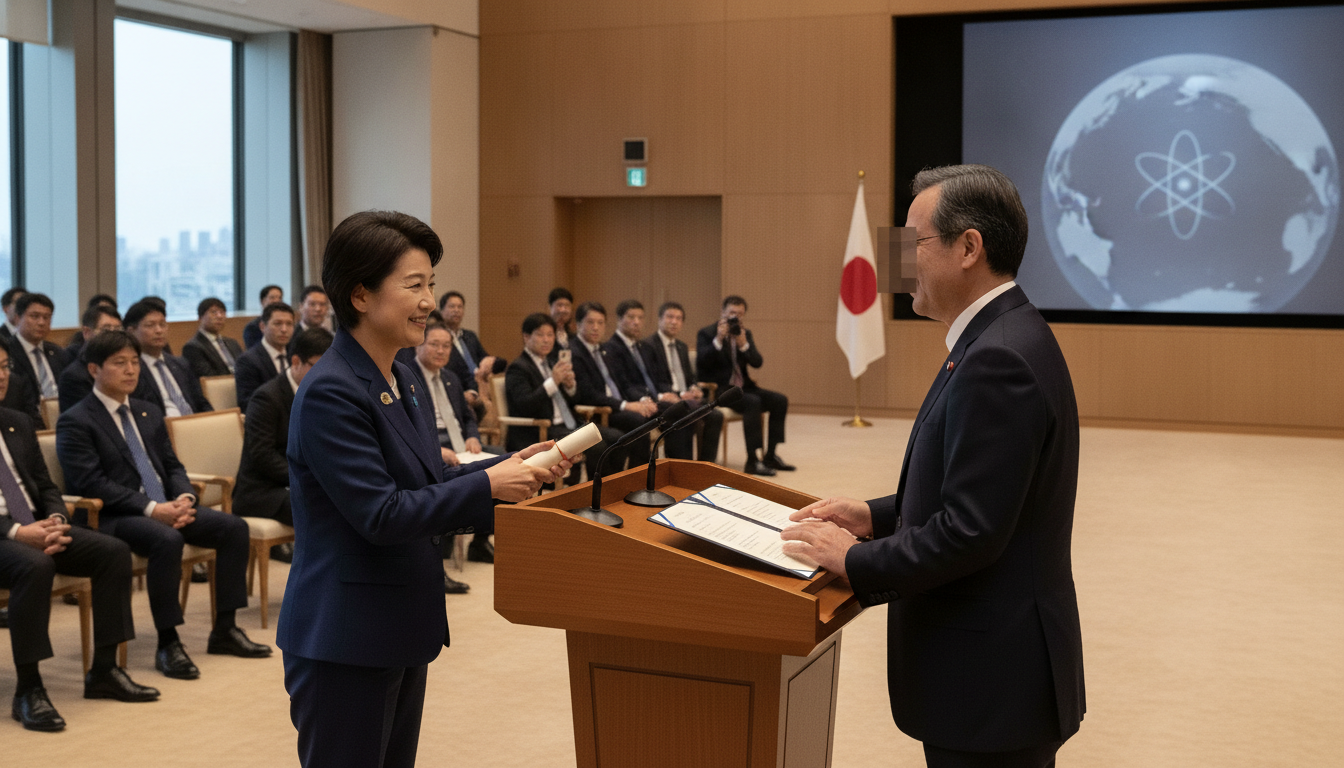
Prime Minister Takaichi welcomes memorandum as a key step toward de‑escalation
Takaichi welcomed a memorandum as a step toward de-escalation, urging prompt implementation to secure Strait of Hormuz navigation and advance Iran nuclear talks.
Prime Minister Takaichi on Monday morning welcomed a newly announced memorandum as a significant move toward ending recent tensions, posting her remarks on X at about 8:40 a.m. Japan Standard Time. She described the memorandum as a “major step” toward the stabilization of the situation and praised the persistent diplomatic efforts that produced the agreement. In the same message she praised the countries that mediated the talks and called for speedy implementation to ensure freedom and safety of navigation in the Strait of Hormuz while urging progress on the Iran nuclear issue.
Takaichi’s public statement and timing
Prime Minister Takaichi posted her response on X, the platform formerly known as Twitter, shortly after the memorandum’s announcement, saying she welcomed the accord and its potential to de-escalate hostilities. She credited the parties involved for seeking a diplomatic solution and emphasized the role of sustained negotiation in reaching the memorandum. Her timing and wording signal Tokyo’s interest in both regional stability and the diplomatic process that produced the document.
Praise for mediating countries and diplomatic process
In her post, Takaichi explicitly commended the nations that played mediating roles, saying their efforts were “highly valued” in achieving the memorandum. She framed the agreement as the result of purposeful diplomacy and patient negotiation by the directly involved parties and their interlocutors. The prime minister’s remarks underscore Japan’s broader diplomatic preference for negotiated outcomes to security disputes that could affect international commerce and regional stability.
Concerns for Strait of Hormuz navigation
A central element of Takaichi’s statement was the expectation that the memorandum would secure free and safe navigation through the Strait of Hormuz, a vital artery for global energy shipments. She urged that the terms of the memorandum be implemented reliably so that commercial and naval vessels can operate without new restrictions or threats to safety. Tokyo’s emphasis reflects longstanding concerns about disruptions in the narrow waterway and the potential global economic consequences of any escalation there.
Linking the memorandum to Iran nuclear negotiations
Alongside maritime security aims, Takaichi linked the memorandum’s promise of de-escalation to the need for a broader, timely settlement on Iran’s nuclear issues. She expressed a strong hope that the memorandum’s implementation would coincide with rapid progress toward a final agreement on the nuclear file. By coupling immediate security relief in the Gulf with a call for resolution on nuclear matters, her remarks sought to align short-term stabilization with longer-term non-proliferation goals.
Implementation, monitoring and next steps
Takaichi emphasized that welcoming the memorandum was not an end in itself, but the start of a phase in which adherence and verification will be essential. She called for the memorandum’s provisions to be carried out “steadily,” signaling Tokyo’s interest in clear mechanisms for monitoring compliance and resolving disputes that might arise during implementation. Her statement also implied that Japan will continue to follow the situation closely and support diplomatic channels aimed at cementing the accord.
Japan’s position, as reflected in the prime minister’s message, balances immediate security priorities with a preference for multilateral diplomacy and rule-based resolution. The government’s public praise for mediators and insistence on implementation suggest Tokyo may also engage through quiet diplomacy to assist monitoring or to coordinate with partners on measures that protect shipping and deter renewed tensions. Observers will watch for any follow-up statements from Japan’s foreign ministry or discussions with regional partners clarifying Tokyo’s practical contributions.
The memorandum’s reception among other governments and stakeholders will determine whether the diplomatic momentum continues, and whether the stated aims for the Strait of Hormuz and the nuclear talks translate into concrete, verifiable outcomes. In the coming days and weeks, Tokyo’s call for swift implementation will face tests as governments align on monitoring, verification and potential enforcement steps to ensure the agreement produces the stability its signatories describe.

